


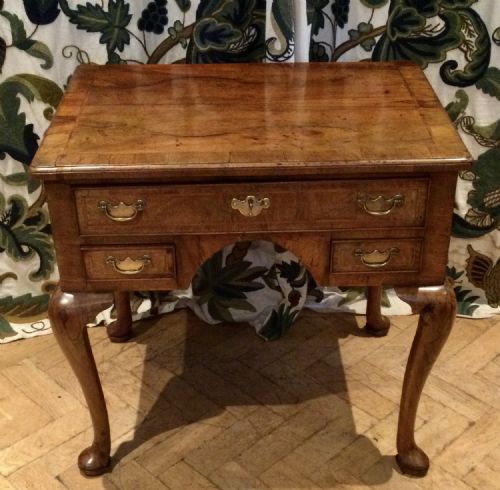


Feather Banded Desk
These feather banded desk examples bring together walnut, brass and leather across the 18th Century and Georgian periods.
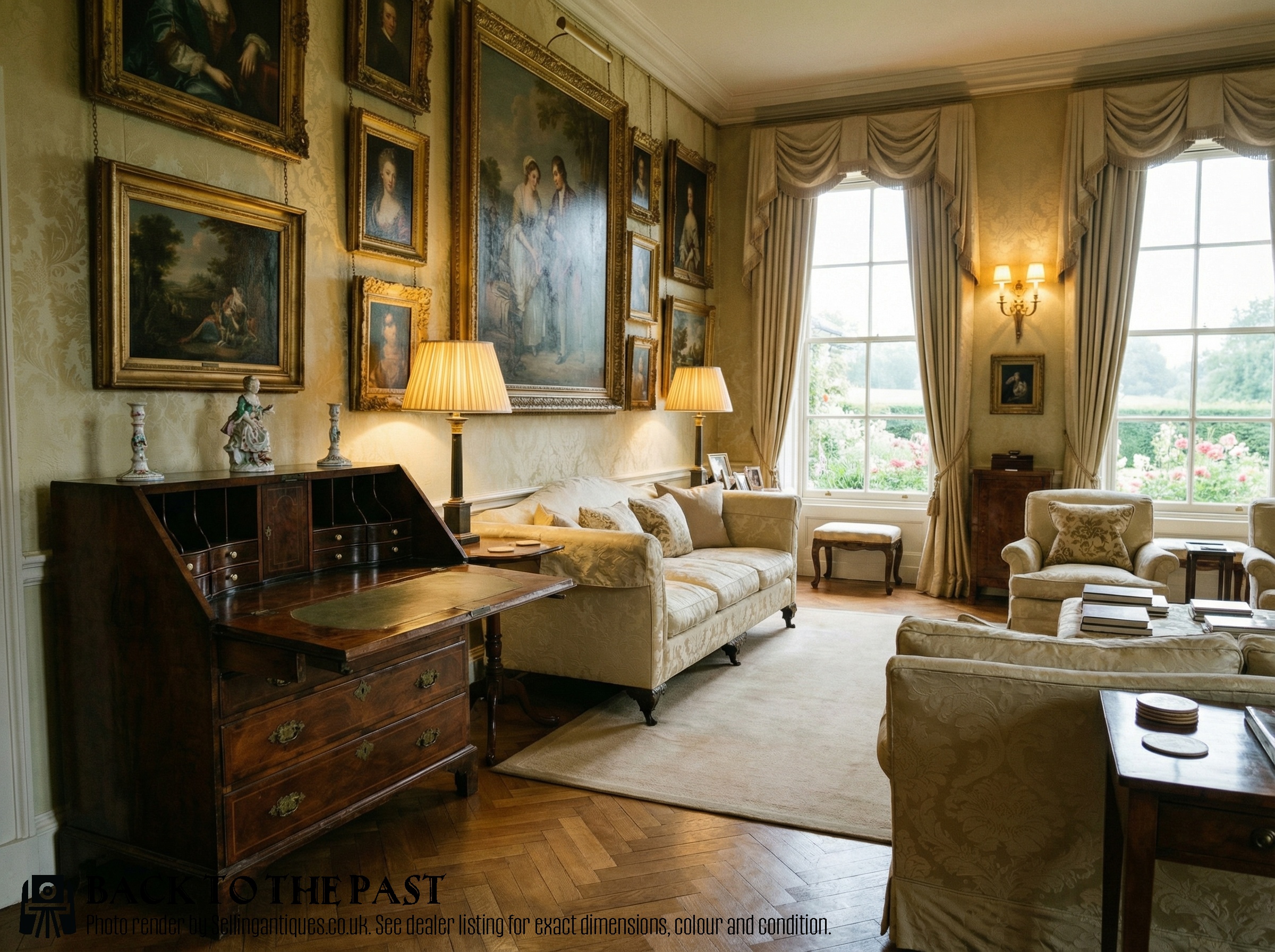
Feather Banded Desk
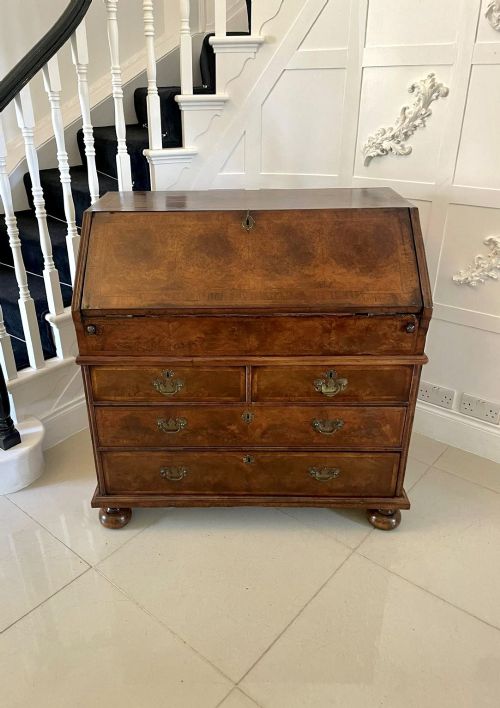
A feather banded desk is a surface for writing or storage defined by fine border inlay work, appearing frequently as a bureau, lowboy or kneehole desk. You are most likely to meet pieces originating from the 18th Century and the Georgian period, often built with compact proportions.
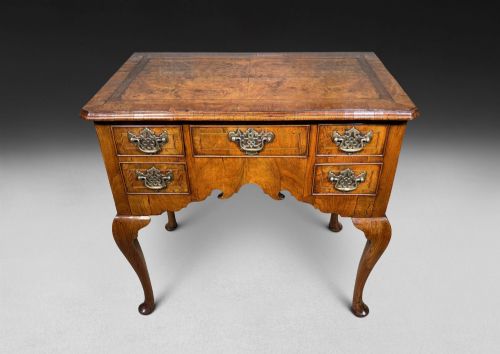
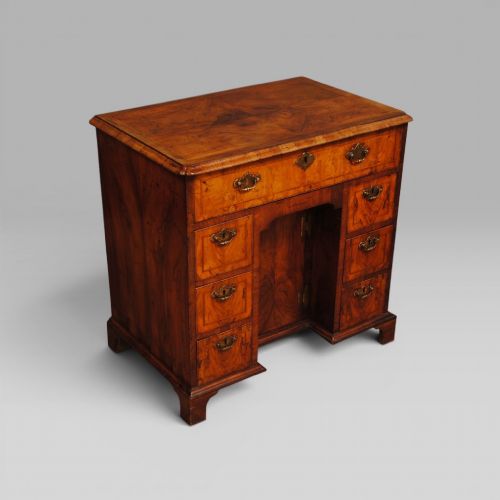
The form spans lowboys, side tables, bureaux and escritoires, each showing the characteristic decorative banding around the drawer fronts or top edges. These items served domestic writing and storage needs in wealthy homes during the reigns of Queen Anne and the early Georges.
Makers of these forms employed distinct regional traits, including solid walnut construction seen in Irish examples alongside standard veneered carcasses. The survival rate of these pieces highlights the enduring appeal of walnut furniture from the 1700s onwards.
Assessing quality
Quality rests on the crispness of the feather banding and the figuration chosen for the walnut veneers. A superior piece displays matching grain patterns across multiple drawers and intact original brass hardware.
The depth of colour and the preservation of the timber surface separate standard examples from exceptional ones. Construction integrity in the drawer linings and internal pigeonholes also determines the standing of an individual piece.
The listings here span the 1700s, 18th Century, Georgian and Edwardian periods, constructed in walnut, burr walnut and oak.
The Feather Banded Desk Glossary
- Feather banding
- A decorative inlay made from two strips of veneer laid diagonally to resemble a bird's feather or a herringbone motif. It frames the drawer fronts and tops of high-status furniture.
- Lowboy
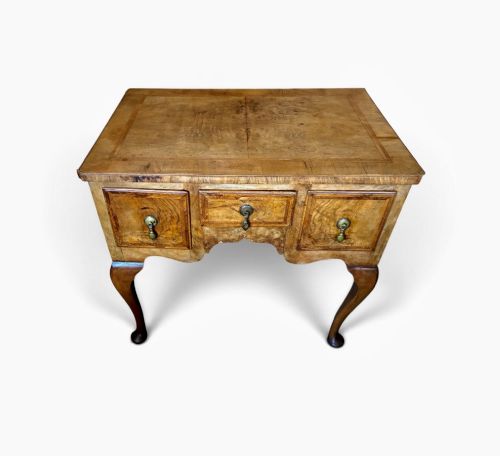
- A small table with drawers, commonly used as a dressing table or side table during the 18th Century. Many examples feature cabriole legs and matching feather banded surfaces.
- Burr walnut
- Timber taken from walnut tree growths, producing swirling and mottled patterns that cabinet makers prized for veneering. It forms the primary decorative surface on top-tier desks.
- Kneehole desk
- A form of desk featuring a central recess for the user's legs, flanked by banks of small drawers. They frequently incorporate cupboard spaces behind the central kneehole arch.
Feather Banded Desk: Frequently Asked Questions
What is a feather banded desk?
A feather banded desk is an antique writing surface decorated with inlaid herringbone veneers around the drawer borders. These items date primarily from the early 18th Century and the Georgian era.
They were designed for domestic correspondence and record keeping in affluent households. The category includes bureaux, kneehole desks and lowboys.
Where were these desks placed?
Original owners positioned these desks in private studies, bedrooms and withdrawing rooms for managing personal correspondence. Their modest proportions allowed them to fit comfortably against panelled walls.
Today, they function effectively in similar domestic spaces as writing stations or display tables. Their compact size makes them adaptable to modern interiors.
What is the difference between a bureau and a lowboy?
A bureau incorporates a sloping fall-front that opens to reveal a fitted interior of pigeonholes and small drawers. It functions primarily as a secure writing cabinet with storage below.
A lowboy is essentially a small table with one or more rows of drawers beneath the top surface. It lacks the sloping writing flap and served multi-purpose roles in domestic rooms.