

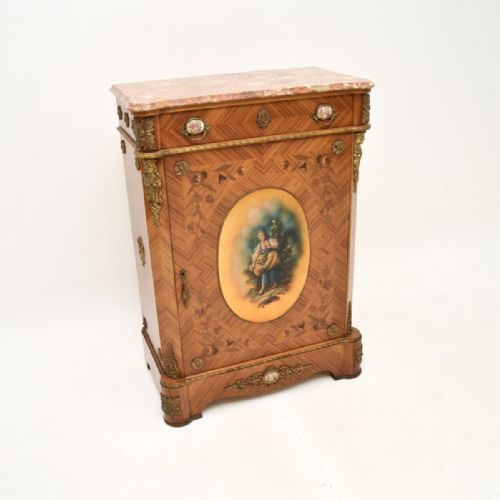
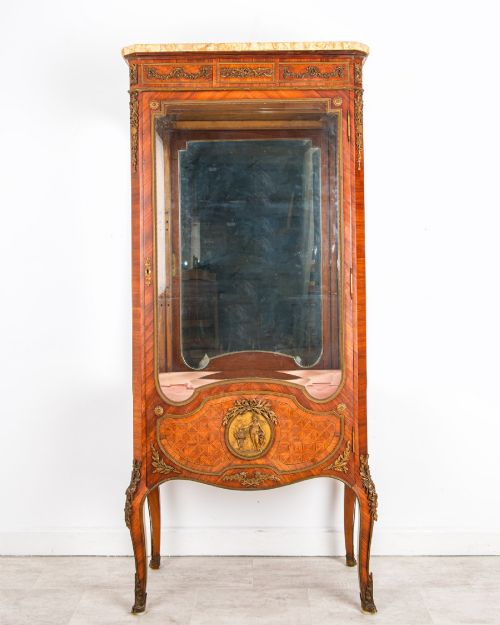

Kingwood Parquetry Cabinet
When you search for a kingwood parquetry cabinet, you look for figured timbers and geometric veneers arranged on French forms.
Kingwood Parquetry Cabinet
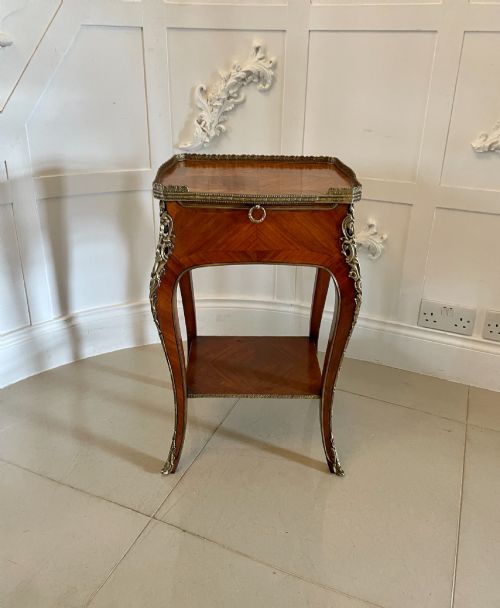
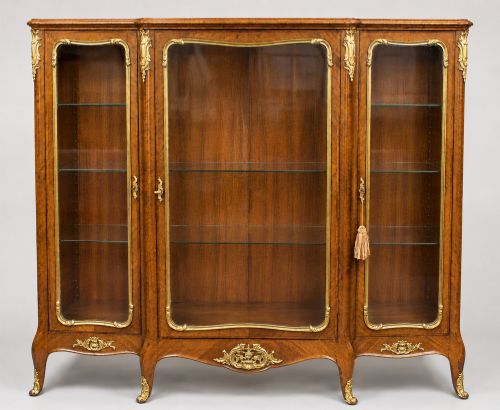
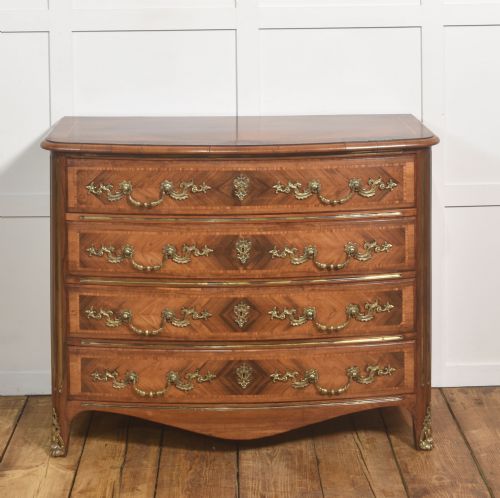
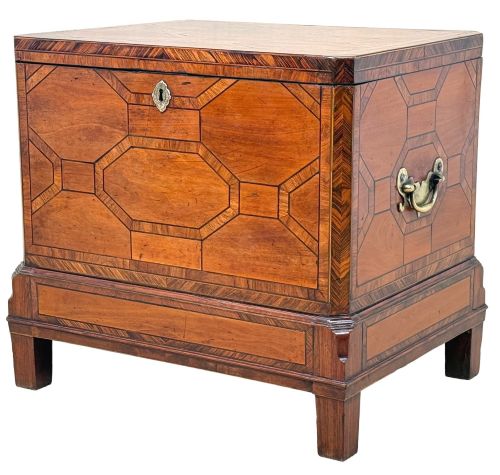
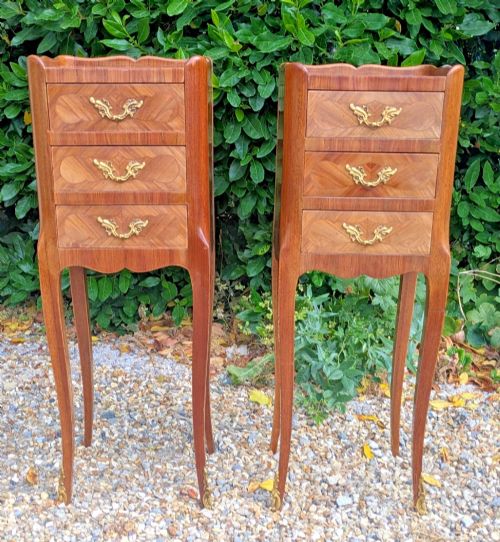
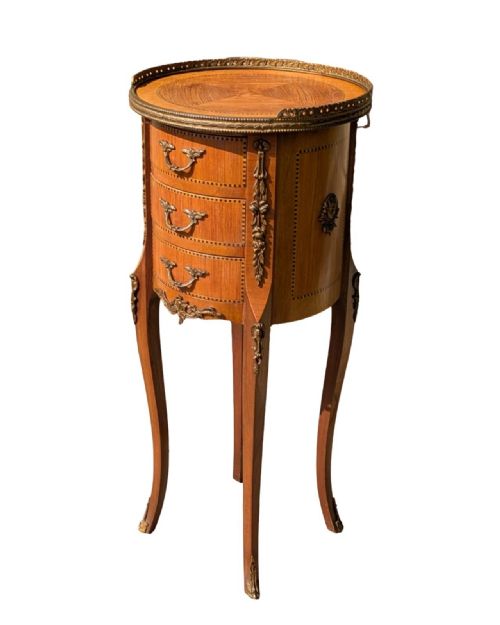
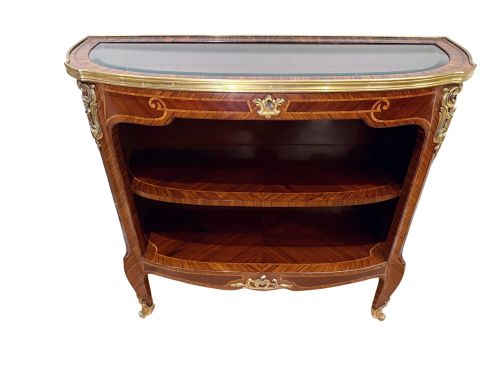
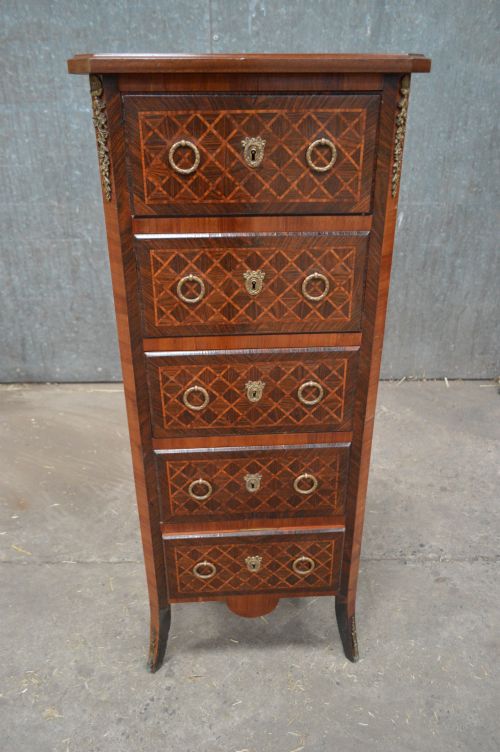
A kingwood parquetry cabinet combines dense, violet-brown timber with geometric veneer arrangements on forms such as bedside tables, display cabinets, and chests of drawers.
The pieces appearing on this page stretch from the nineteenth century into the twentieth century, reflecting revival styles like Louis XV and Louis XVI alongside Edwardian interpretations.
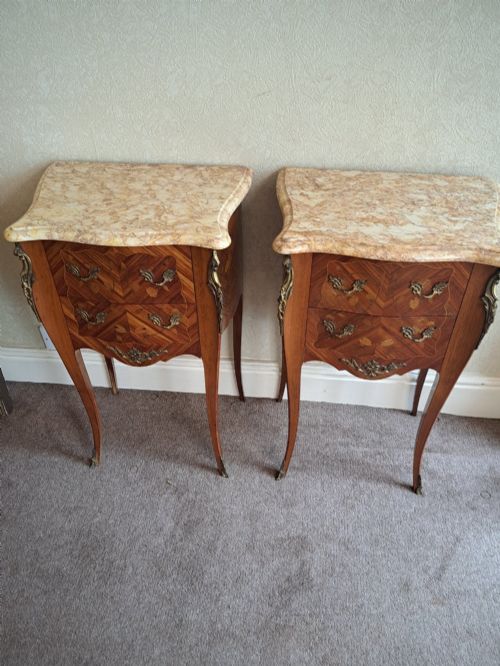
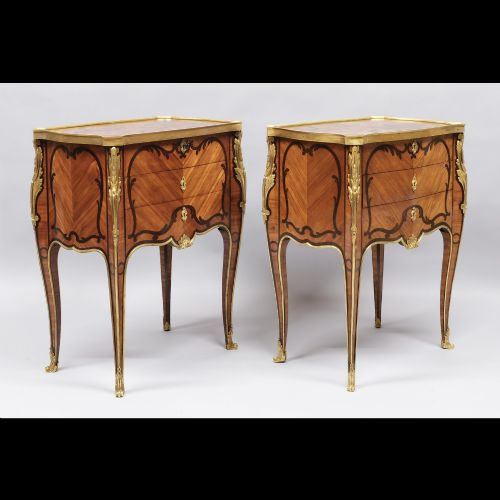
You will most frequently encounter compact bedside cabinets and larger display vitrines, constructed in walnut, rosewood, and kingwood with marble tops.
How they were made
Cabinetmakers laid thin veneers of kingwood in intricate parquetry patterns over secondary timbers, exploiting the wood's contrasting dark grains.
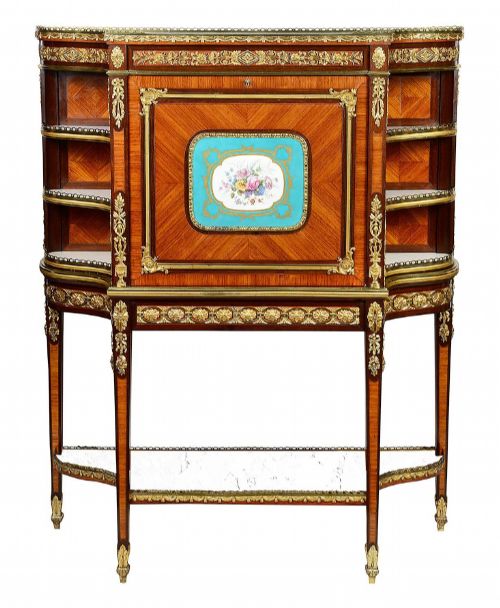
Gilt bronze and ormolu mounts were cast and chased to frame the corners, drawer edges, and glass doors of the cabinets.
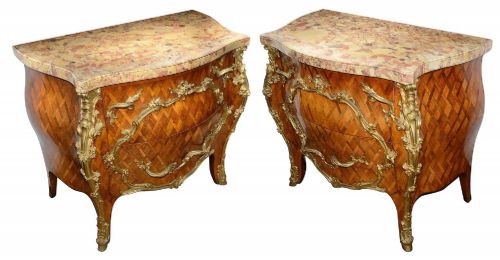
Marble tops, often cut with serpentine or moulded edges, were fitted to the upper surfaces of commodes, side cabinets, and bedside tables.
The furniture forms span bedside tables, vitrines, and secretaire abattants executed in Louis XV and Louis XVI revival styles.
What varies in quality
The precision of the parquetry geometry and the crispness of the gilt bronze or ormolu chasing distinguish workshop output.
The depth of the kingwood's natural figuration and the thickness of the marble slab reveal the tier of the original commission.
The fluidity of the serpentine shaping in the carcase woodwork separates standard production from ambitious cabinetmaking.
Blake London·Sormani Inlaid Commodes·Maison Millet Paris·Victor Raulin Cartonnier
The Kingwood Parquetry Cabinet Glossary
- Kingwood
- A dense tropical timber featuring violet-brown grain with darker banding, highly valued for decorative veneers. It was widely utilised in seventeenth- and eighteenth-century French cabinetmaking.
- Parquetry
- Geometric wood inlay arranged in patterns such as cubes, lozenges, or chequers. This technique requires exact cutting of different timber veneers to form a continuous surface.
- Ormolu
- Gilt bronze mounts applied to furniture to accent corners, handles, and borders. The metal is cast and then finished with gold leaf or mercury gilding.
- Secretaire Abattant
- A tall vertical cabinet featuring a drop-front writing flap that conceals small drawers and pigeonholes. It often pairs with a marble top and lower cupboard doors.
- Vitrine
- A display cabinet featuring glass panels in the doors or sides to exhibit porcelain and small objects. These pieces frequently incorporate gilt bronze mounts and parquetry veneers.
Kingwood Parquetry Cabinet: Frequently Asked Questions
What is a kingwood parquetry cabinet?
A kingwood parquetry cabinet is a piece of furniture veneered with patterned tropical hardwoods, typically featuring geometric designs across doors, drawers, or tops.
These cabinets often incorporate gilt bronze or ormolu mounts and marble surfaces, drawing heavily on French revival designs from the nineteenth century.
How do I identify Louis styles?
Louis XV style pieces are defined by curving serpentine lines, asymmetrical floral motifs, and bombé silhouettes on bedside cabinets and commodes.
Louis XVI style furniture shifts toward straight fluted legs, neoclassical symmetry, and geometric parquetry panels reflecting a return to classical restraint.
Where were these cabinets used?
These cabinets served multiple domestic functions, from bedside nightstands holding lighting and small items to principal drawing-room vitrines displaying porcelain.
Larger credenzas and secretaire abattants functioned as storage and writing surfaces in formal reception rooms and private chambers.
How do I care for kingwood veneer?
Kingwood veneer requires stable indoor humidity and protection from direct sunlight to prevent the timber from fading and the underlying glue from drying out.
Routine dusting with a soft, dry cloth maintains the surface without the need for heavy modern polishes or abrasive cleaners.