
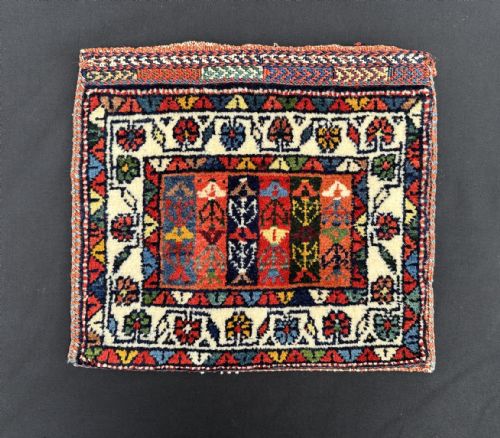
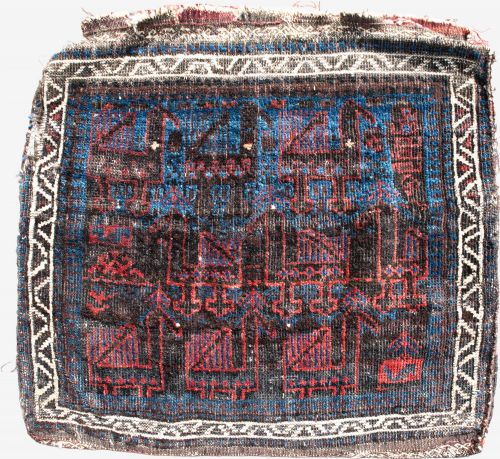
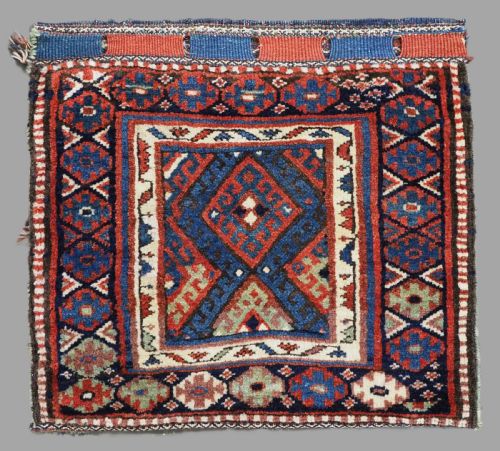
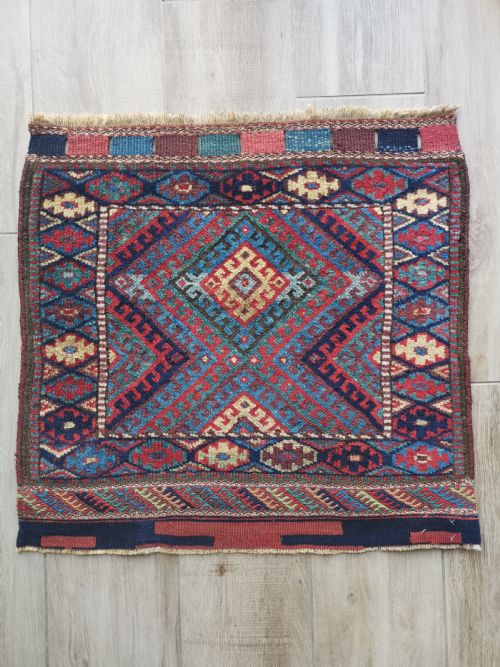


Khorjin Face Rug
These khorjin face rugs are woven tribal saddlebag fronts that bring rich nomadic pattern into a room.
Khorjin Face Rug
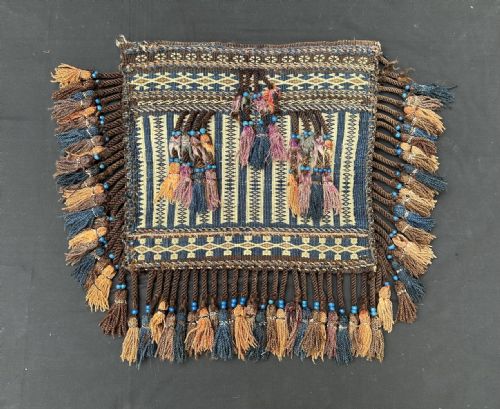
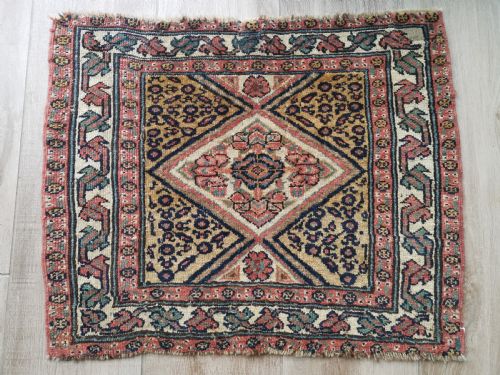
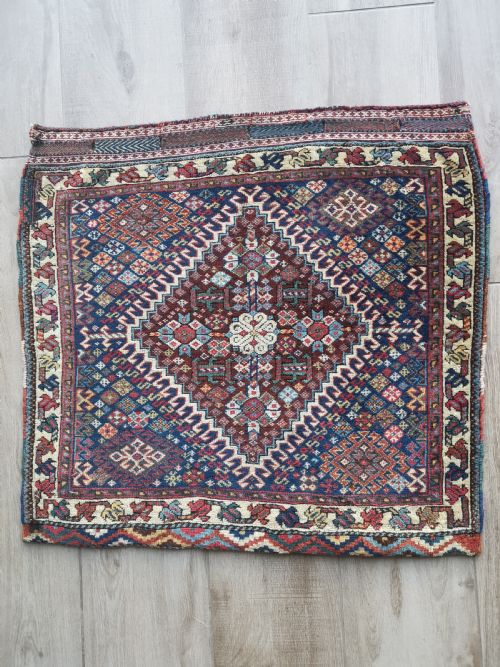
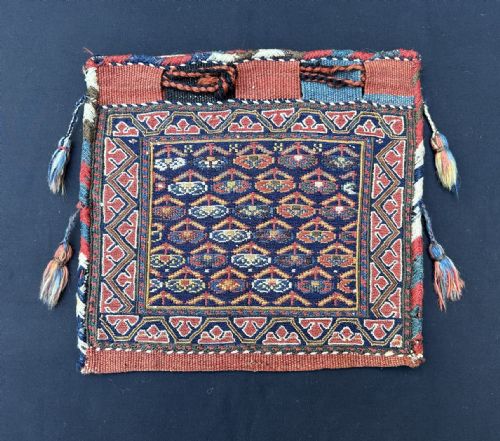
A khorjin face rug represents the front panel of a traditional double saddlebag woven by nomadic and village groups across Persia and the Caucasus. These utilitarian objects served practical transport needs during migrations before surviving as decorative textile art.
The pieces appearing here span the nineteenth and early twentieth centuries, created by tribal makers such as the Qashqai, Afshar, Shahsavan, Jaf Kurd, Baluch, and Luri peoples. Collectors encounter single bag faces, halved sections, and occasional complete examples retaining their original plain weave backs.
Makers utilised these wool panels for domestic storage, personal vanity bags, or animal transport, applying distinctive regional iconography including central medallions, boteh motifs, and tile designs. Their survival reflects robust construction methods and enduring aesthetic appeal.
How they were made
Weavers constructed these textiles predominantly using hand-spun wool for the pile and foundation, supplemented by cotton in certain regions. Natural dyes provided the palette, yielding stable colours that age with depth.
Production techniques combined pile knotting with flatwoven soumac or plain weave structures, particularly on the reverse sides and structural transitions. Artisans occasionally incorporated glass beads into specific personal bags for added ornamentation.
Listings feature wool, natural dyes, and cotton across nineteenth and early twentieth-century tribal textiles.
What varies in quality
Quality rests upon the fineness of the knotting and the crispness of the tribal design execution. Tighter structures and more intricate geometric or figurerative articulation distinguish superior weaving.
The integrity of the natural dyes and the preservation of the original wool pile determine the visual impact of the surface. Surviving backs and complete structural edges add significantly to the integrity of a piece.
The Khorjin Face Rug Glossary
- Khorjin
- A traditional Persian double saddlebag used by nomads for transport and storage. The face sections often survive independently as decorative rugs.
- Soumac
- A flatweaving technique where pattern threads wrap around the warp andweft threads, creating a textured surface resembling braids. Shahsavan weavers utilised this method frequently.
- Boteh
- A stylised almond or pear-shaped motif representing a floral shoot or cypress tree. Afshar and other tribal weavers deployed this design extensively.
- Chanteh
- A small personal bag or vanity bag carried by tribal nomads. These pieces often display exceptionally fine knotting.
- Medallion
- A central ornamental design element anchoring the composition of the rug. Many South-West Persian bag faces centre around this motif.
Khorjin Face Rug: Frequently Asked Questions
What is a khorjin face rug?
A khorjin face rug is the decorative front panel salvaged from a traditional nomadic saddlebag. These woven textiles served functional transport purposes before being preserved as independent wall hangings or small floor pieces.
Nomadic groups across Persia and the Caucasus produced these panels using local wool and natural dyes. Each piece displays the distinct geometric patterns and tribal markers of its maker.
How were saddlebags used by nomads?
Nomadic tribes utilised double saddlebags draped over pack animals to carry household possessions, grain, and personal belongings during seasonal migrations. The robust construction protected contents from dust and rough terrain.
When bags wore out or split down the centre, families often preserved the decorative faces. These panels transitioned into domestic storage or interior decoration.
How do I style a bag face rug at home?
These small textiles suit display as miniature wall hangings, table mats, or accent pieces on furniture. Their compact dimensions allow integration into various interior settings without dominating a room.
Mounting a bag face behind glass or securing it to a fabric backing protects the historic wool pile. Placing them away from direct sunlight preserves the natural dyes.
How do I identify different tribal styles?
Tribal attribution relies on specific colour palettes, structural techniques, and characteristic motifs. Qashqai and Afshar pieces often feature intricate geometric medallions and boteh patterns, while Shahsavan work frequently employs soumac flatweaving.
Examining the weave density and wool preparation provides further clues to regional origin. Baluch pieces typically display darker tones and banded weft work designs.