




Japanese Style Side Table
These Japanese style side table pieces bring together nineteenth and early twentieth century craftsmanship, offering distinctive forms for any interior.
Japanese Style Side Table
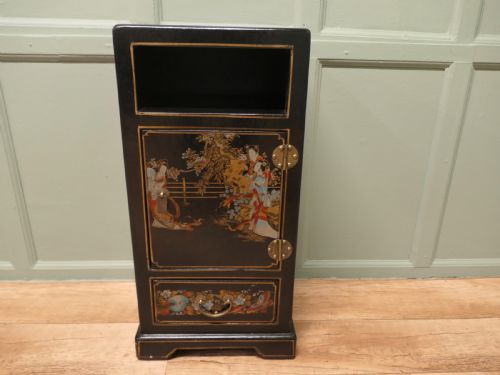
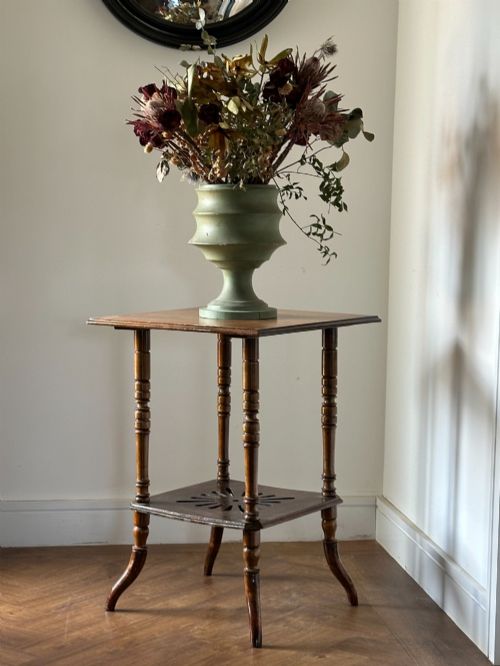
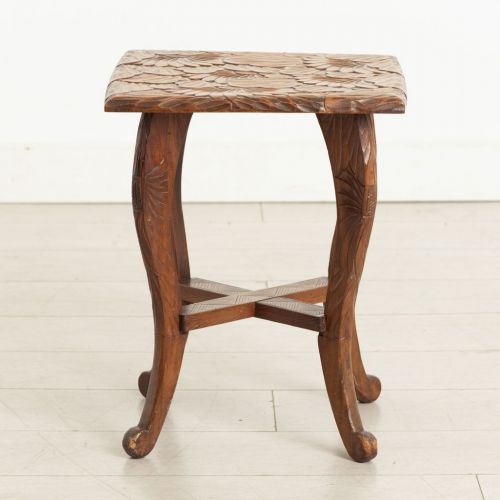
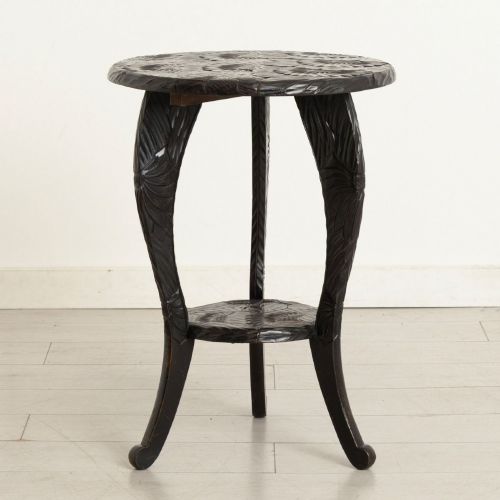
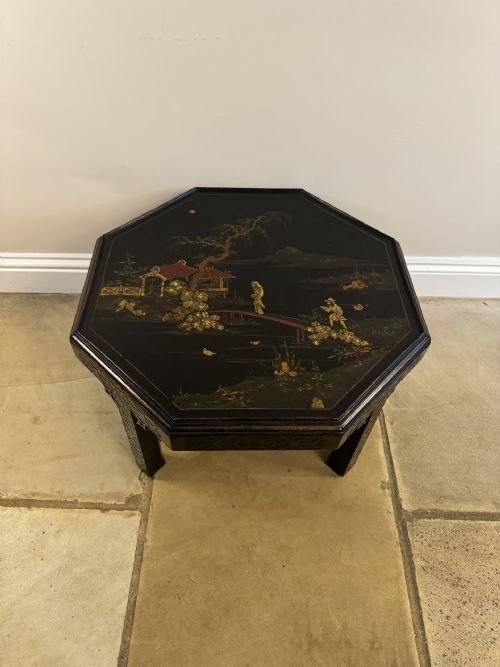
A Japanese style side table encompasses low tables, occasional tables, nests of tables, plant stands, and cabinets created across the late nineteenth and early twentieth centuries. These forms reflect diverse design influences ranging from traditional Japanese motifs to the Aesthetic Movement and Chinoiserie.
The pieces on this page span several decades from the 1880s through to the 1930s, showing how European makers interpreted Eastern aesthetics. Occasional tables and side tables dominate the selection, often taking compact forms suitable for display or daily use.
Makers drew on specific stylistic movements such as Japonisme, Arts and Crafts, and Anglo-Japanese design. Such pieces integrate natural materials and carved details into domestic furniture intended for prominent display in reception rooms.
What varies in quality
The standard of carving and surface decoration distinguishes individual pieces, with hand-carved relief work and layered lacquer finishes showing greater artist investment. Simpler production items rely on printed or basic painted motifs rather than detailed hand application.
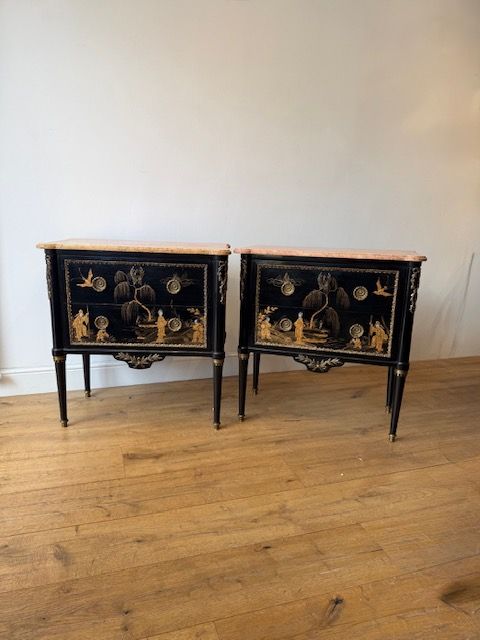
The choice of structural material also separates tiers of production, as solid hardwoods and specialised bamboo frames contrast against simpler secondary timbers. The integration of specialty components like inset marble tops or fine brass hardware elevates the overall execution.
Several tables arrive with hidden tiers or folding panels designed to expand surface area instantly for tea.
Liberty of London·Gabriel Viardot·E W Godwin
The Japanese Style Side Table Glossary
- Aesthetic Movement
- A nineteenth-century design current that prioritised visual beauty over narrative subject matter. It drew heavily on Japanese art and design principles.
- Anglo-Japanese
- A style fusing British furniture forms with Japanese decorative motifs and construction methods. This approach gained popularity during the late Victorian period.
- Chinoiserie
- European artistic interpretation of Chinese and East Asian artistic traditions. It appears frequently on lacquered and painted furniture surfaces.
- Japonisme
- The influence of Japanese art on Western artists and designers. The term describes the broader cultural fascination with Japanese aesthetics during the late nineteenth century.
- Ebonisation
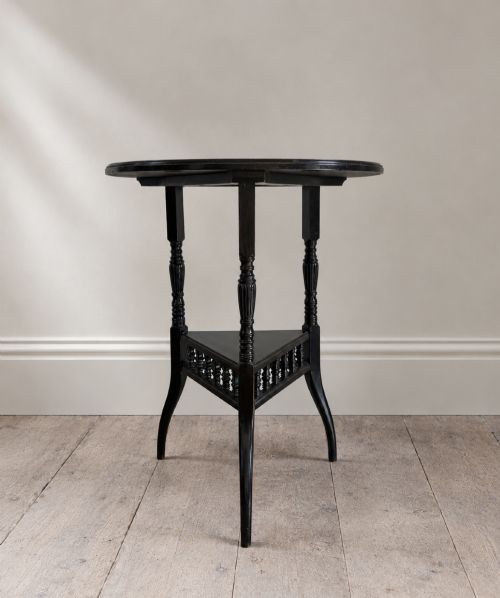
- A wood-finishing process that stains timber to resemble ebony. Makers utilised this technique to create striking dark surfaces on occasional tables.
Japanese Style Side Table: Frequently Asked Questions
What periods do these tables come from?
The listings span the late nineteenth century through the early decades of the twentieth century. Production dates cluster around the Aesthetic Movement and subsequent Arts and Crafts revivals.
Specific examples reflect design revivals up to the 1930s, capturing decades of evolving tastes in domestic interior decoration.
How do I identify an Anglo-Japanese table?
These tables typically feature clean structural lines combined with ebonised finishes or subtle structural framing reminiscent of traditional Japanese architecture. Look for restrained carving and contrasting panel details.
Many examples draw directly upon published design portfolios from the period, particularly the aesthetic vocabulary established by designers like E.W. Godwin.
Were these tables made in Japan or Britain?
The pieces originate from both British firms interpreting Eastern aesthetics and workshops operating in Japan for export markets. Retailers like Liberty of London commissioned specific designs from both domestic and international makers.
Materials and construction techniques often point towards the specific regional origin of each individual piece.
How should I care for a lacquered surface?
Lacquered and painted surfaces require gentle dusting with a soft, dry cloth to prevent abrasion. Avoid placing items in direct sunlight or near heat sources to protect the finish.
Maintaining stable room humidity preserves the underlying timber and prevents cracking in the delicate lacquer layers.
What is the difference between a side table and a plant stand?
Side tables offer general surface space for display or daily utility alongside seating furniture. Plant stands feature taller, narrower proportions specifically engineered to support heavy horticultural containers.
Both forms utilise similar decorative treatments and material palettes within the selection.