


Japanese Style Porcelain Urns
Japanese style porcelain urns bring striking aesthetic character into a room through intricate glazes and painted panels.
Japanese Style Porcelain Urns
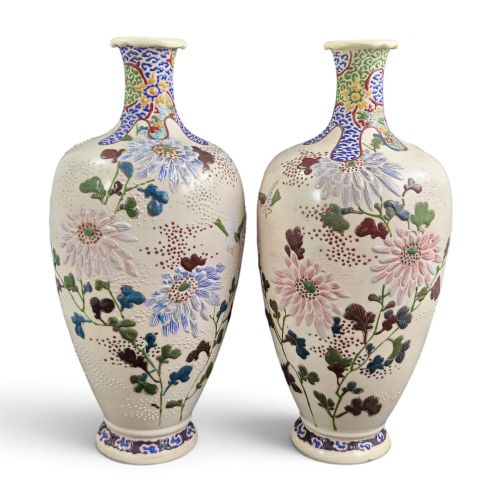
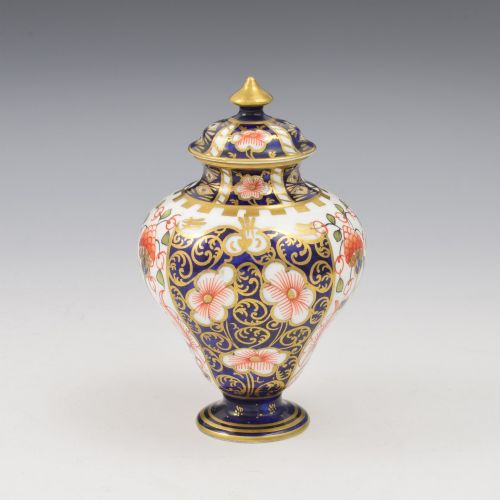
Japanese style porcelain urns encompass lidded vessels, bulbous containers and trumpet-shaped beaker vases originating across the nineteenth and early twentieth centuries. These pieces display distinct decorative traditions including Imari patterns, blue and white designs and Satsuma earthwares.
Materials and Construction
These vessels utilise hard-paste porcelain and earthenware bodies shaped on the potter's wheel or cast in moulds. Artisans applied cobalt blue underglaze pigments alongside overglaze enamels to achieve rich colour palettes.
Many examples incorporate gold leaf or fine gilding to highlight raised moriage decoration and geometric panels. Wood bases occasionally accompany these ceramic bodies to provide stable display mounts.
Listings feature porcelain, earthenware, enamel and gold leaf across nineteenth-century and Edwardian periods.
Evaluating Quality and Execution
Quality rests upon the precision of the hand-painted brushwork and the depth of the glaze firing. Superior examples demonstrate crisp delineation in complex floral and geometric motifs without muddiness in the enamel.
The preservation of the gilding and enamel surface also dictates the standing of a piece. Finer specimens retain their original covers and display balanced proportions across the fluted or bulbous body.
Royal Crown Derby·Samson·Fukagawa
The Japanese Style Porcelain Urns Glossary
- Imari
- A style of Japanese porcelain decorated in underglaze blue, iron red, and gold. This palette creates a vibrant contrast that proved highly popular in both Asian and European markets.
- Moriage
- A type of raised slip decoration used on ceramics to create textured, tactile floral or geometric patterns. Artisans piped the slip onto the surface before glazing and firing.
- Jardinieres
- Large ornamental pots or urns designed to hold flowering plants or ferns. They form substantial decorative focal points in interior spaces.
- Edo
- A historical period in Japan noted for distinct artistic traditions that heavily influenced later export wares. Pieces decorated in this manner reference earlier aesthetic standards.
Japanese Style Porcelain Urns: Frequently Asked Questions
Are these urns waterproof?
Most antique lidded vases and urns are intended for decorative display rather than functional container use. The historic ceramic bodies and internal glazes may not withstand prolonged exposure to moisture.
For jardinieres or pieces intended to hold plants, using a removable inner liner protects the historic ceramic surface from water damage and mineral deposits.
How do I distinguish European copies from Japanese originals?
European manufacturers frequently produced pieces in the Japanese style to satisfy Western demand during the nineteenth century. Examining the paste, weight and marks often reveals whether a piece originated in Japan or a European factory.
Makers such as Samson in France specifically replicated Imari styles, adding distinct European potting characteristics while adopting Eastern motifs.
How should I clean these porcelain pieces?
Dust these vessels gently using a soft, dry brush to prevent accumulation in textured areas like moriage relief. Avoid harsh commercial cleaning agents that can damage delicate overglaze enamels and gold leaf.
If deeper cleaning is necessary, a damp cloth with mild soap suffices, followed immediately by thorough drying with a lint-free towel.
What is the significance of the covers?
Original covers complete the intended silhouette of urns and lidded vases. Finding a piece with its matching lid significantly enhances its historical integrity.
Many surviving vessels lost their covers over centuries of handling, making matched sets particularly notable for collectors.