
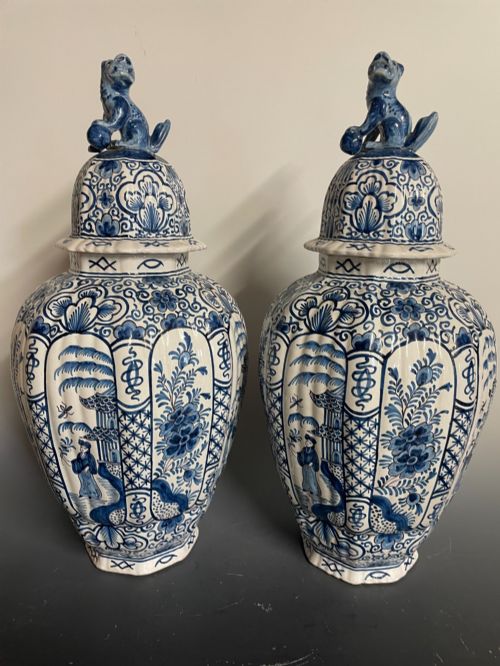
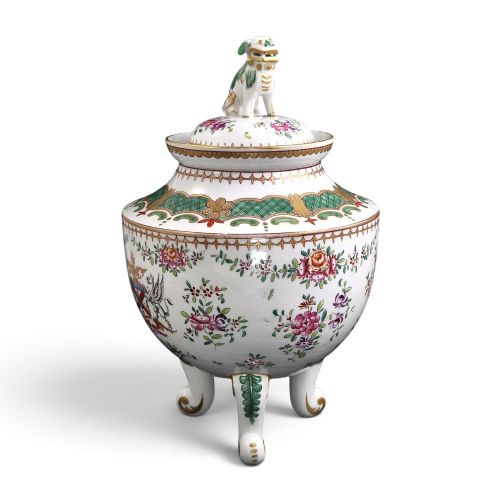
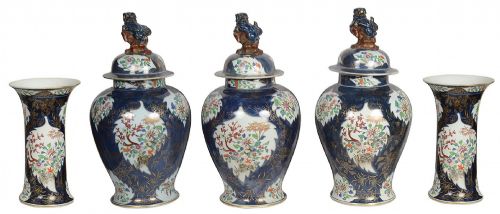


Foo Dog Lid Porcelain Vase
These foo dog lid porcelain vase pieces bring remarkable form and historic glaze work to a room, offering genuine character for any collector.
Foo Dog Lid Porcelain Vase
A foo dog lid porcelain vase combines covered ceramic vessels with the sculptural guardian lion finials seen across nineteenth century output. These objects include baluster vases, jars, and garnitures originating from Chinese and Japanese kilns alongside European revival pieces.
The selection here draws heavily on nineteenth century production, featuring Qing dynasty pieces, Victorian interpretations, and Meiji period examples. Buyers frequently encounter lidded forms decorated with Japanese Imari style motifs, blue and white pigments, or rich enamel palettes.
How they were made
Potters shaped these vessels using hard-paste porcelain, applying ceramic glaze before firing the body to high temperatures. Artisans then built up surface decoration using enamel, gold leaf, and gilding to accentuate the detailed forms.
Lids were modeled separately to incorporate the distinctive foo dog finials, requiring precise kiln control to ensure proper fit with the main vase or jar body.
Listings feature hard-paste porcelain alongside ceramic glaze, enamel, gold leaf, and gilding across the nineteenth century.
What varies in quality
Quality rests on the crispness of the porcelain modelling and the control shown in the enamel and gilt application. Stronger examples display precise brushwork in the Chinoiserie, Famille rose, or Imari patterns rather than rushed or muddy pigment placement.
Samson Paris
The Foo Dog Lid Porcelain Vase Glossary
- Foo dog
- A traditional guardian lion sculpture serving as a decorative lid finial on porcelain vessels. These figures symbolise protection and authority in East Asian art.
- Famille rose
- A palette of opaque enamels dominated by pink or rose colours, widely used on nineteenth century Chinese porcelain. This technique allowed for subtle shading and complex floral or figural scenes.
- Imari
- A style of Japanese export porcelain featuring underglaze blue and overglaze red, gold, and green. European potteries frequently copied these distinctive colour combinations during the nineteenth century.
- Hard-paste porcelain
- A durable ceramic composition fired at high temperatures using kaolin and petuntse. This material provides a dense, vitreous body capable of holding sharp details.
Foo Dog Lid Porcelain Vase: Frequently Asked Questions
What is a foo dog lid porcelain vase?
A foo dog lid porcelain vase is a covered ceramic vessel featuring a sculptural guardian lion on top. These pieces range from nineteenth century Chinese export ware to Japanese and European revival items.
They serve as decorative focal points, often decorated with elaborate enamel work, gilding, or traditional blue and white painting.
How do I date a lidded porcelain vase?
Dating relies on examining the porcelain body, glaze characteristics, and the style of decoration. Nineteenth century pieces often show specific manufacturing traits and palette choices linked to the Qing dynasty or Meiji period.
Comparing the painting technique and the handling of the foo dog finial against known period examples helps clarify the era of production.
Where were these porcelain vases made?
These pieces originate primarily from traditional ceramic centres in China and Japan, created largely for export markets. European workshops also produced imitative styles during the nineteenth century, such as Japanese Imari or Chinese armorial designs.
The recorded items reflect this broad geographical spread, encompassing Cantonese workshops, Japanese kilns, and French factories.
How should I display a porcelain vase with a lid?
Place these covered vessels on stable surfaces away from high traffic areas to protect the lid and finial. Ensure they sit out of direct sunlight to maintain the vibrancy of the enamel and gilding over time.
Their substantial presence makes them suitable for mantels, sideboards, or dedicated display cabinets where the detailed glaze work can be appreciated.