





Pair Covered Porcelain Jars
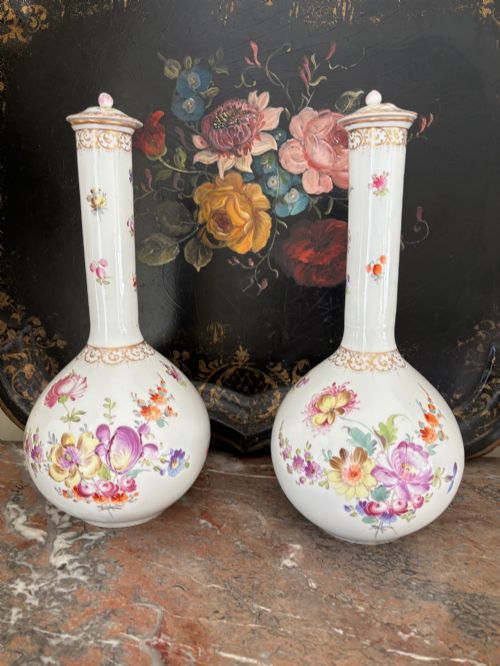
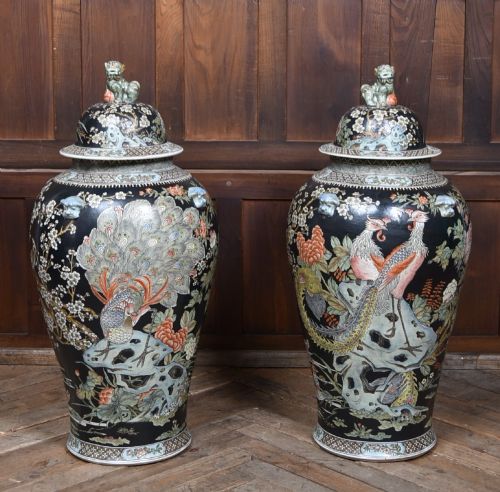
These pair covered porcelain jars bring decorative symmetry to a room, appearing in forms from bulbous Sitzendorf shapes to Chinese palace floor jars.

Pair Covered Porcelain Jars
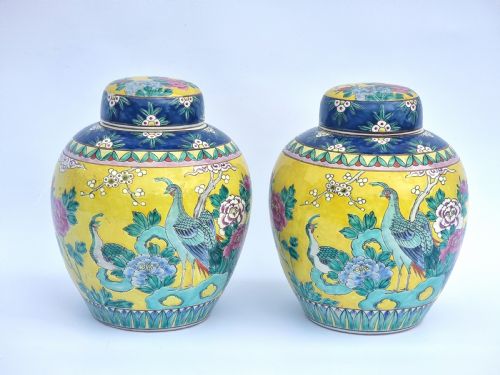
Pair covered porcelain jars are matching lidded vessels created for display, incorporating forms such as ginger jars, ovid jars, urns, and floor jars. When you search for pair covered porcelain jars, you encounter pieces spanning the seventeenth century through the mid twentieth century, drawing from European manufactories and Asian kilns alike.
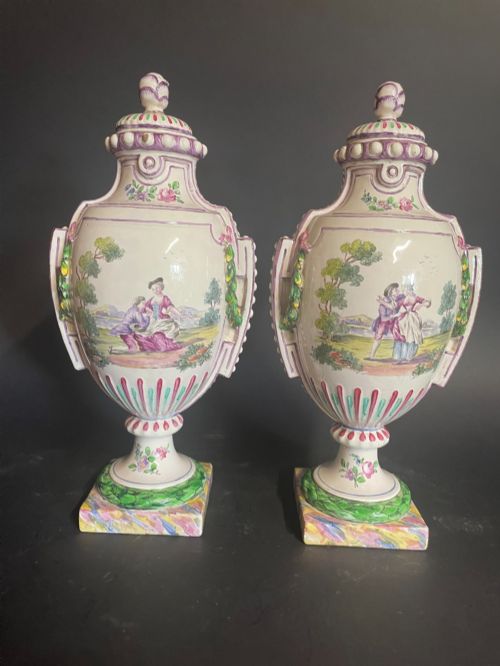
The English and European examples include Victorian porcelain, French faience, and products from factories such as Sitzendorf, Royal Vienna, Berlin, and Coalport. Alongside these sit Japanese Imari, Arita, Satsuma, and Kutani wares, reflecting distinct regional styles and painting traditions.
Most entries belong to the nineteenth century, utilising hand-painted floral decoration, blue and white pigments, or enamel finishes. The objects range from cabinet-sized lidded vases to substantial palace floor jars mounted with ormolu.
How They Were Made
The primary material is ceramic porcelain or faience, shaped into jars and fitted with matching covers. Potters applied glazes, underglaze blue, and overglaze enamel colours before secondary firing.
Many specimens incorporate supplementary metal elements, utilising ormolu mounts, gilding, and gold leaf to accent the ceramic bodies. Artisans executed hand-painted motifs, ranging from intricate Japanese Imari patterns to botanical studies and fruit.
European makers such as Mason's utilised ironstone variations, while others produced specific styles like Chinoiserie and Rococo Revival. The combination of ceramic throwing, moulding, and detailed brushwork defines the construction of these vessels.
Several pairs managed to survive centuries of dusting without losing their lids.
What Varies in Quality
Quality rests upon the precision of the hand-painted decoration and the crispness of the porcelain modelling. Finer jars display controlled brushwork in complex motifs like Imari patterns or botanical studies, whereas simpler pieces rely on standard transfer prints or heavier glaze applications.
The presence of supplementary materials creates distinction within the range. Gilt, gold leaf, and cast ormolu mounts elevate standard ceramic bodies into more elaborate decorative statements.
The reputation of the manufactory or artist influences the standing of individual pieces. Marked porcelain from established European works or designated Japanese periods commands greater interest than unmarked domestic equivalents.
Sitzendorf·Mason·Royal Vienna·Berlin·Coalport·Augustas Rex·Royal Worcester
The Pair Covered Porcelain Jars Glossary
- Imari
- A style of Japanese porcelain featuring underglaze blue and iron red with added gold, named after the port of shipment. These wares became widely copied across Europe.
- Faience
- Tinned-glazed earthenware produced in France and other European regions. It offers an opaque white surface suitable for painted decoration.
- Ormolu
- Gilded bronze mounts applied to furniture and porcelain vessels. French makers utilised these metal additions to frame ceramic bodies during the nineteenth century.
- Ginger Jar
- A broad-shouldered ceramic container originally used to store spices. Later periods adapted the form purely for decorative display.
- Ovid
- An egg-shaped vessel profile common in Chinese and European porcelain jars. This rounded form provides a balanced surface for painted scenes.
Pair Covered Porcelain Jars: Frequently Asked Questions
How do I identify Japanese Imari jars?
Japanese Imari jars typically feature a distinct palette of underglaze cobalt blue and iron red, frequently highlighted with gold leaf or gilding. The decorative schemes often incorporate floral and panel designs.
Pieces range from early seventeenth-century Arita productions to nineteenth-century interpretations. European factories also produced imitations of this distinct aesthetic.
What is the difference between porcelain and faience?
Porcelain is a hard, vitrified ceramic material fired at high temperatures, resulting in a dense and non-porous body. Faience is a tin-glazed earthenware that provides an opaque white ground for painted scenes.
European factories utilised both materials, though porcelain dominates the nineteenth-century selections. Faience vessels tend to present heavier earthenware bodies with distinctive glaze characteristics.
How should I display pair covered porcelain jars?
Display these jars as a matched set on stable surfaces where their shared symmetry can be appreciated. Because many pieces feature hand-painted decoration or delicate ormolu mounts, placement away from heavy foot traffic ensures their safety.
Pairing them on sideboards or mantelpieces echoes their traditional nineteenth-century domestic placement. Maintaining adequate spacing allows the detailed enamel and gold leaf work to remain visible.