


Antique Imari Decorative Vases
These antique imari decorative vases combine striking Japanese and British porcelain traditions, offering rich colour and pattern for any room.
Antique Imari Decorative Vases
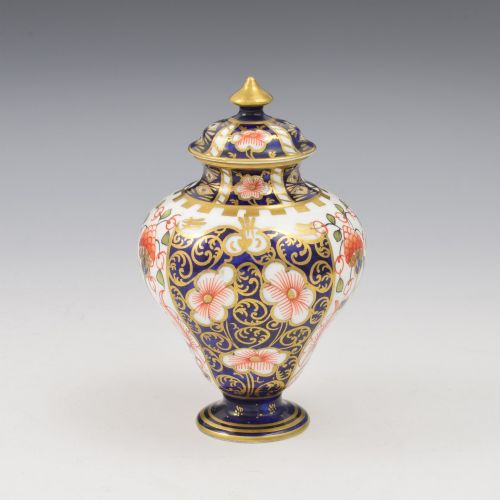
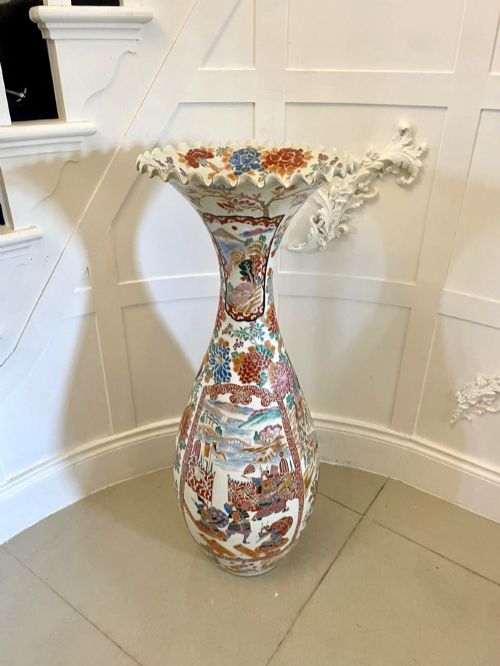
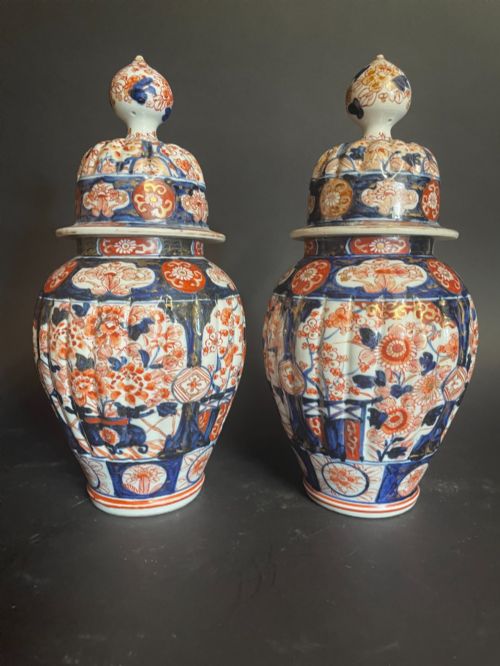
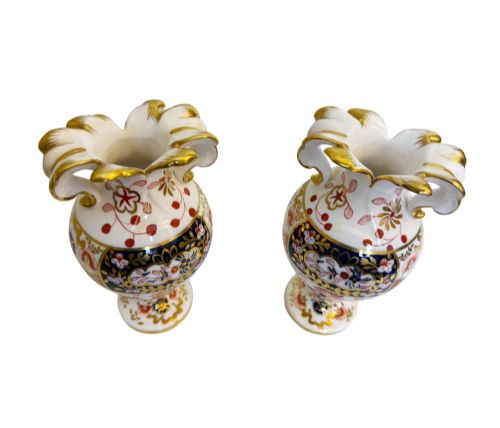
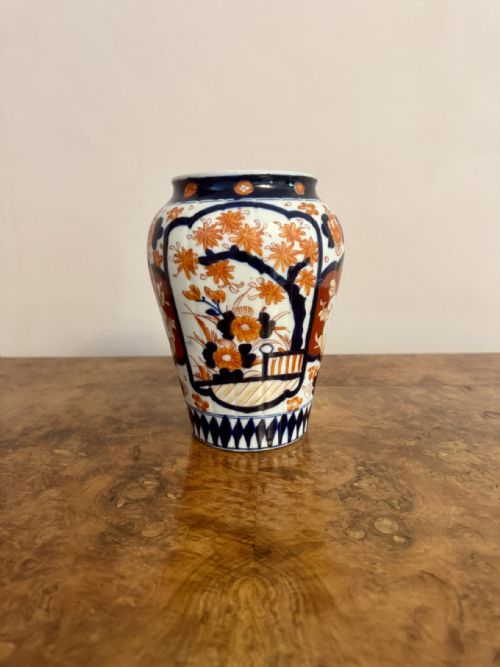
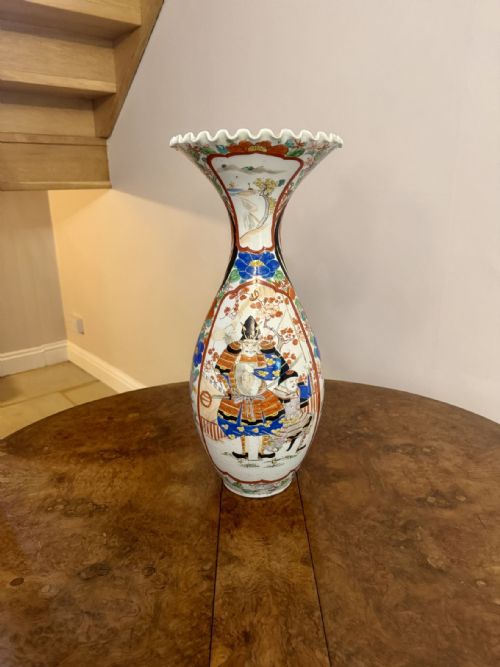
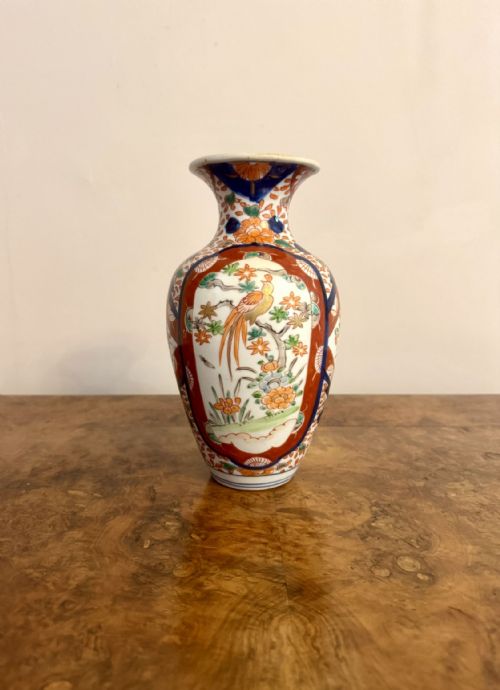
When searching for antique imari decorative vases, buyers encounter a diverse selection originating from both Japanese kilns and prominent English potteries. The items span the nineteenth century, the Edwardian era, and the Meiji period, taking forms such as baluster vessels, lidded ginger jars, floor-standing pieces, and twin-handled urns. Japanese examples include items from Arita and Fukagawa alongside nineteenth-century works, while English interpretations come from makers like Spode, Royal Crown Derby, and Mason's.
Most entries on this page consist of Japanese porcelain vessels decorated in the traditional palette, alongside British ironstone and porcelain adaptations. Pairs and garniture sets of three appear frequently alongside single floor vases and miniature bud vases. Buyers will find both covered jars and open vessels showing varying scales from small cabinet pieces to monumental proportions.
How they were made
The construction of these objects relies primarily on porcelain and ironstone bodies formed into shapes like hexagonal bodies, fluted surfaces, and twin-handled profiles. Potters shaped the clay by hand or moulded the ironstone before applying glazes and foundational underglazes.
Decoration involves enamel pigments combined with gold leaf, gilt, or gold gilding applied over the glaze. Artisans painted intricate patterns directly onto the ceramic surface, incorporating the characteristic palette associated with these historic workshops.
Listings feature pieces spanning the Georgian, Victorian, and Edwardian periods, alongside nineteenth-century Japanese Meiji production.
What varies in quality
Quality separates through the precision and complexity of the hand-painted enamel work and the crispness of the porcelain or ironstone moulding. Finer examples display meticulous brushwork in the gold leaf and enamel details, whereas simpler versions show more straightforward application.
Scale and form also distinguish the range, from standard bud vases to monumental floor-standing pieces and balanced pairs or garnitures. The execution of specific shapes, such as fluted bodies or hexagonal profiles, requires greater skill from the potter.
Royal Crown Derby·Spode·Stevenson and Hancock·Masons Ironstone·Fukagawa
The Antique Imari Decorative Vases Glossary
- Imari palette
- A traditional decorative colour scheme typically featuring underglaze blue, iron red, and gilt highlights. This palette unites both Japanese originals and British adaptations from the eighteenth and nineteenth centuries.
- Garniture
- A set of three or more matching vases or jars designed to be displayed together on a mantelpiece or sideboard. These sets frequently appear as a trio of shaped vessels.
- Ironstone
- A heavy, durable type of ceramic developed in the nineteenth century by English potteries as a robust alternative to porcelain. It readily accepts transfer printing and enamel hand-painting.
- Ginger jar
- A covered ceramic vessel originally used for storing spices, later adapted purely for decorative display. They often feature domed lids and rounded bodies.
- Meiji period
- A historic Japanese era spanning from 1868 to 1912, noted for porcelain production destined for export markets. Works from this time often exhibit detailed hand-painted designs.
Antique Imari Decorative Vases: Frequently Asked Questions
How do I identify Japanese imari from English pieces?
Japanese examples usually originate from Arita or the Meiji period, utilising specific porcelain bodies and traditional hand-painted motifs. English interpretations often employ ironstone or bone china produced by factories such as Spode or Derby.
Examining the base marks and the texture of the ceramic body helps determine the geographic origin. British pieces frequently bear maker stamps or pattern numbers specific to Staffordshire or Derby potteries.
Were these vases made for use or display?
Many of these vessels, particularly lidded ginger jars and large floor vases, served both functional storage purposes and decorative display roles in period interiors. Covered jars held dry goods or potpourri before becoming purely ornamental objects.
As interior tastes shifted through the Georgian, Victorian, and Edwardian eras, matching pairs and garnitures became centrepieces for mantelpieces and large reception rooms.
How should I clean antique porcelain and ironstone?
Dusting these decorative surfaces gently with a soft, dry brush prevents the accumulation of dirt without risking the delicate enamel and gold leaf decorations. Avoid submerging older pieces in water, particularly those with delicate overglaze gilding.
Professional conservation advice is recommended for pieces showing historic cracks or repairs to ensure the stabilizing materials remain undisturbed during routine maintenance.
What periods do these decorative vases represent?
The selection spans from the eighteenth century through the nineteenth century, including the Victorian and Edwardian eras alongside the Japanese Meiji period. Pieces from the 1880s and 1900s appear frequently across the listings.
Dating relies on stylistic markers, historical pattern numbers, and specific ceramic compositions associated with particular decades of production in Britain and Japan.