


Japanese Imari Covered Vases
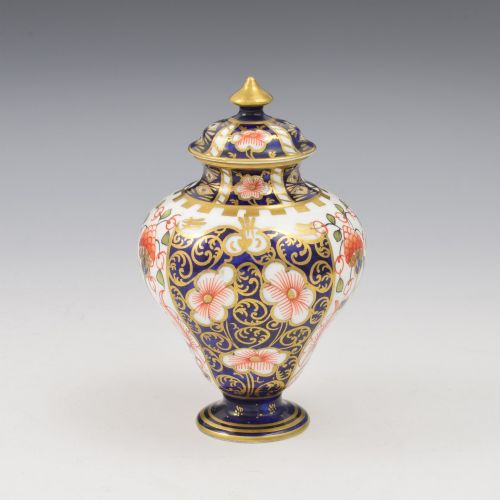
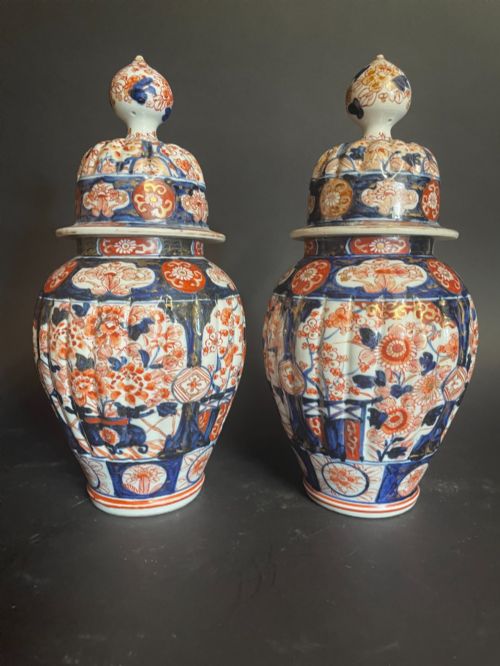
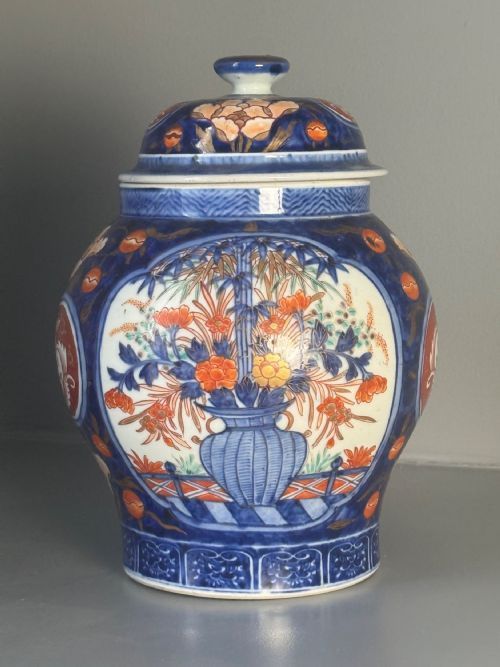
These japanese imari covered vases bring together rich porcelain, iron-red enamel and cobalt blue, offering a striking focal point for any interior.
Japanese Imari Covered Vases
Japanese imari covered vases are ceramic vessels designed with matching lids, intended for display or storage. When searching this phrase, collectors encounter forms ranging from ginger jars and baluster vases to large decorative urns.
The pieces appearing on this page span several centuries, with a strong representation of nineteenth-century examples alongside eighteenth-century works and later nineteenth-century Meiji period productions. Makers and workshops across Japan and Europe produced these designs, including Arita kilns and later European ceramicists working in the Imari style.
Objects take various shapes, including octagonal profiles and tall vessels standing on stands. Many pieces incorporate covers or lids that complete the silhouette of the porcelain body.
Materials and Craftsmanship
Makers formed these vessels using high-fired porcelain decorated underglaze in cobalt blue and overglaze in iron-red enamel. Artisans frequently added gold leaf, gilding, or gilt accents to highlight specific motifs across the surface.
Techniques relied on traditional potting methods developed in Arita and refined through the Edo and Meiji periods. Pigments and glazes were applied by hand before firing in kilns to fuse the colours to the ceramic body.
Materials recorded across the inventory include hard-paste porcelain, cobalt blue glaze, iron-red enamel, gold leaf, and ormolu mounts.
Factors That Determine Quality
Quality in these ceramics rests on the crispness of the hand-painted cobalt blue beneath the glaze and the precision of the iron-red and gilt details applied over it. Finer pieces display balanced compositions and carefully controlled firing without distortion in the porcelain body.
The handling of the form, particularly on large baluster shapes and octagonal vessels, indicates the skill of the potter. Weight, proportion, and the neat execution of the matching covers distinguish the best examples from simpler production pieces.
Royal Crown Derby·Arita Kilns·Samson
The Japanese Imari Covered Vases Glossary
- Imari
- A style of Japanese porcelain originating from Arita and exported through the port of Imari, traditionally characterised by a palette of cobalt blue, iron-red, and gold. This decorative approach spread to European factories in later centuries.
- Baluster
- A vase shape with a rounded body that tapers toward the base and swells near the lower middle section. It provides a stable and classic silhouette for lidded display vessels.
- Ginger Jar
- A globular or ovoid ceramic jar traditionally fitted with a domed lid. These vessels were originally made for storage and later valued as decorative objects.
- Ormolu
- Gilt bronze mounts applied to the base, rim, or handles of ceramic pieces. This decorative hardware appears on select antique objects to enhance their status.
Japanese Imari Covered Vases: Frequently Asked Questions
What were japanese imari covered vases used for?
These vessels served primarily as decorative garnitures or containers for spices and precious goods in domestic interiors. Their striking appearance made them centrepieces on mantelpieces and tables.
Over time, collectors valued them purely for their visual impact, displaying matched pairs or single large jars to add colour and pattern to a room.
How do I date a lidded imari vase?
Dating relies on examining the characteristics of the porcelain body, the tone of the cobalt blue, and the style of the overglaze enamels. Eighteenth-century pieces often show different potting weights and pigment mixtures compared to nineteenth-century Meiji period examples.
Comparing the painting style to documented pieces from Arita or European revival factories helps narrow down the period of production.
Are all these vases from Japan?
While the majority originate from Japanese kilns, particularly in the Arita region, European factories also produced imari style ceramics. Nineteenth-century French and English makers created imari pattern wares and painted vessels in the Edo manner.
Examining the paste, glaze characteristics, and any marks helps distinguish Japanese export porcelain from European imitations.
How should I display them at home?
Place large baluster jars and covered vases on sturdy furniture where their painted details can be seen clearly in natural light. Keeping pairs together on sideboards or mantels maintains their traditional decorative balance.
Ensure they sit away from heavy foot traffic to protect the covers and the overglaze gilt details from accidental knocks.