




Japanese Satsuma Pottery Vases
Japanese satsuma pottery vases are finely painted earthenware vessels decorated with intricate gilt and enamel figures, prized for their rich Meiji period artistry.
Japanese Satsuma Pottery Vases
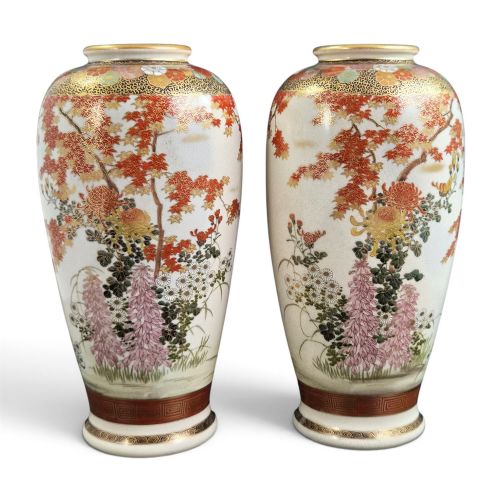
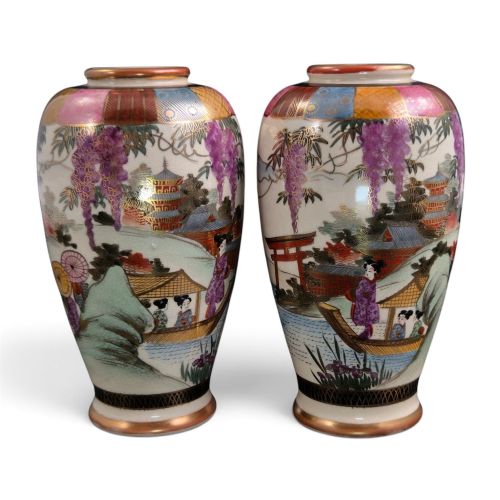
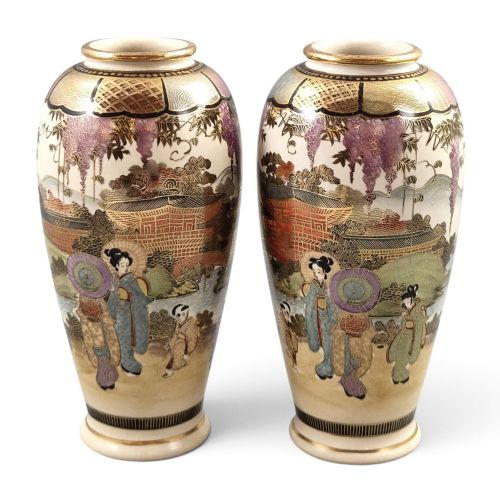
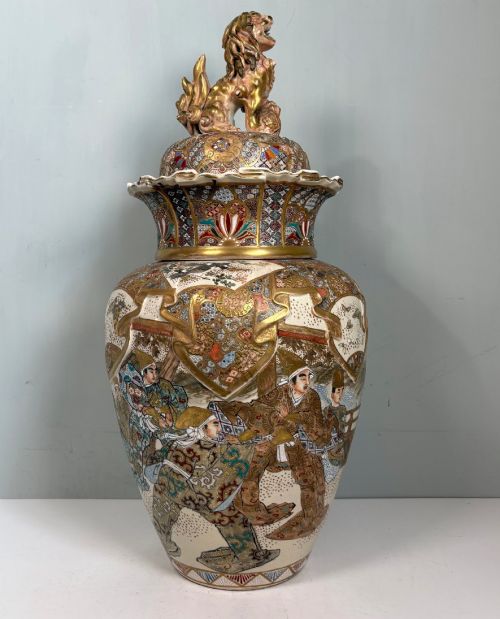
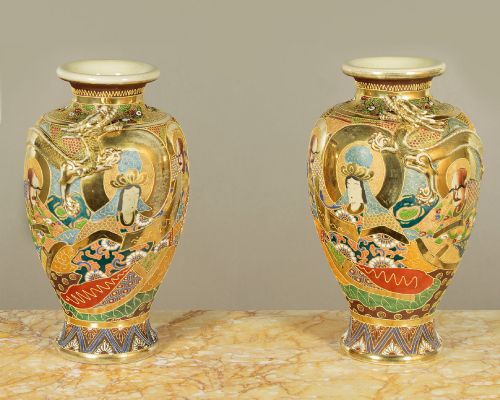
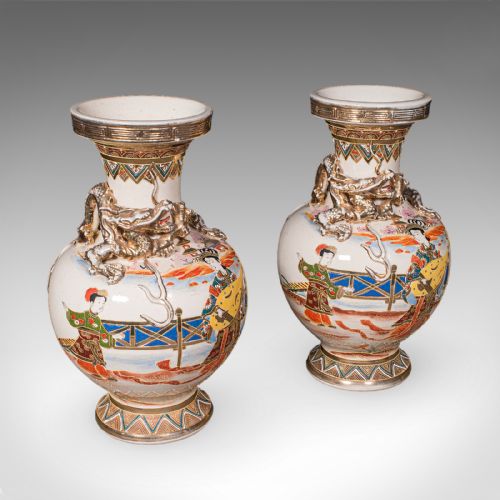
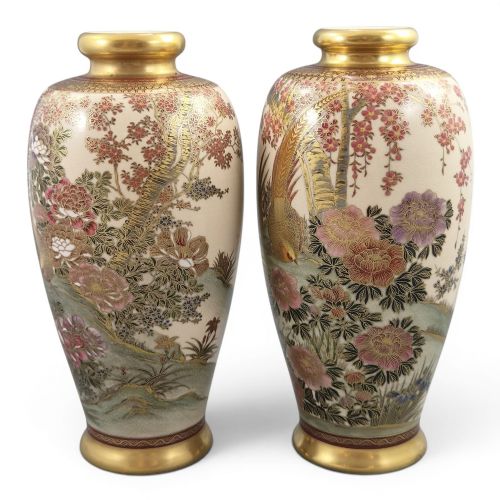
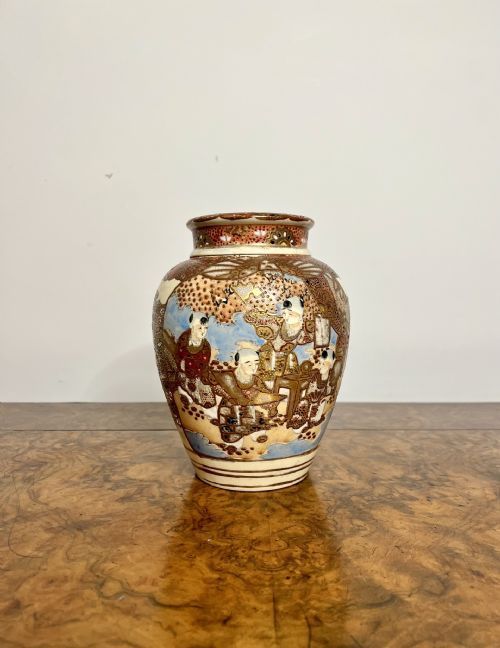
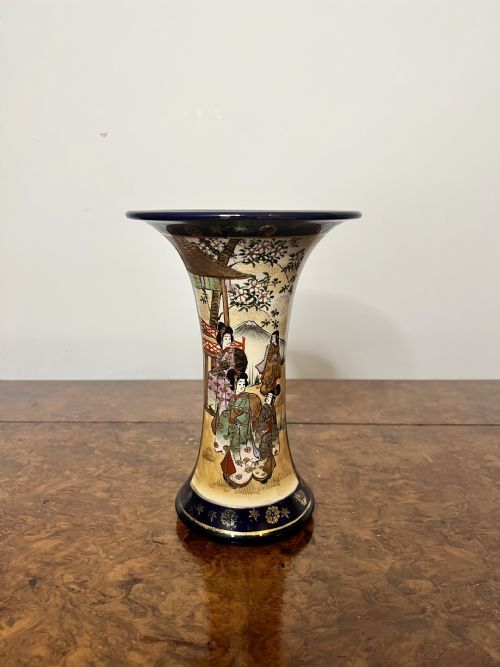
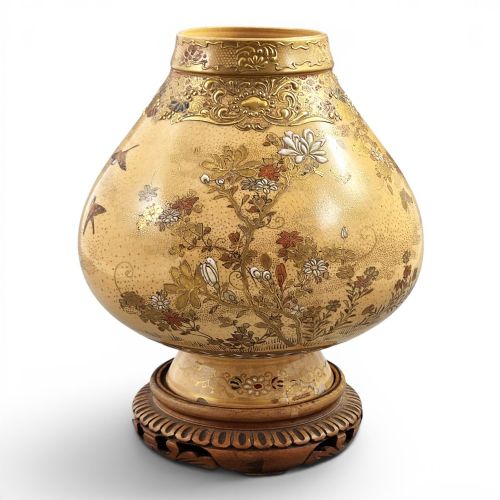
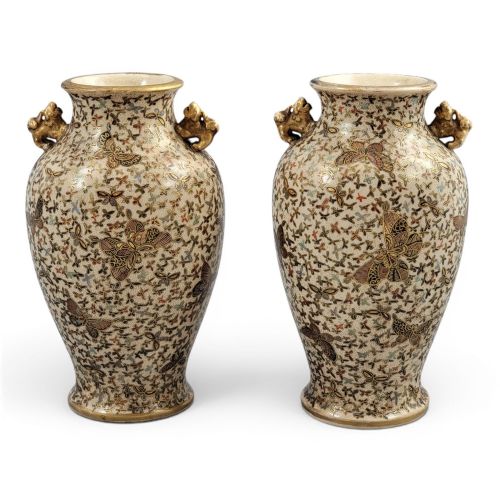
When you examine Japanese satsuma pottery vases, you are looking at earthenware vessels defined by their distinctive cream-coloured, crackle-glazed surfaces. These pieces typically display elaborate hand-painted scenes depicting court figures, arhats, landscapes, or butterflies.
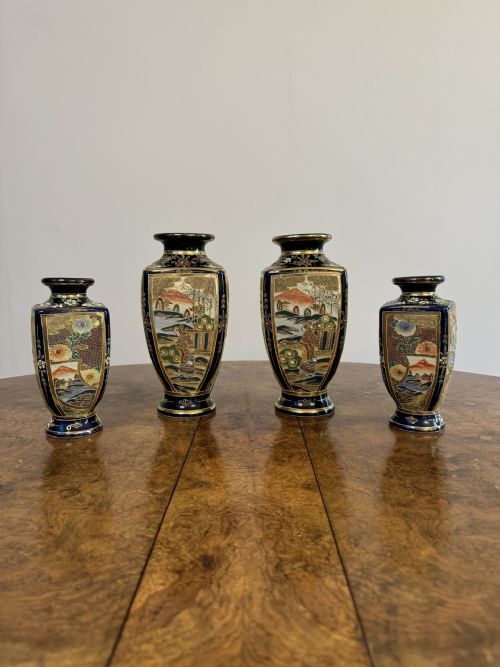
The objects on this page span from the late nineteenth century into the Taisho and Showa periods, capturing a transition from dense Meiji ornamentation to later decorative styles. Collectors most frequently encounter baluster shapes, hexagonal forms, and ginger jars alongside table lamps adapted from earlier bodies.
Originating primarily from major production centres such as Kyoto and Kobe, these vessels range from miniature cabinet pieces to monumental exhibition items. Each piece reflects the intricate export aesthetic developed for Western markets during the late Victorian and Edwardian eras.
How They Were Made
Makers formed these vessels from buff earthenware, applying a transparent crackle glaze that serves as the canvas for subsequent decoration. Artisans then built up complex compositions using polychrome enamels and raised gold leaf.
Techniques such as moriage were utilised to create tactile, relief-worked details on robes, borders, and floral motifs. Skilled painters executed minute brushwork, detailing facial expressions and garments with extraordinary precision under high-gloss finishes.
Object forms recorded on this page include baluster vases, ginger jars, tripod incense burners, and table lamps converted from decorative bodies.
What Varies in Quality
Quality in these vessels rests upon the discipline of the brushwork and the clarity of the enamel palette. Superior examples demonstrate remarkable control in miniature portraits and landscape perspective, avoiding the crowded monotony seen in lesser production.
The execution of the underlying crackle glaze and the purity of the gilt detailing further separate ordinary export wares from works associated with distinguished workshops like Kinkozan or makers such as Hododa. Weight, balance, and the crispness of signature cartouches complete the hierarchy.
Maruni Kobe·Shozan·Manpei·Kinkozan·Hotoda·Chosei·Nanzan·Seiko-en Chokei·Choshuzan·Hakusan·Tagawa
The Japanese Satsuma Pottery Vases Glossary
- Satsuma
- Earthenware pottery originating from Satsuma province, traditionally recognised by its ivory-coloured body and fine network of crackled glaze. This ceramic base received rich overglaze enamel and gold decoration.
- Moriage
- A decorative technique where slip is piped onto the ceramic surface before firing and painting to create raised, three-dimensional relief patterns. This method adds tactile depth to robes and floral borders.
- Meiji Period
- The era of Japanese history lasting from 1868 to 1912, characterised by rapid modernisation and intense ceramic production for export. Pieces from this time often feature elaborate polychrome and gilt scenes.
- Mon
- A Japanese heraldic badge or crest used to identify families or clans, frequently incorporated into the decorative borders of high-end ceramics. The Shimazu clan mon appears often on Satsuma wares.
- Koro
- A traditional Japanese incense burner, frequently modelled with tripod feet and a pierced cover, sometimes featuring guardian lion handles. These ceramic forms mirror the detailed painting style of contemporary vases.
Japanese Satsuma Pottery Vases: Frequently Asked Questions
What is Satsuma pottery?
Satsuma pottery is a type of Japanese earthenware featuring a distinctive ivory or cream-coloured body covered in a fine network of crackled glaze. Artisans decorated these surfaces with elaborate polychrome enamels and heavy gilding.
Originally produced for domestic use in southern Kyushu, the style evolved during the Meiji period into a major export ware designed to satisfy Western demand for highly detailed oriental art.
How do I identify Meiji period pieces?
Meiji period pieces are generally identified by their dense, meticulous painting style, featuring court figures, deities, or natural motifs executed in rich enamels and gold leaf. These items often bear artist signatures or workshop marks within painted cartouches on the base.
The historical context of the Japanese imperial opening during the late nineteenth century drove workshops to produce these complex, narrative-heavy decorative objects for international exhibition.
Were these vases made for use?
Most of these vessels served primarily as decorative display items in European and American drawing rooms rather than utilitarian flower containers. Their delicate earthenware bodies and elaborate gilt surfaces made them unsuited for holding water.
Many surviving examples retain original fitted boxes, indicating that households treated them as treasured art objects rather than everyday furnishings.