



Japanese Porcelain Centrepiece Bowl
A japanese porcelain centrepiece bowl brings striking colour and intricate hand-painted detail to a dining table or sideboard.
Japanese Porcelain Centrepiece Bowl
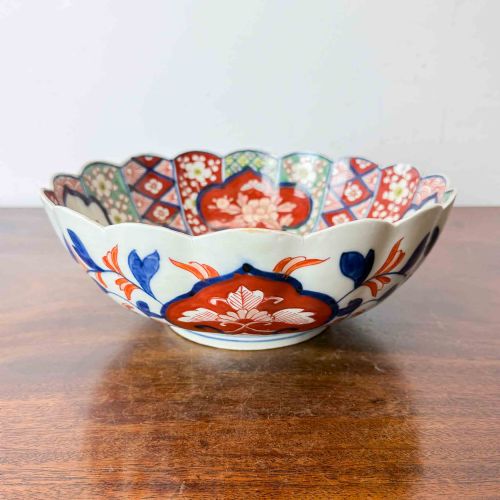
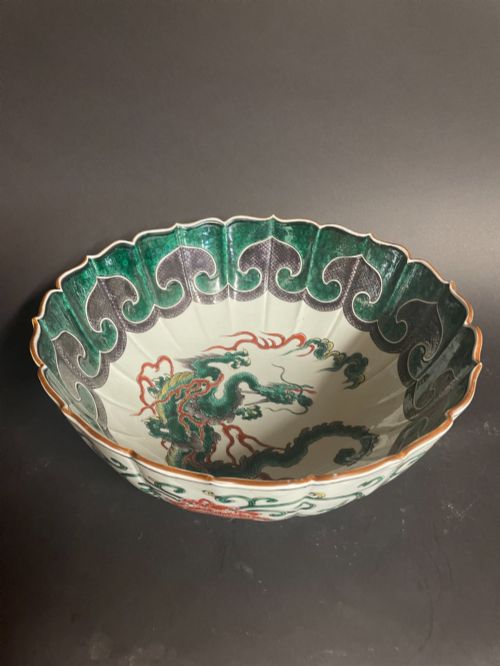
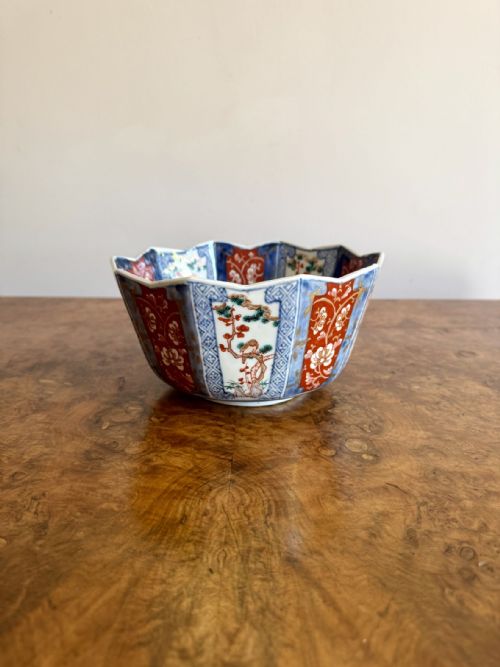
A japanese porcelain centrepiece bowl encompasses decorative vessels dating primarily from the nineteenth century and the nineteen hundreds, spanning the Meiji period and Edwardian export eras. These pieces take the form of large decorative bowls featuring scalloped edges and substantial proportions suited for central display.
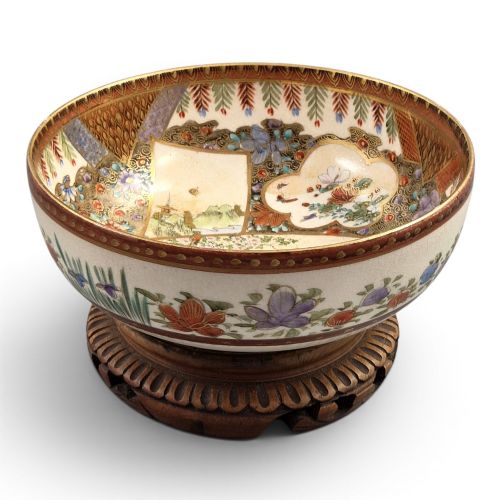
Buyers encountering this search phrase will most frequently meet Japanese Imari vessels alongside Satsuma and Arita wares. The selection balances traditional Imari palettes with finely painted Satsuma compositions and classic Arita forms.
Makers recorded in these pieces include named artists and studios such as Kozan, Ryuzan, and Kinkozan Kyoto, reflecting the high standard of export and domestic production during the Meiji period. Such vessels served both as functional decorative objects and as significant statements of interior styling.
Assessing quality and execution
Quality reveals itself in the precision and density of the hand-painted enamel work, cobalt blue depth, and the restrained application of gold leaf. Pieces bearing signatures from recognised workshops like Kinkozan demonstrate superior brushwork and finer potting.
The complexity of the decorative scheme, such as elaborate samurai battle scenes or dense millefleur patterns, distinguishes standard export items from monumental studio works. Overall condition of the glaze, enamel integrity, and the presence of original wood components further define the hierarchy of these bowls.
Moonlit samurai battles wage eternal war across nineteenth-century bowls while quiet millefleur blossoms keep the peace right beside them.
Kozan·Ryuzan·Kinkozan Kyoto
The Japanese Porcelain Centrepiece Bowl Glossary
- Imari
- A traditional Japanese style of porcelain featuring underglaze cobalt blue and overglaze iron red, gold, and other enamel colours. This style originated in the town of Arita and became immensely popular for export.
- Satsuma
- An earthenware type characterised by a crackle-glaze ivory body decorated with elaborate polychrome enamels and gilt. Satsuma bowls often depict figural scenes, warriors, or dense floral arrangements.
- Meiji Period
- The era in Japanese history lasting from eighteen sixty-eight to nineteen twelve, marked by extensive international trade and the production of high-quality export ceramics. Works from this period show exceptional technical skill.
- Arita
- The Japanese town renowned as the birthplace of Japanese porcelain production, where skilled potters utilised local clay deposits. Arita bowls form the foundation of many classical export traditions.
- Shimazu Mon
- The heraldic crest of the Shimazu clan, frequently found on Satsuma pottery produced in the Satsuma domain. It consists of a cross within a circle.
Japanese Porcelain Centrepiece Bowl: Frequently Asked Questions
How are japanese porcelain centrepiece bowls dated?
Dating relies upon stylistic markers, historical periods such as the Meiji era, and specific signature panels applied by artists and kilns. Examination of the glaze texture and cobalt blue characteristics also helps place the piece within the nineteenth century or around nineteen hundred.
Export records and stylistic evolution from Edo traditions provide further context for establishing the approximate age of each bowl.
What is the difference between Imari and Satsuma bowls?
Imari bowls utilise a hard porcelain body decorated in cobalt blue, iron red, and gilt, creating a vibrant and durable finish. Satsuma bowls feature an earthenware body with an ivory crackle glaze, serving as a canvas for detailed pictorial scenes.
Imari pieces tend to have geometric and floral patterns, whereas Satsuma works frequently portray samurai figures, historical battles, or dense botanical compositions.
How should these bowls be displayed at home?
These large decorative bowls function well as standalone centrepieces on dining tables, sideboards, or open display cabinets. Placing them away from direct sunlight helps preserve the delicate enamel colours and gold leaf highlights.
Some bowls are accompanied by custom wood stands, which elevate the piece and protect the unglazed base from surface friction.
What do artist signatures indicate on these pieces?
Signatures identify the maker, studio, or kiln responsible for painting and firing the vessel, such as Kinkozan or Ryuzan. These marks indicate production from prominent workshops during the Meiji period.
Signed pieces often reflect a higher level of artistic ambition and detailed brushwork compared to unmarked export items.