



Japanese Kutani Figure
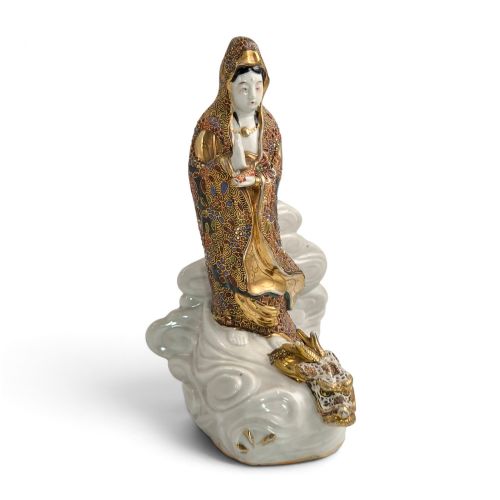
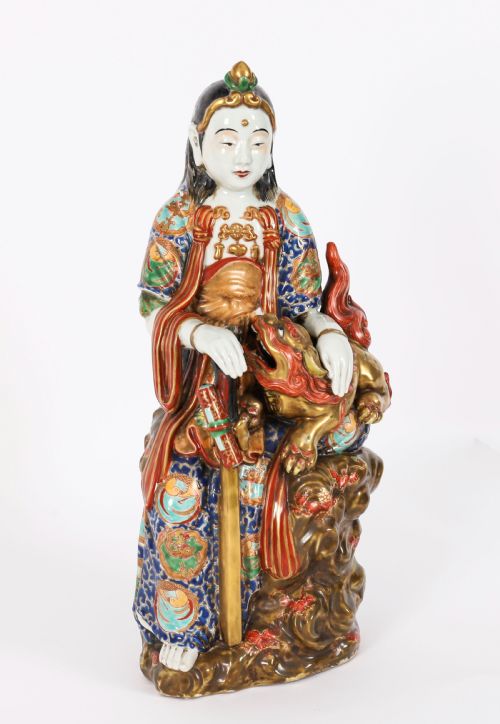
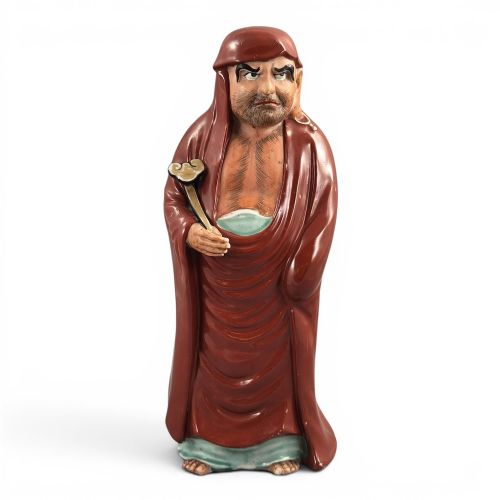
These Japanese kutani figure examples are porcelain sculptures rendered in polychrome enamel and gold leaf, offering collectors a traditional piece of Asian craftsmanship.
Japanese Kutani Figure
When you search for a japanese kutani figure, you are examining porcelain sculptures and figurines that represent deities, monks, animals, and traditional figures from Japanese history and mythology. The pieces on this page span the nineteenth century, the Meiji period, and the Edwardian era, showing both individual characters and seated triads.
You will most frequently encounter depictions of Kannon, the Goddess of Mercy, alongside figures of Daruma, Shishi lions, and historical personages like the god Jurojin. These ceramic works range from smaller desk figurines to large sculptures, often modelled with detailed robes, expressions, and attributes.
The aesthetic of these figures draws heavily on nineteenth-century Japanese design traditions, with specific crossover into Meiji and Taisho period output. They serve primarily as display objects that bring intricate ceramic modelling and painted detail into an interior space.
What varies in quality
The integration of gold leaf and the application of raised moriage work indicate the level of ambition in the workshop. Pieces that retain vibrant, unfaded gilding and balanced proportions demonstrate superior craftsmanship from their period of origin.
Japanese Kutani Figure Retail Price Guide 2026
Typical asking prices for japanese kutani figure among the pieces listed under this phrase on Sellingantiques today, from the lower quarter to the upper quarter. They describe what is for sale here now, not the wider market.
Listings feature porcelain figures spanning the nineteenth century, the Edwardian era, and the Meiji period.
The Japanese Kutani Figure Glossary
- Kutani
- A style of Japanese porcelain originating from the Kutani kilns, noted for its rich palette of enamels and extensive use of gold leaf. It defines much of the figurative and vase production seen from the nineteenth century onward.
- Meiji Period
- The era in Japanese history spanning from 1868 to 1912, characterised by the opening of trade and an explosion of decorative arts exported to the West. Many figurines on the market date from this productive phase.
- Moriage
- A ceramic technique where slip is piped onto the surface of the porcelain before firing to create raised, three-dimensional decorative patterns. It adds a distinct textural element to robes and background details.
- Polychrome Enamel
- Multi-coloured glass-based paints applied over the glazed porcelain body and fixed with a low-temperature second firing. These colours provide the primary visual narrative on figurative ceramics.
- Shishi
- A mythical guardian lion or dog common in Buddhist iconography, frequently modelled alongside deities or as an independent sculpture. They symbolize protection and strength in traditional Asian art.
Japanese Kutani Figure: Frequently Asked Questions
What is a kutani figure?
A Japanese kutani figure is a porcelain sculpture decorated with colourful enamels and gold leaf, depicting traditional deities, historical figures, or animals.
These pieces were produced primarily during the nineteenth century and the Meiji period, serving as decorative art objects.
How do I date a figure?
Dating relies on stylistic markers, garment details, and the characteristics of the porcelain body and enamel palette.
Pieces from the Meiji period often exhibit complex moriage work and refined gilding, whereas later Edwardian examples continue these traditional motifs.
Who do these figures represent?
Many sculptures portray Buddhist and mythological subjects such as Kannon, the Goddess of Mercy, or Daruma, the founder of Zen.
Other common subjects include traditional figures like the longevity god Jurojin, monks, and musicians.
Where should I display them?
These ceramic sculptures suit stable display surfaces away from direct sunlight to protect the enamel and gold leaf.
Placing them on a mantelpiece or within a cabinet allows the detailed brushwork and raised patterns to be viewed clearly.