




Japanese Incense Censer
A japanese incense censer brings ritual form and intricate metalwork or ceramic artistry directly into a room.
Japanese Incense Censer
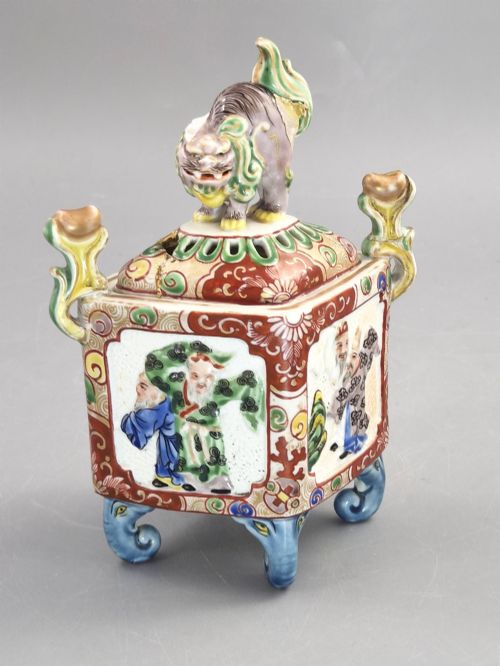
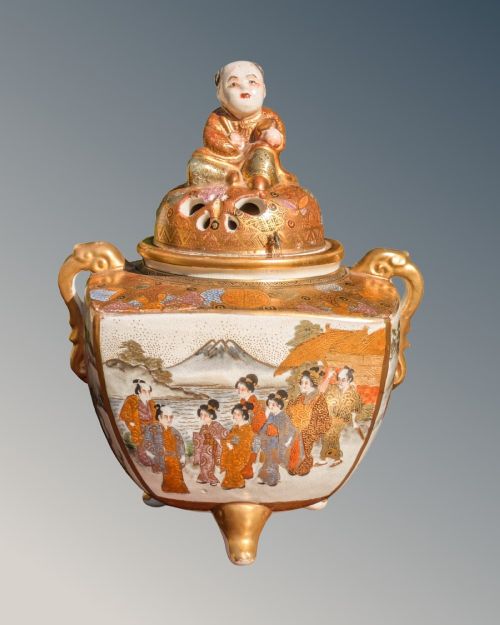
A japanese incense censer typically takes the form of a lidded vessel, often called a koro, designed to hold burning aromatics. You will regularly encounter pieces originating from the Edo and Meiji periods alongside later Taisho and Edwardian examples.
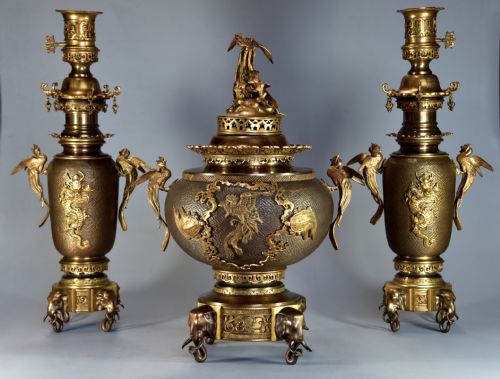
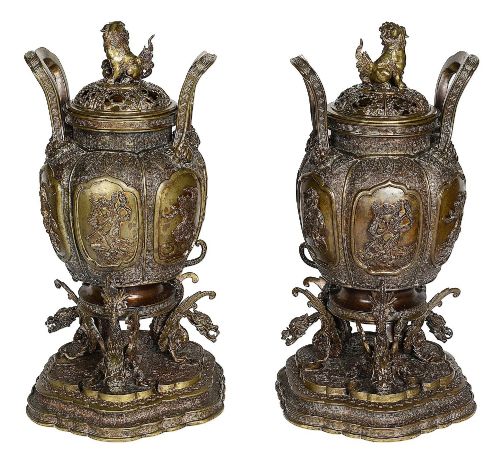
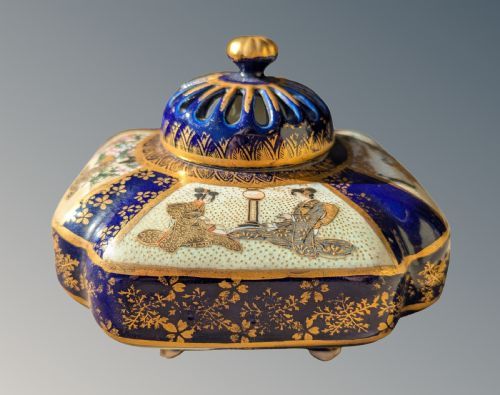
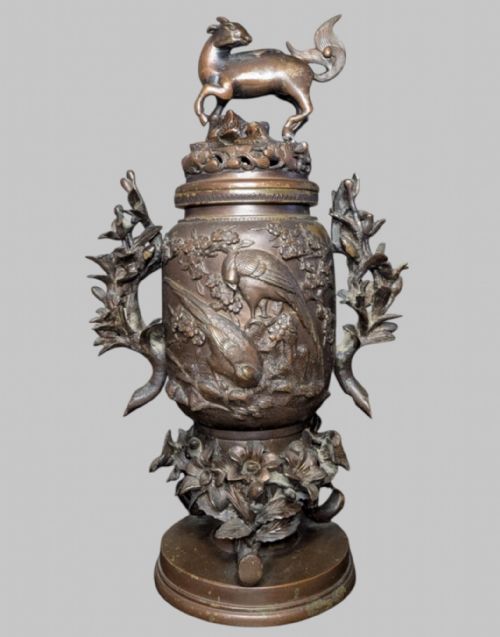
The selections span distinct ceramic traditions, including Satsuma, Kutani, Imari, and Hirado porcelain and earthenware. Alongside these ceramics, metalwork vessels in bronze appear frequently, featuring figural finials and sculptural feet.
Materials and Technique
Casting forms the basis of metal examples, utilising bronze sometimes enriched with silver, gold leaf, gilt, or patination. Artisans then apply detailed chasing and sculpting to shape elements such as dragons, lions, and elephant head feet.
Ceramic pieces combine hand-thrown or moulded earthenware and porcelain bodies decorated with enamel pigments and gilding. Cloisonné enamel techniques also emerge, fusing vitreous enamel within wire compartments on metal foundations.
Several bronze vessels manage to disguise themselves as floating vessels, taking the form of a hanging boat or a treasure ship.
Evaluating Craftsmanship
The distinction between tiers rests upon the precision of the modelling and the fineness of the surface decoration. Hand-chiselled bronze details and carefully painted polychrome Satsuma enamels indicate superior workshop output.
Structural complexity also dictates standing, particularly where vessels incorporate reticulated panels, articulated lids, or complex sculptural elements like hanging boat shapes and treasure ships.
Kinkozan·Kizan·Kotobuki do·Shizan
The Japanese Incense Censer Glossary
- Koro
- A traditional Japanese incense burner, usually fitted with a cover and resting on feet. These vessels serve both practical burning purposes and display functions.
- Satsuma
- A type of Japanese earthenware featuring a crackle-glaze finish, typically decorated with intricate polychrome enamels and gilding. Kyoto workshops produced notable examples during the Meiji period.
- Cloisonné
- A metalwork technique where flat wires form compartments on a surface, which are subsequently filled with enamel paste and fired. This method creates geometric or pictorial motifs.
- Finial
- An ornamental ornament attached to the top of a censer lid. Sculpted animal forms frequently serve this decorative purpose.
Japanese Incense Censer: Frequently Asked Questions
How do I date a bronze censer?
Dating relies on stylistic markers, patination characteristics, and manufacturing techniques recorded across Edo and Meiji period examples. Earlier pieces often display archaic forms, while late nineteenth-century works frequently show elaborate casting.
Consulting signature panels or workshop marks, where present, helps narrow the production window.
Where should I place a censer at home?
These vessels suit prominent display surfaces such as mantelpieces, sideboards, or low tables where their detailed craftsmanship remains visible. Placing them away from heavy foot traffic protects delicate finials and protruding feet.
They function well as standalone decorative objects or as part of larger garniture sets.
How do Satsuma and Kutani differ?
Satsuma wares utilise an earthenware body covered in a characteristic ivory-coloured crackle glaze, painted with detailed enamel designs and gilding. Kutani pieces typically employ porcelain bodies with distinct iron-red and green palettes.
Both styles emerged prominently during the Meiji period but maintain separate aesthetic traditions.