


Meiji Bronze Burner
These Japanese bronze burners combine animal forms and rich metallic inlays to bring historical metalwork into modern interiors.
Meiji Bronze Burner
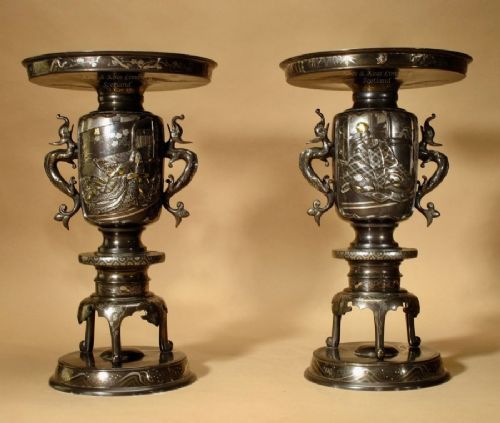
When searching for a meiji bronze burner, collectors encounter vessels designed for burning incense during the late nineteenth and early twentieth centuries. These pieces originate primarily from the Japanese Meiji period, reflecting the metalworking traditions of that era.
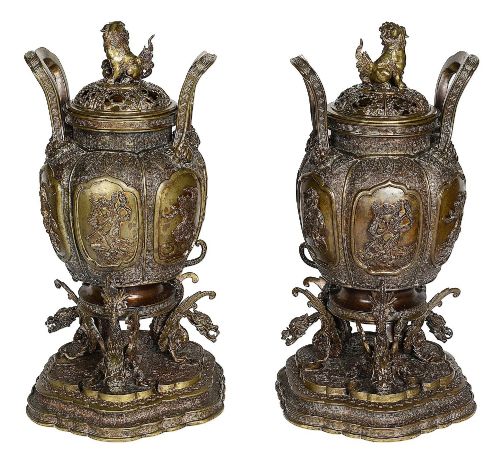
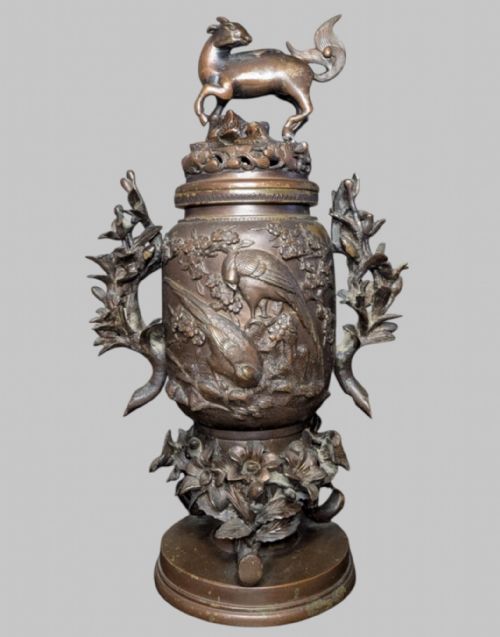
The forms vary widely from lidded urns and censer bowls to sculptural representations of temple lions, kirin, and aubergines. Many examples adopt traditional shapes while incorporating animal finials or figural details.
In addition to standard incense burners, related forms such as hanging boat koro, vases, and jardinières appear across the listings, showing the versatility of metalwork from this period.
How they were made
Craftsmen utilised bronze as the primary structural material, often enhancing the surface with gold inlay, silver inlay, and parcel-gilt details. These metallic accents highlight motifs such as dragons, peonies, and crests against the darker bronze body.
Enamel and earthenware also contribute to the construction, particularly in cloisonné pieces where coloured enamels fill wire compartments on the metal surface. Cord details occasionally accompany hanging boat vessels, adding texture to the suspension.
Several bronze burners take the surprising shape of an aubergine, transforming an ordinary vegetable into an exotic nineteenth-century incense vessel.
What varies in quality
The integration of mixed metals, such as contrasting gold and silver highlights on the bronze surface, separates standard production from exceptional works. Signed or crest-bearing items often demonstrate a higher level of workshop execution.
Masahiko Katori·Daimei Noritoku·Kizan
The Meiji Bronze Burner Glossary
- Koro
- The traditional Japanese term for an incense burner, usually fitted with a pierced cover to allow scented smoke to escape. These vessels can take the form of simple bowls or complex animal figures.
- Shishi
- A mythical temple lion frequently depicted guarding the lid or sides of incense burners. This protective creature appears with stylized curls and energetic postures.
- Cloisonne
- A technique where enamel is applied within wire compartments soldered to a metal base. This method creates colourful decorative patterns across the surface of the vessel.
- Finial
- The ornamental ornament attached to the top of a lid. On these burners, finials often take the shape of animals, fruit, or symbolic figures.
Meiji Bronze Burner: Frequently Asked Questions
What is a koro?
A koro is a traditional Japanese incense burner designed with a secure base and a pierced lid. It serves to diffuse fragrance while acting as a decorative object.
These vessels range from plain censer bowls to elaborate animal sculptures incorporating mythical beasts.
How do I date a bronze burner?
Dating relies on stylistic markers from the Meiji period, nineteenth-century manufacturing techniques, and occasional artist signatures. Materials like gold inlay and cloisonne enamel also point to specific eras.
Examining the casting quality and surface wear helps distinguish late nineteenth-century pieces from later reproductions.
Where were these burners used?
These burners were placed in temples, domestic reception rooms, and scholar spaces to burn aromatic woods and incense. Their sculptural designs made them display pieces even when not in active use.
Larger floor or table urns anchored interior decoration schemes in both Japan and Western export markets.
What animals appear on burners?
Common animal motifs include temple lions, kirin, quails, elephants, and aubergines. Each creature carried traditional symbolic meanings related to protection, fortune, or nature.
Sculptors integrated these figures directly into the lid finials or shaped the entire vessel around the animal's form.