


Japanese Imari Porcelain Set
A Japanese imari porcelain set brings vibrant cobalt and iron red panels to a room, offering striking contrast and historic character.
Japanese Imari Porcelain Set
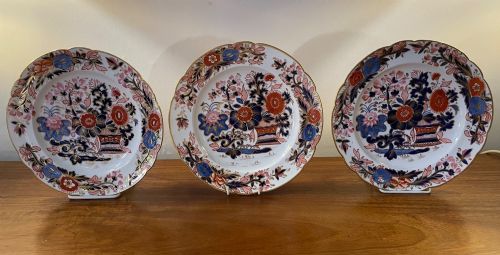
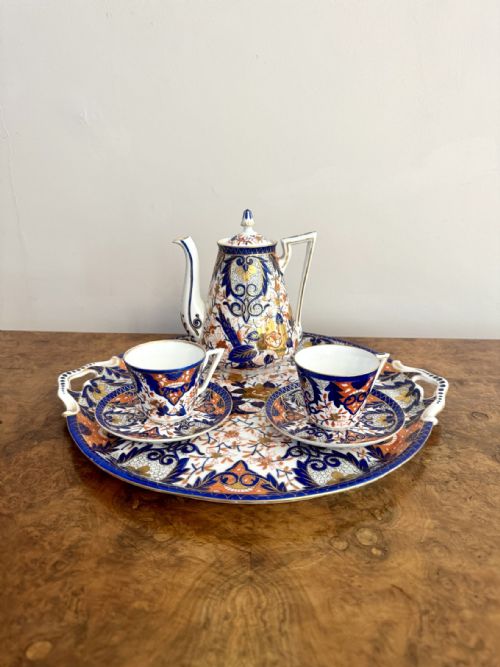
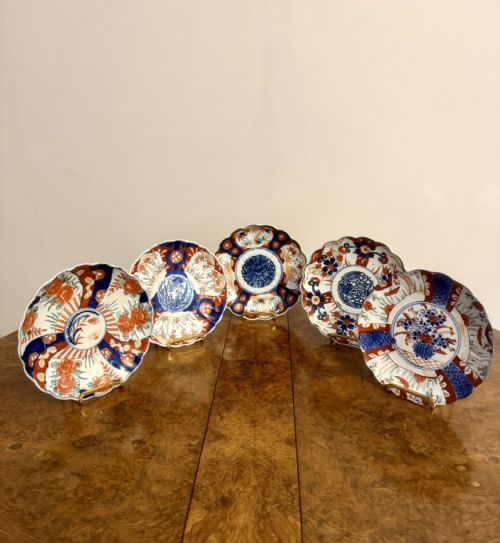
When searching for a japanese imari porcelain set, collectors encounter items spanning the eighteenth, nineteenth, and early twentieth centuries. These collections primarily comprise matching plates, dishes, coffee sets, and vases decorated in the traditional palette.
The objects originate from various periods including the Edo and Meiji eras, alongside European interpretations styled in the Regency, Victorian, and French Rococo Revival manners. Sets often feature groupings of three to fourteen matching pieces.
Vases appear as garnitures or lidded trios, while plates and dishes are grouped in sets of four, five, six, or seven. Alongside purely Japanese works, the selection includes British earthenwares adopting the same distinctive palette.
How they were made
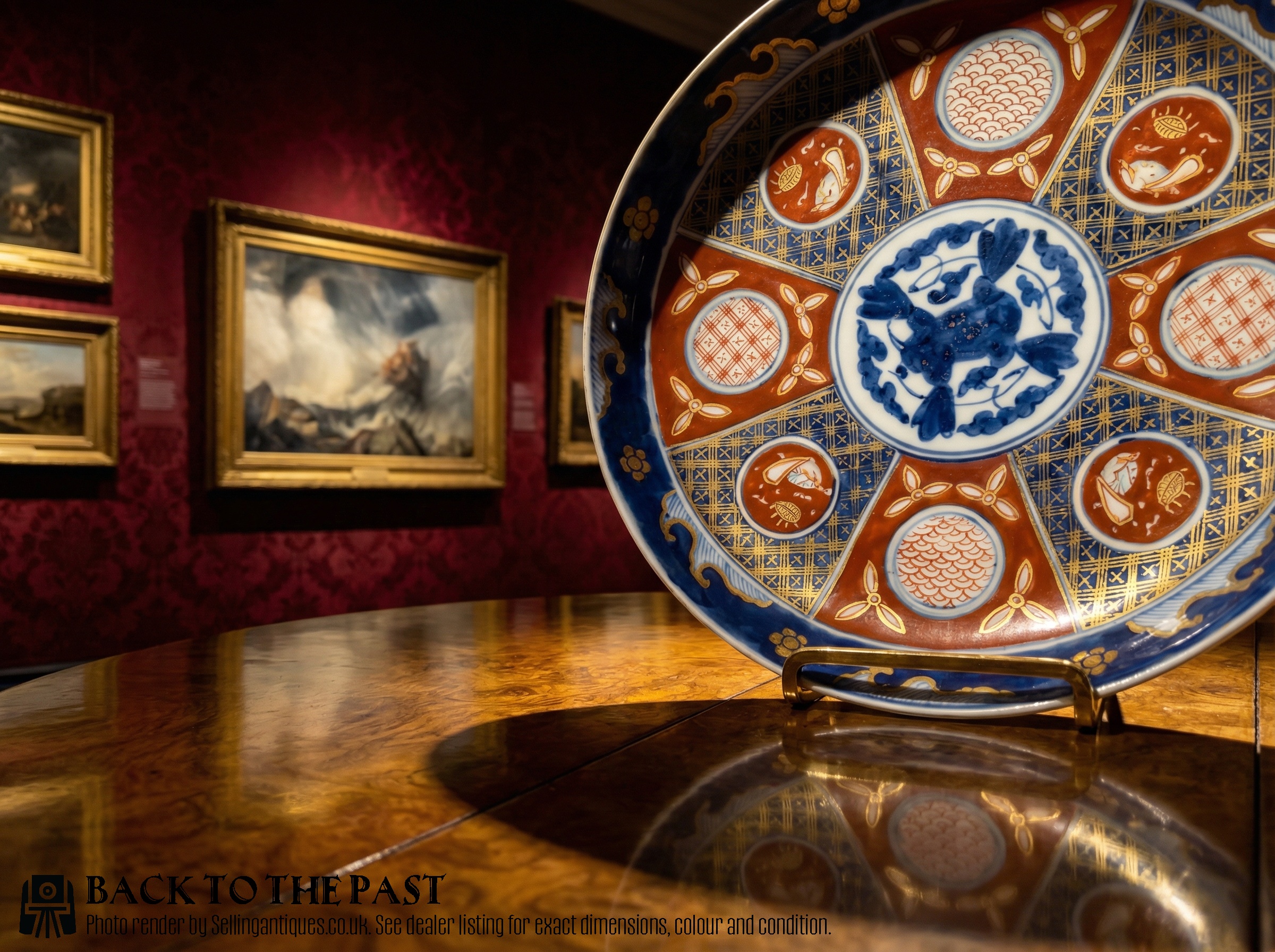
Ceramics are formed from porcelain or earthenware and finished with a hard glaze. Cobalt blue is painted beneath the glaze before firing, while iron red and other enamels are applied over the glaze.
Gold leaf and gilding are frequently added to highlight intricate panel designs. Some nineteenth century European examples incorporate cast ormolu mounts to frame the ceramic components.
Listings include porcelain and earthenware pieces decorated in the Imari palette across the eighteenth, nineteenth, and early twentieth centuries.
What varies in quality
The crispness of the underglaze cobalt painting and the precision of the overglaze enamel work dictate the visual impact of a set. Finer examples maintain consistent control across every piece in a multi-item grouping.
The integrity of the gilding and gold leaf ornamentation contributes significantly to the overall presence. Uniformity in shape and matching decorative motifs across larger collections distinguish superior sets from assembled groups.
The Japanese Imari Porcelain Set Glossary
- Imari palette
- A traditional decorative scheme dominated by underglaze cobalt blue, iron red, and white, often accented with gold. This distinct combination creates the high contrast characteristic of the style.
- Garniture
- A set of matching vases or ornamental vessels designed to be displayed together on a mantelpiece or cabinet. They typically consist of three or five graduated pieces.
- Ormolu
- Gilt bronze mounts applied to furniture, clocks, and porcelain in European decorative schemes. It provides a heavy metallic contrast to the ceramic body.
- Underglaze
- Pigment applied to the ceramic body before the glaze is fired, protecting the colour beneath a glassy layer. Cobalt blue is the most common underglaze colour found on these wares.
- Meiji period
- The era of Japanese history lasting from 1868 to 1912, corresponding with significant production of export ceramics. Works from this time often display meticulous attention to pattern and form.
Japanese Imari Porcelain Set: Frequently Asked Questions
What is an Imari palette?
An Imari palette refers to the traditional colour combination of underglaze cobalt blue and iron red, frequently enriched with gold leaf. This striking triad defines the visual identity of these ceramics.
The style originated in Japan and was later emulated by European potteries eager to capture the same decorative intensity.
How were garniture sets displayed?
Garniture sets of three or more vases were traditionally placed along mantelpieces or atop large pieces of furniture. They served as prominent decorative centerpieces in formal rooms.
The matching vessels created a sense of symmetry and balance in period interiors.
What are Black Ship plates?
Black Ship Imari plates feature specific iconography relating to Western trading vessels arriving in Japan. This historical imagery marks a distinct subcategory within nineteenth century production.
Collectors prize these pieces for their narrative connection to international trade history.
Are all these sets made in Japan?
While the majority of pieces originate from Japanese kilns during the Edo and Meiji periods, the selection also includes European items. British makers produced wares using the Imari palette, and French makers mounted Japanese porcelain in ormolu.
Each regional variation brings distinct stylistic elements to the overall grouping.