



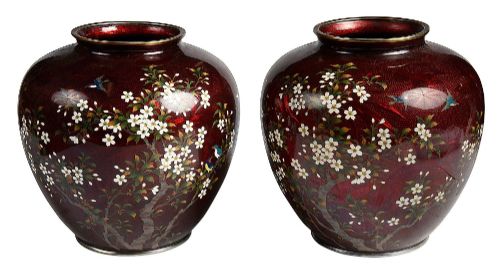


Japanese Cloisonne Vessel
A Japanese cloisonne vessel brings tactile depth to a room through intricate wirework and vitreous enamel.
Japanese Cloisonne Vessel
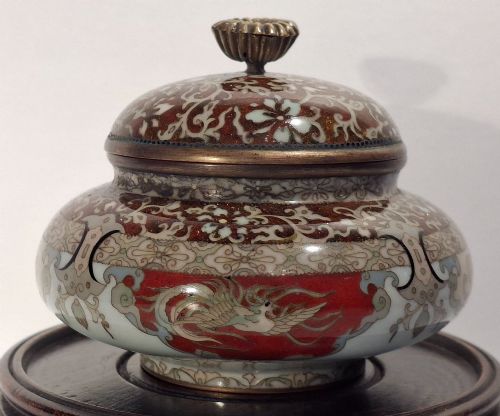
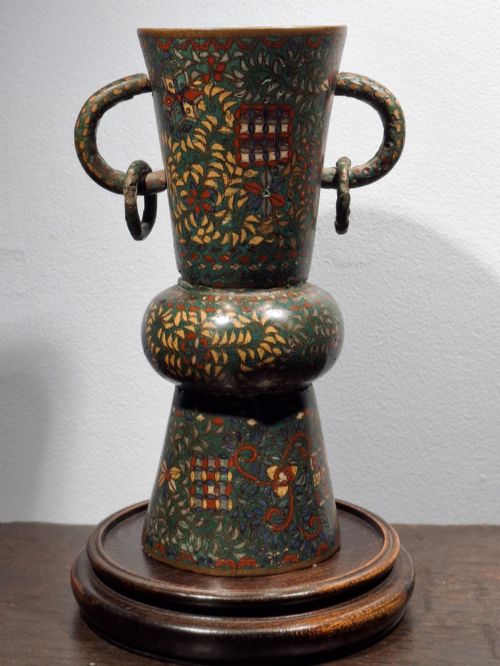
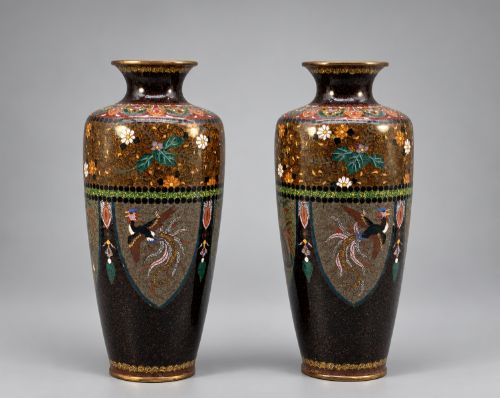
When you search for a Japanese cloisonne vessel, you encounter a range of forms spanning vases, ginger jars, lidded bowls, incense burners, and sake kettles. These objects emerge primarily from the nineteenth century, encompassing the Edo and Meiji periods, alongside later Showa examples.
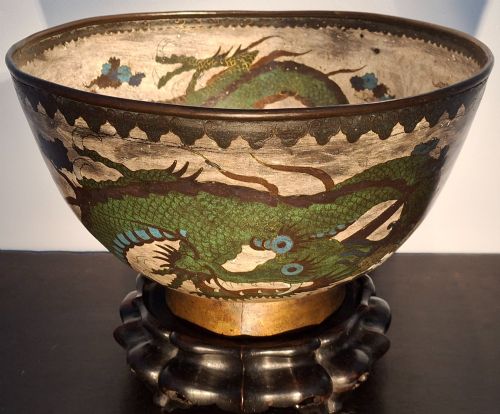
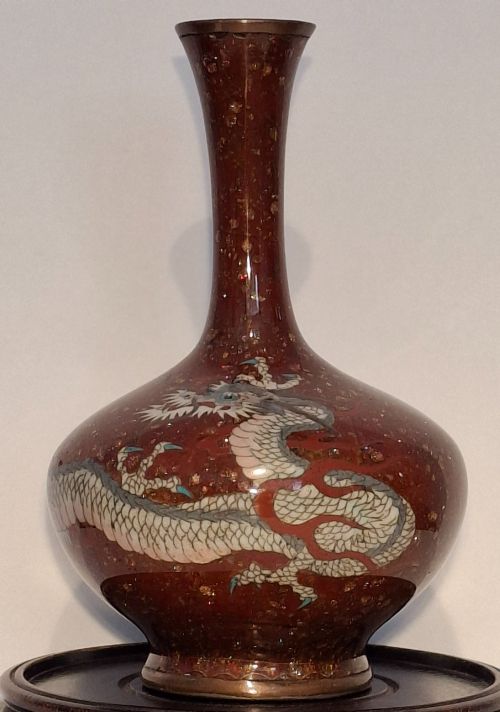
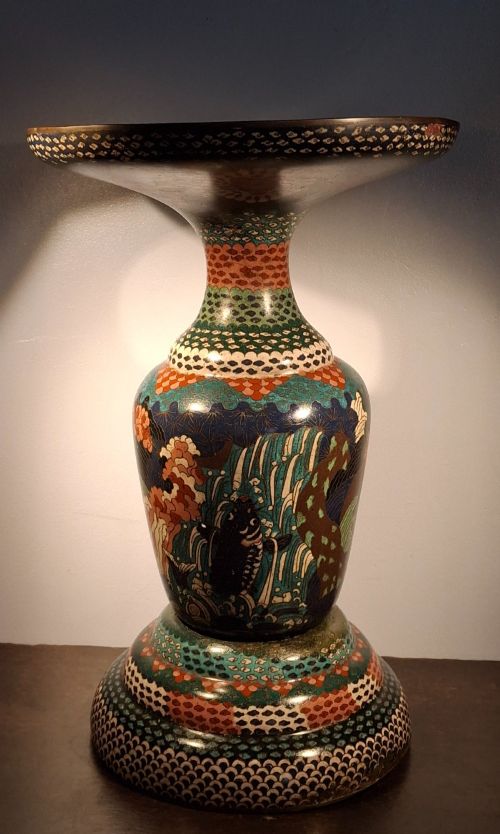
The pieces on this page include large temple water dispensers, hanging boat koro, and sugar bowls alongside standard decorative vessels. You are most likely to meet nineteenth-century vases and bowls decorated with birds, dragons, and koi fish.
Forms vary from monumental temple pieces reaching sixty centimetres and upwards to smaller table cups, lamps, and lidded jars. Each piece reflects the functional and decorative shifts across Meiji production and earlier Edo traditions.
Materials and construction
Metal forms of copper, bronze, brass, and cast iron serve as the foundational body for these vessels, providing rigid support for the delicate surface work. Artisans shape these metals into jars, vases, and censer bodies before applying wire partitions.
Fine metal wires soldered to the body create compartments, known as cloisons, which are subsequently filled with coloured enamel pastes. Firing fixes the vitreous enamel within the cellular network, after which the surface is polished smooth.
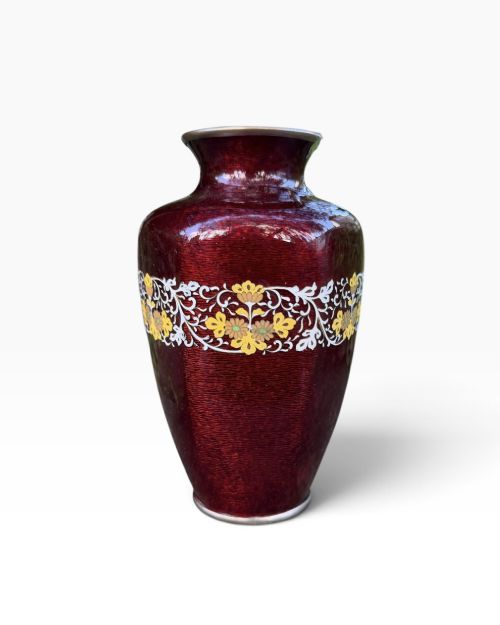
Specialised variations utilise silver foil beneath transparent enamel, or omit the metal backing entirely to produce translucent plique-a-jour panels resembling miniature stained glass.
Japanese Cloisonne Vessel Retail Price Guide 2026
Typical asking prices for japanese cloisonne vessel among the pieces listed under this phrase on Sellingantiques today, from the lower quarter to the upper quarter. They describe what is for sale here now, not the wider market.
Listings feature copper, bronze, and brass bodies decorated with Champleve and standard cloisonne enamel across the nineteenth and twentieth centuries.
Distinguishing quality in cloisonne
The refinement of the wirework dictates the primary tier of quality, where thinner, perfectly uniform wires denote superior control and patience by the maker. Irregular cell spacing or heavy, clumsy metal lines indicate standard commercial output.
Clarity and consistency in the coloured enamels separate masterworks from ordinary pieces, with top-tier examples showing even tones free from pitting, cloudiness, or bubbling. The complexity of the pictorial subject, such as detailed dragons or koi scales, further elevates the piece.
Signature plaques and maker marks provide evidence of individual artistry, separating unsigned factory items from authenticated studio pieces produced during the height of the Meiji period.
Tamura Yukio
The Japanese Cloisonne Vessel Glossary
- Cloisonne enamel
- A decorative metalwork technique where flat metal wires form cells that hold coloured enamel paste. These cells are fired and polished to create intricate patterns across the vessel surface.
- Champleve
- An enamelling method where troughs or cavities are carved directly into the thick bronze or brass body to hold the enamel. This technique results in bolder outlines compared to wired cloisonne.
- Koro
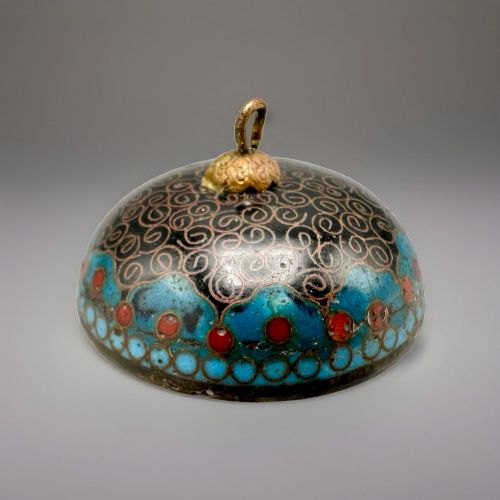
- A traditional Japanese incense burner, often featuring a lidded bowl or hanging boat form supported on legs. These vessels frequently incorporate delicate pierced covers to release fragrance.
- Plique-a-jour
- An enamel technique executed without a backing metal, allowing light to shine through the translucent coloured glass cells. It resembles cellular stained glass adapted for small vessels.
- Totai shippo
- A specific technique involving wirework applied over a non-metal core, such as a ceramic or wooden body, mimicking tree bark or alternative textures beneath the enamel.
Japanese Cloisonne Vessel: Frequently Asked Questions
How do I date a Japanese cloisonne vessel?
Dating relies on stylistic shifts, metal types, and manufacturing techniques recorded across the Edo, Meiji, and Showa periods. Earlier nineteenth-century pieces often feature heavier bronze bodies and distinct champleve or muted cloisonne palettes.
Later Meiji production displays extreme technical precision with fine silver wires and pictorial realism, while mid-twentieth-century Showa examples carry specific artist signatures or distinct modernist traits.
What is the difference between cloisonne and champleve?
Cloisonne relies on thin metal wires soldered onto a smooth metal base to outline the design cells before enamel is added. This creates fine, geometric, or pictorial linework across the vessel.
Champleve involves carving or casting the design directly into a thick bronze or brass body to create recessed trenches for the enamel, producing heavier and more robust borders.
How should I display a cloisonne vessel at home?
Place vessels where natural light can strike the enamelled surface, highlighting the subtle colour gradations within the wire cells. Avoid direct, intense sunlight to protect the vitreous enamel over extended periods.
Ensure stability by placing heavier bronze or copper pieces on secure, level surfaces away from high-traffic edges, particularly when displaying tall vases or large temple jars.