





Japanese Dragon Vase
A Japanese dragon vase brings sculptural bronze, earthenware and porcelain from the Meiji period and later into a room with striking mythic detail.
Japanese Dragon Vase
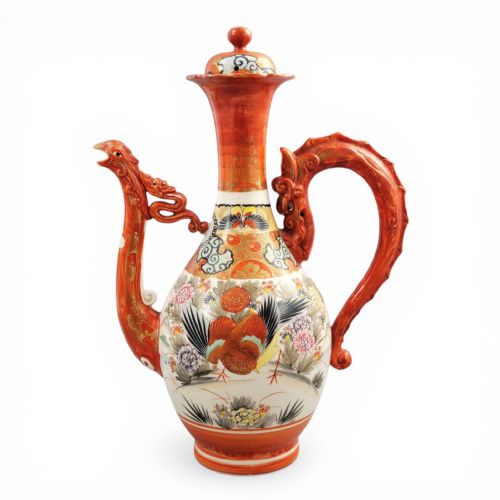
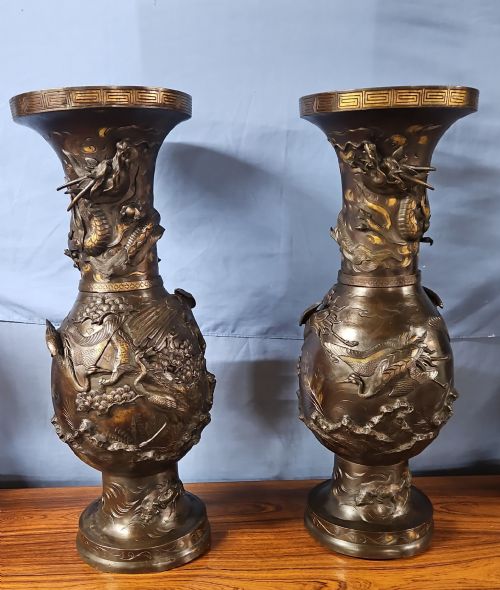
When you search for a japanese dragon vase, you encounter a variety of forms ranging from heavy bronze vessels and garden urns to ceramic baluster vases and porcelain ewers. The majority of these pieces originate from the Meiji period and the decades spanning the turn of the twentieth century, reflecting a rich history of decorative metalwork and pottery.
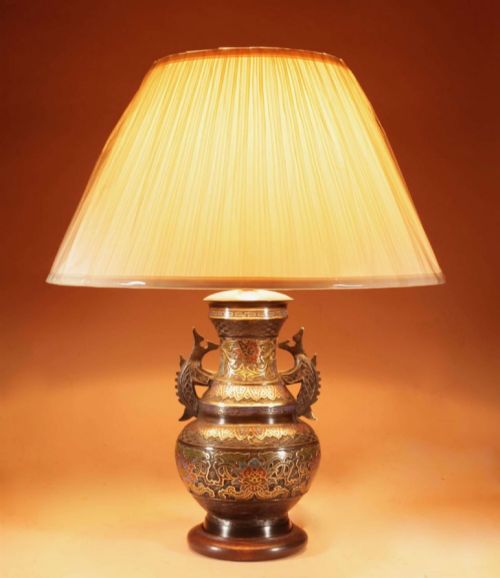
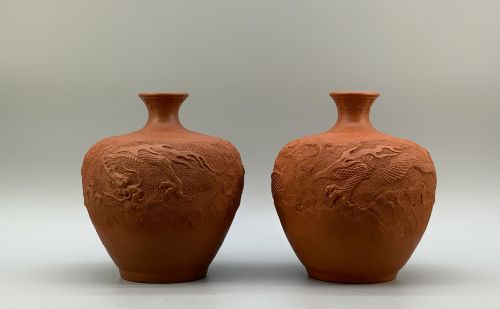
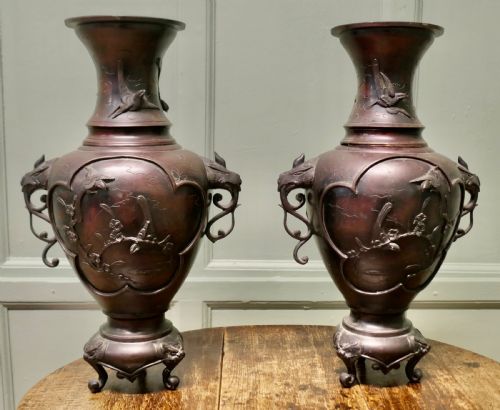
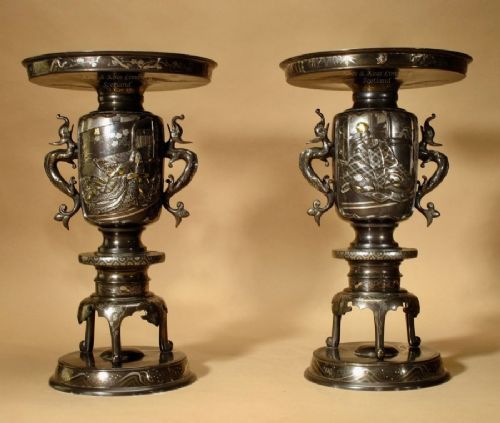
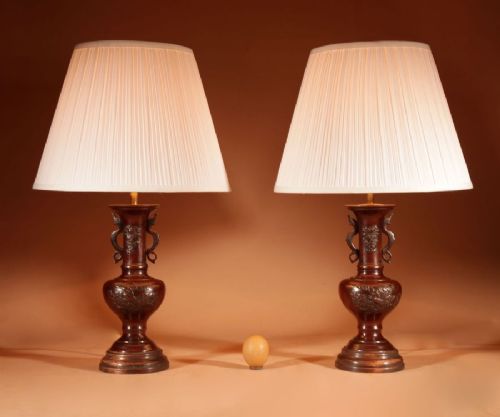
You will frequently find matching pairs and large floor-standing examples alongside table lamps adapted from earlier bronze or champlevé vessels. The decorative motifs focus heavily on coiled dragons, often paired with phoenixes, arhats or traditional deities rendered in high relief or fine hand-painted ceramic enamels.
How they were made
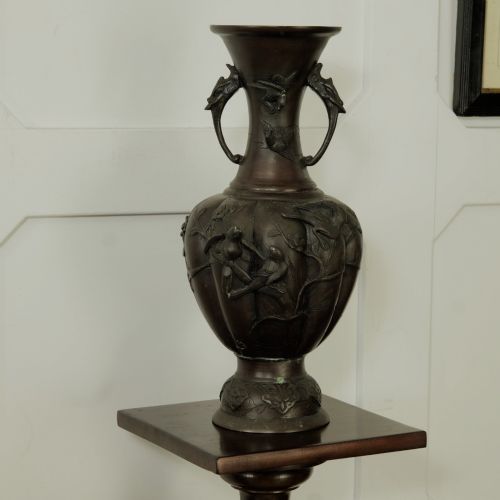
Metal vessels are predominantly cast in bronze, occasionally incorporating brass elements and champlevé enamel with applied mixed-metal details or onlaid decoration. Artisans utilised sophisticated casting and patination techniques to achieve depth and texture in the scaly bodies of the dragons.
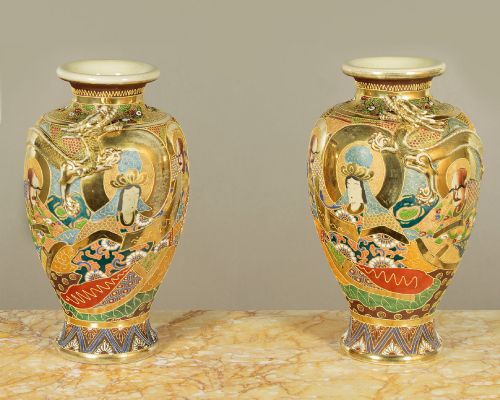
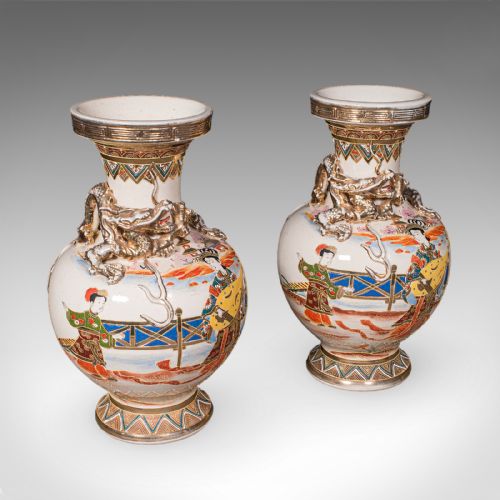
Ceramic examples rely on earthenware and porcelain bodies, such as Satsuma and Kutani wares, decorated with hand-painted pigments, gilding and moulded relief work. These ceramic techniques allow for intricate depictions of deities and mythical beasts wrapping around the curves of the vessel.
What varies in quality
The degree of definition in the modelling determines much of the visual success in a bronze japanese dragon vase, where superior examples exhibit deeply undercut claws and scales rather than flat surface casting. Artisans who achieved subtle patination gradations and secure mixed-metal onlays produced pieces that command greater visual presence.
In ceramic versions, the precision of the hand-painted enamelwork and the clarity of the gilt detailing separate standard production pieces from signed workshop masterpieces. The proportion and weight of the vessel body also indicate the skill involved in firing large earthenware and porcelain forms.
Hotoda·Kinkozan·Fukagawa
The Japanese Dragon Vase Glossary
- Meiji Period
- The era in Japanese history lasting from 1868 to 1912, associated with a surge in decorative arts produced for international and domestic markets. Pieces from this time frequently feature elaborate dragon motifs in bronze and Satsuma ceramic.
- Champlevé
- An enamelling technique where troughs or cells are hollowed out in the metal surface and filled with vitreous enamel before firing. This method appears on decorative bronze vases alongside raised metallic elements.
- Satsuma
- A type of Japanese earthenware characterised by a pale, ivory-coloured cracked glaze decorated with polychrome enamels and gold. These ceramics often portray historical figures and dragons in dense pictorial scenes.
- Usubata
- A traditional bronze vase form with a wide, shallow basin at the top, typically used for flower arrangement. These substantial vessels frequently incorporate dragon supports or handles.
- Imari
- A style of Japanese porcelain decorated in underglaze blue and overglaze iron red, gold and green. These pieces often take the form of large floor vases featuring robust dragon designs.
Japanese Dragon Vase: Frequently Asked Questions
How do I date a Japanese dragon vase?
Dating relies heavily on stylistic markers, materials and workshop signatures associated with the Meiji and Taisho periods. Nineteenth-century examples often display heavier bronze casting or traditional Satsuma earthenwares, while early twentieth-century pieces extend into Showa production.
Examining the base and any applied seals or signatures helps place the piece within a specific era of Japanese craftsmanship.
How should I display a heavy bronze vase?
Due to the substantial weight of large bronze and champlevé vessels, place them on sturdy, stable furniture or dedicated plinths. Ensure the surface can support the concentrated load, particularly with monumental garden urns or temple vases.
Positioning them away from high-traffic household areas protects both the protruding relief work and the surrounding space.
What is the difference between Satsuma and Kutani wares?
Satsuma wares are earthenware bodies featuring a characteristic ivory crackle glaze decorated with detailed enamel and gold leaf. They frequently depict dense figural scenes alongside coiled dragons and deities.
Kutani wares are typically porcelain bodies known for a vibrant colour palette, often dominated by greens and blues in pictorial or geometric arrangements.