



Japanese Champleve Bronze
Japanese champleve bronze pieces are heavy metal vessels and lamps bearing coloured enamel cells, offering collectors intricate Asian decorative artistry.
Japanese Champleve Bronze
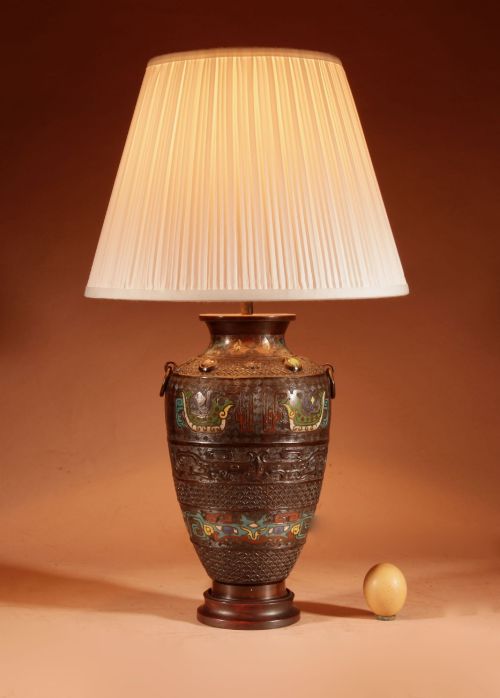
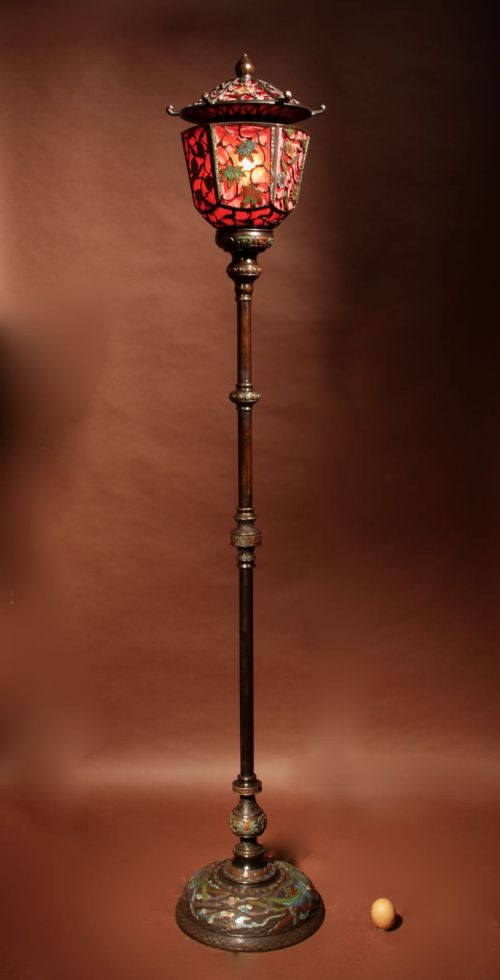
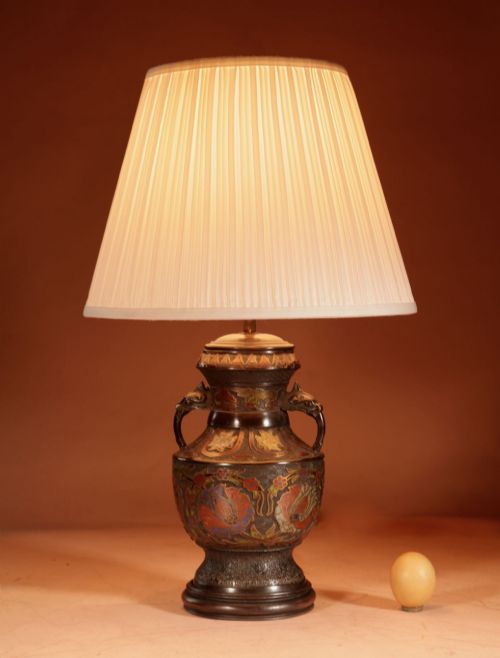
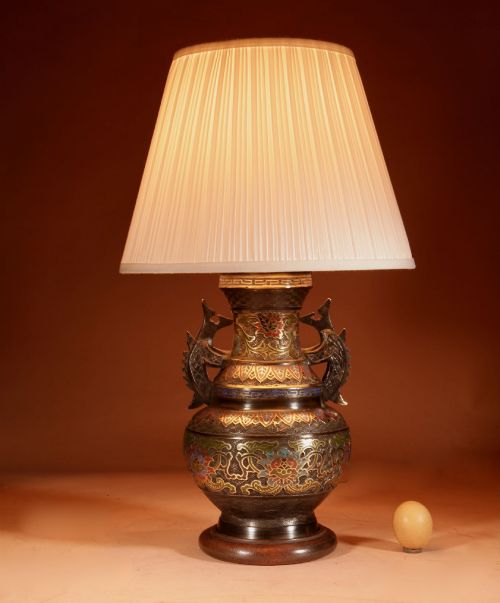
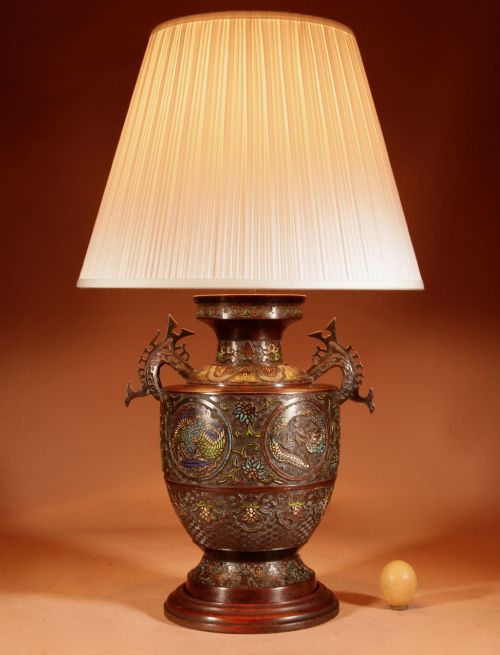
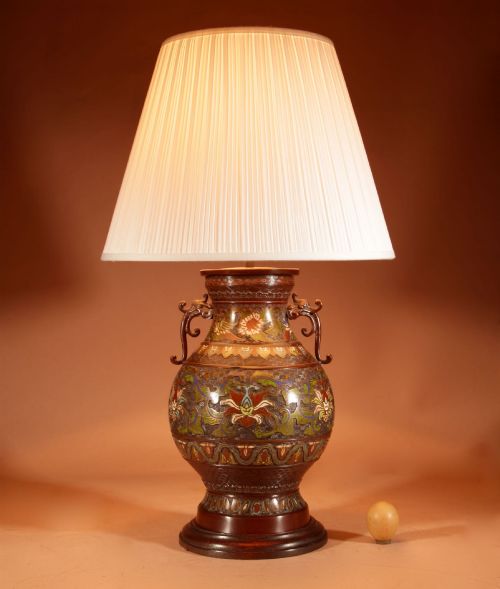
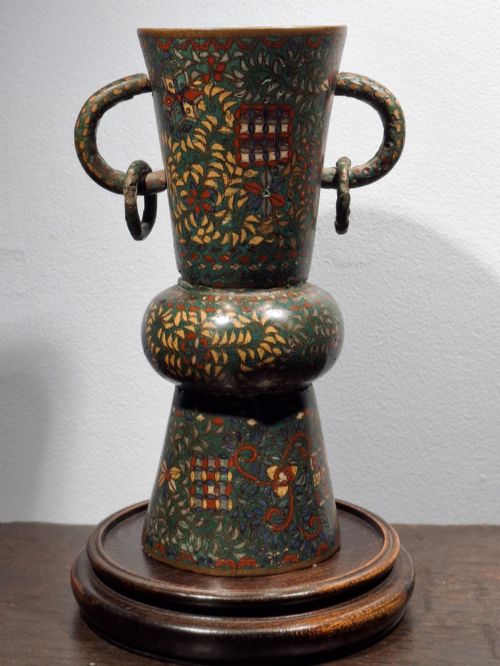
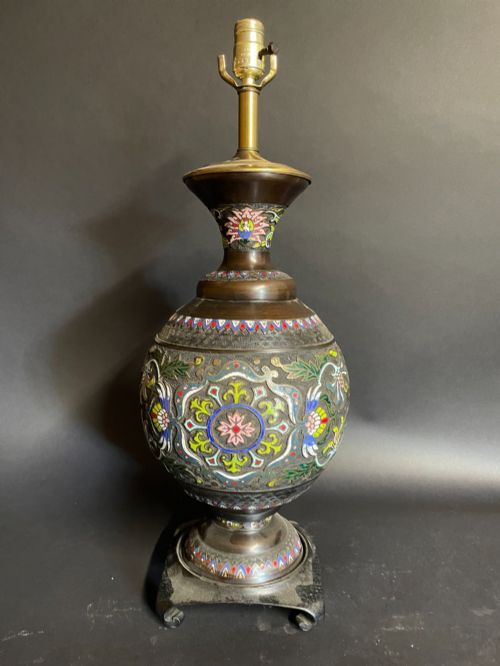
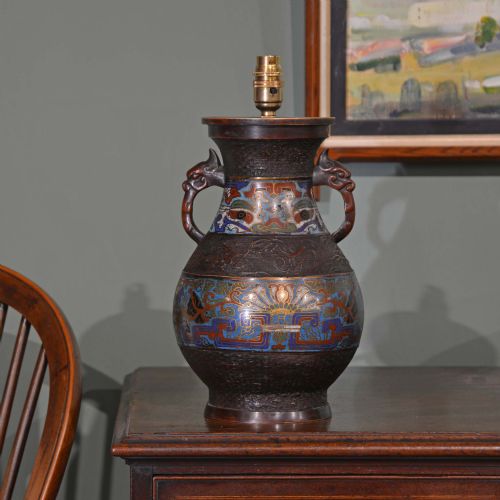
When you search for japanese champleve bronze, you encounter substantial metalwork objects originating primarily from the Meiji period and the nineteenth century. These items take the form of large vases, jardinieres, planters, standing lamps, and hanging lanterns designed for ornamental display.
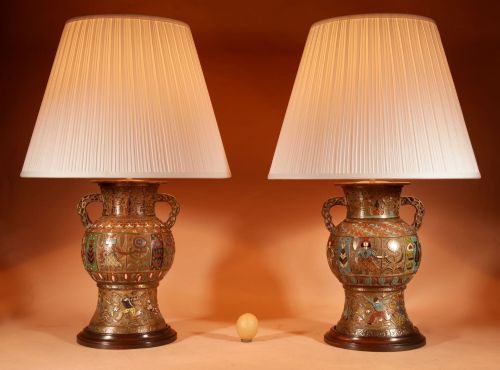
The versions most frequently met on this page include towering table lamps and robust vases decorated with intricate coloured enamel patterns. They reflect diverse stylistic influences, incorporating both traditional Asian aesthetics and occasional nineteenth century Chinese export motifs.
How they were made
Artisans cast heavy bronze bases, carving recesses directly into the metal surface to form channels for the decoration. Coloured enamel paste was then packed into these sunken compartments before the entire object was fired and polished smooth.
Many surviving examples incorporate secondary materials such as wood and fabric, particularly when adapted into functional table lamps with fitted wiring or shades. Metal alloys and brass also appear across the nineteenth century production period.
Japanese Champleve Bronze Retail Price Guide 2026
Typical asking prices for japanese champleve bronze among the pieces listed under this phrase on Sellingantiques today, from the lower quarter to the upper quarter. They describe what is for sale here now, not the wider market.
Object forms span table lamps, hanging lanterns, jardinieres, planters, and vases, sometimes incorporating wood, fabric, and brass.
What varies in quality
The finest examples display deep, uniform casting with crisp recess walls that hold the coloured enamel securely without pitting or shrinking. Poorer execution shows uneven metal thickness and muddy enamel tones that lack definition.
Scale and ambition dictate distinction, with large planters and pairs of lamps commanding greater visual presence than modest single vases. Surface finishing and the precision of the carved bronze framework separate standard decorative items from superior masterworks.
The Japanese Champleve Bronze Glossary
- Champleve
- An enamelling technique where troughs are gouged into a metal base to hold coloured paste before firing. This method creates raised metallic outlines between the vibrant enamel sections.
- Meiji Period
- The Japanese historical era spanning from eighteen sixty-eight to nineteen twelve, noted for increased export of decorative arts to Western markets. Pieces from this time often exhibit exceptional metallurgical skill.
- Jardinere
- A large decorative pot or stand designed to hold growing plants indoors. These heavy bronze vessels provide a stable base for substantial floral arrangements.
- Cloisonne
- A related enamelling method using soldered metal wires to create surface cells rather than carved recesses. Collectors occasionally find pieces exhibiting related decorative sensibilities alongside champleve.
Japanese Champleve Bronze: Frequently Asked Questions
What is champleve bronze?
Champleve bronze refers to metal objects featuring carved recesses filled with coloured enamel paste. Artisans gouged patterns directly into the bronze before firing and polishing the surface.
This technique produced durable, highly decorative vessels and lamps that became popular export items during the nineteenth century and the Meiji period.
How do I clean japanese bronze?
Dust these bronze and enamel surfaces gently with a dry, soft cloth to prevent abrasive scratching. Avoid chemical cleaners or excessive moisture that might damage the vulnerable enamel inlays.
Wooden components and fitted lamp bases require separate care appropriate for aged timber and fabric wiring.
Are these lamps original?
Many lamps began life as decorative vases or urns before receiving electrical fittings during subsequent decades. The bronze bodies date back to the nineteenth century or early nineteen hundreds.
Buyers should examine the wiring and mounting methods to understand how and when the conversion took place.
How do I date these pieces?
Dating relies on stylistic markers associated with the Meiji period, nineteenth century manufacturing techniques, and export trade histories. The integration of archaic motifs and specific bronze casting styles helps narrow the timeframe.
Archival comparisons and material combinations further assist in determining whether a piece originates from the eighteen eighties or the early twentieth century.