
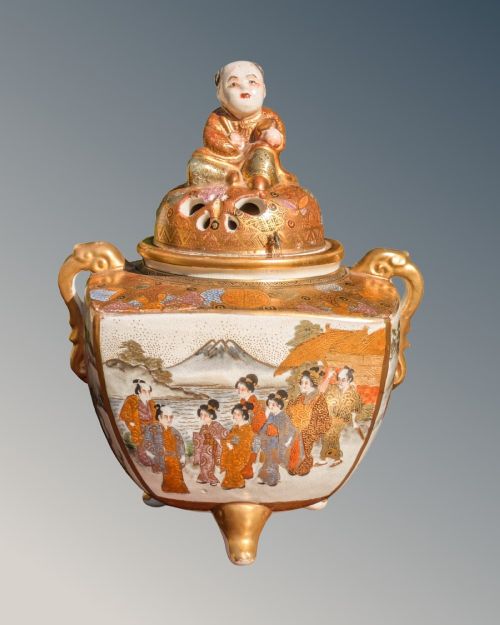


Japanese Ceramic Incense Burner
A Japanese ceramic incense burner brings centuries of craftsmanship into a room, offering sculptural form alongside traditional aromatic use.
Japanese Ceramic Incense Burner
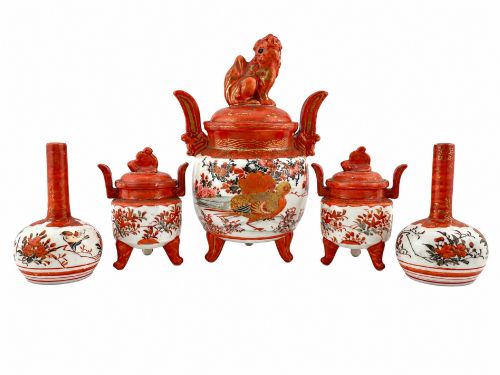
A japanese ceramic incense burner typically takes the form of a koro, a lidded vessel designed for burning aromatic materials during quiet reflection or ceremonial practice. These pieces emerge predominantly from the Meiji period, alongside examples spanning the Edo and Taisho periods, as well as the Edwardian era.
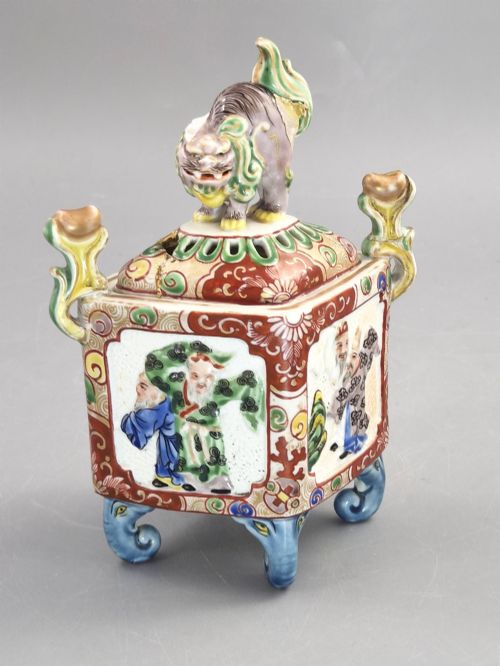
Makers shaped earthenware and porcelain into diverse vessels, ranging from footed bowl burners to sculptural forms like treasure ships and creatures such as the Karashishi lion. Surface decoration draws heavily upon Imari, Satsuma, and Kutani traditions, incorporating detailed painting and glazes.
The objects serve as functional vessels and decorative display pieces alike, often resting upon elephant head feet or featuring intricate finials. Collectors encounter various regional outputs, from Kyoto Satsuma to Hirado porcelain.
Materials and methods
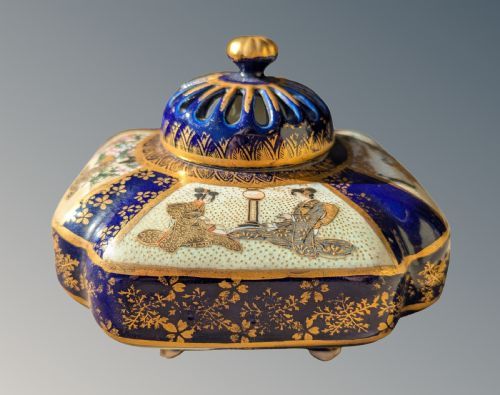
Potters utilised fine porcelain and earthenware as the primary ceramic bodies for these vessels, shaping them by hand or mould before firing. Artisans then applied cobalt underglaze, enamel, and intricate gilding or gold leaf to build up complex pictorial and decorative surfaces.
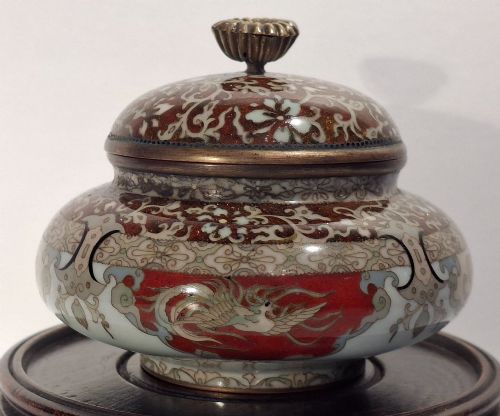
Skilled modellers added sculptural elements such as sculpted dragons, reticulated panels, and fierce guardian lions as lids or feet. Bronze fittings and covers occasionally accompanied the ceramic bodies to complete the incense burner structure.
Listings feature 19th century, Edwardian, and 1920s periods, incorporating porcelain, earthenware, enamel, and gold leaf.
Judging quality and execution
Quality rests upon the precision of the modelling and the clarity of the ceramic body, whether fine porcelain or dense earthenware. Superior examples demonstrate disciplined brushwork in the enamel and cobalt painting, avoiding muddy colour transitions or misaligned patterns.
The crispness of sculptural additions, such as reticulated sections, finials, and animal feet, distinguishes finer workshops from mass production. Well-preserved gilding and intact enamel work maintain their visual depth without excessive rubbing.
Kinkozan·Kotobuki-do·Kizan·Shizan
The Japanese Ceramic Incense Burner Glossary
- Koro
- A traditional Japanese incense burner, typically featuring a body, a perforated lid, and sometimes feet. These vessels hold aromatic materials during burning.
- Satsuma
- A type of Japanese earthenware originating from Satsuma Province, characterised by an ivory crackle glaze and elaborate overglaze enamel and gold decoration.
- Kutani
- A style of Japanese porcelain known for vibrant colour palettes and intricate pictorial designs, often featuring greens, blues, yellows, and reds.
- Imari
- A traditional Japanese porcelain style featuring rich cobalt blue underglaze combined with iron red, gold, and secondary enamel colours.
- Shi-Shi
- A mythical guardian lion or dog often depicted as a finial or decorative motif on incense burners to ward off evil spirits.
- Reticulated
- Openwork decoration formed by cutting or piercing patterns into the ceramic wall before firing, creating a lattice or lace-like effect.
Japanese Ceramic Incense Burner: Frequently Asked Questions
How do I use an antique incense burner?
Place granulated incense or aromatic wood inside the ceramic body upon a bed of ash, then set the pierced lid back in place to let the smoke drift through.
Ensure the vessel sits on a heat-resistant surface to protect underlying furniture from conducted warmth during use.
What is the difference between Satsuma and Kutani?
Satsuma pieces utilise an earthenware body covered in a characteristic creamy crackle glaze that provides a textured canvas for detailed enamel painting.
Kutani ware relies on a porcelain body decorated with bold, saturated enamel colours and intricate pictorial motifs.
How do I identify a Meiji period piece?
Meiji period ceramics typically display ambitious decorative schemes, combining rich gilding, complex enamels, and high-relief sculptural elements influenced by international exhibition tastes.
Look for refined potting techniques and stylistic signatures that reflect the artistic openness of late nineteenth-century Japan.
Can I clean ceramic incense burners?
Remove accumulated soot and ash gently with a soft, dry brush to preserve delicate enamel and gold leaf decorations.
Avoid submerging antique earthenware or gilded surfaces in water, as moisture can infiltrate porous bodies and crackle glazes.