


Meiji Period Porcelain Set
These meiji period porcelain set pieces bring together traditional Japanese artistry and elaborate decorative schemes, offering striking display options for any interior.
Meiji Period Porcelain Set
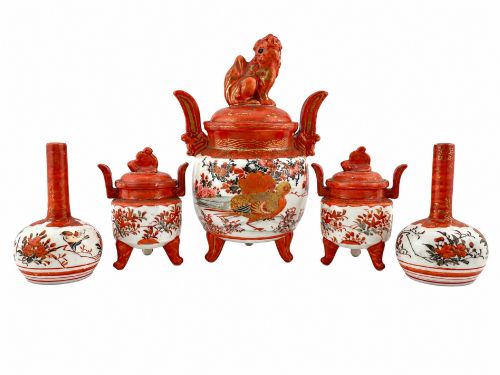
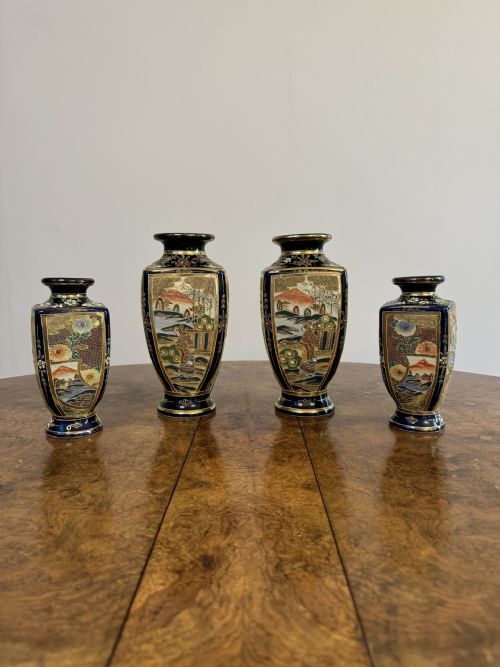
A meiji period porcelain set comprises coordinated groupings of ceramic items such as garnitures, plates, dishes, and bowls produced during the late nineteenth and early twentieth centuries. These collections often display intricate hand-painted designs characteristic of Japanese traditions from the period.
Buyers will most frequently encounter multi-piece groupings of Japanese Imari plates and vases alongside Satsuma ware and Kutani porcelain. Sets range from small pairs and trios up to larger collections of matching plates accompanied by storage boxes.
What separates the fine examples
Quality in a meiji period porcelain set is driven by the precision of the hand-painted brushwork and the complexity of the decorative scheme. Finer examples display meticulous control over cobalt underglazes and rich applications of overglaze enamel and gold leaf.
The consistency across matching elements within a multi-piece garniture or plate collection also defines the standard. Superior sets maintain uniformity in form, glazing quality, and pictorial detail from the central piece to the smallest subsidiary vessel.
Listings feature porcelain, earthenware, glaze, enamel, gold leaf, gilding, and cobalt.
The Meiji Period Porcelain Set Glossary
- Garniture
- A set of matching ceramic vases or vessels designed to be displayed together on a mantelpiece or cabinet. These groupings typically consist of three, four, or five coordinated pieces.
- Imari
- A traditional style of Japanese porcelain decorated in underglaze blue, iron red, and gold. The palette creates a vibrant contrast across plates, bowls, and lidded vases.
- Satsuma
- A type of Japanese earthenware featuring a pale, ivory-coloured cracked glaze decorated with polychrome enamels and gilding. Pieces often depict dense floral patterns or figural scenes.
- Kutani
- A style of Japanese porcelain known for bold pictorial designs and rich colour palettes. Figures, birds, and landscapes frequently appear on these vases and Buddhist triads.
- Overglaze enamel
- Coloured glass decoration applied on top of a fired and glazed ceramic surface. A secondary, lower-temperature firing fuses this pigment to the piece.
Meiji Period Porcelain Set: Frequently Asked Questions
What is a porcelain garniture?
A porcelain garniture is a matching set of vases or jars created to be displayed together as a decorative focal point. These groupings usually contain three to five vessels of complementary shapes.
Historically, these sets were positioned on mantelpieces, cabinets, or shelves in grand interiors. Each vessel in the arrangement was proportioned to balance the visual weight of the central piece.
How do I care for antique plates?
Antique porcelain plates require gentle handling and should be washed by hand in lukewarm water using mild soap. Avoid soaking items that feature delicate overglaze enamels or gold leaf.
Store plates securely in dedicated storage boxes or display them safely in stable racks. Minimise direct exposure to strong sunlight to protect the pigments over time.
How can I identify Satsuma ware?
Satsuma ware is typically distinguished by its characteristic cream-coloured earthenware body and fine network of crackled glaze. The surfaces are then decorated with detailed enamel work and gilding.
Unlike standard porcelain, this body has a softer, porous texture beneath the glaze. Common decorative themes include dense floral arrangements, figures, and traditional Japanese landscapes.