



Japanese Bronze Jardiniere
These heavy cast vessels bring the quiet craft of the Meiji and Edo periods into modern rooms as plant pots or decorative basins.
Japanese Bronze Jardiniere
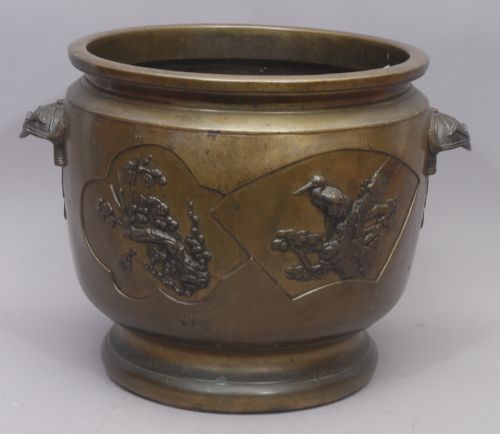
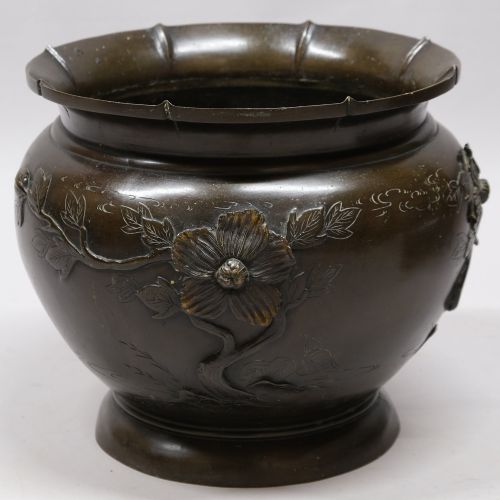
A Japanese bronze jardiniere is a substantial plant container or decorative bowl fashioned for interior display. When you search for this phrase, you encounter heavy metal vessels originating from the nineteenth and early twentieth centuries.
The pieces appearing on this page predominantly date from the Meiji period, alongside Edo period examples and Victorian entries. They serve as planters, bowl planters, and suiban ikebana vessels designed to hold water, arrangements, or potted plants.
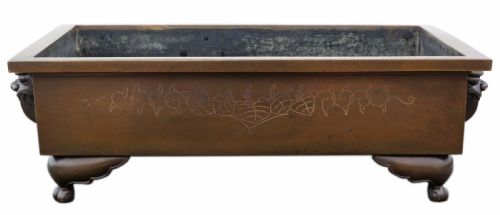
Forms range from simple circular bowls to zoomorphic shapes, rectangular planters, and vessels supported by elephant motifs. Buyers select these heavy decorative items to anchor a room with nineteenth-century metalwork.
Materials and Manufacture
These vessels are cast in bronze, patinated bronze, and occasionally brass, sometimes incorporating champleve enamel or mixed metal decoration. Makers poured molten metal into moulds to achieve thick, durable walls capable of holding damp earth and water.
Surfaces receive patination to produce deep dark tones, while finer examples integrate mixed metal birds, cast details, or relief ornament. The combination of heavy casting and hand-finished detailing defines the construction of these planters.
Japanese Bronze Jardiniere Retail Price Guide 2026
Typical asking prices for japanese bronze jardiniere among the pieces listed under this phrase on Sellingantiques today, from the lower quarter to the upper quarter. They describe what is for sale here now, not the wider market.
Listings span the nineteenth and early twentieth centuries, featuring materials such as patinated bronze, brass, and champleve enamel across Meiji and Edo styles.
Judging Quality
Quality rests in the weight of the casting and the crispness of the surface ornament. Thicker bronze walls and finely detailed mixed metal work separate standard utilitarian pieces from exceptional decorative items.
The presence of distinct zoomorphic elements, such as elephant or animal supports, alongside a refined patination, distinguishes the better specimens. Pieces retaining clear Meiji or Edo period characteristics command stronger attention through their sculptural presence.
Genryusai Seiya
The Japanese Bronze Jardiniere Glossary
- Meiji Period
- The era in Japanese history spanning from 1868 to 1912, known for the opening of trade and exceptional metalwork. Much of the decorative bronze output seen today originates from these decades.
- Edo Period
- The period lasting from 1603 to 1867, preceding the Meiji era. Pieces from this time reflect traditional Japanese design before Western export influences took full effect.
- Suiban
- A shallow Japanese basin traditionally used for water or flower arrangement displays. These low vessels function similarly to jardiniere bowls.
- Ikebana
- The traditional Japanese art of flower arrangement. Vessels designed for this purpose often accommodate stems and water directly within a bronze bowl.
- Champleve
- An enamelling technique where troughs or cells are sunk into the metal surface and filled with vitreous enamel before firing. This method adds colour accents to the bronze body.
- Patinated Bronze
- Metal treated with chemicals or heat to produce a deliberate surface colour or aged finish. This treatment protects the bronze while giving it a deep tone.
Japanese Bronze Jardiniere: Frequently Asked Questions
What is a Japanese bronze jardiniere used for?
These vessels serve as heavy planters for indoor flora, decorative tabletop bowls, or water basins for traditional floral displays.
Their robust construction allows them to hold potted plants or stand alone as sculptural centrepieces within a room.
How do I date a bronze jardiniere?
Dating relies on stylistic markers associated with the Edo and Meiji periods, alongside nineteenth-century manufacturing methods. Records often attribute these pieces to the decades between 1850 and 1930 based on their form and casting style.
Examination of the patination, weight, and decorative motifs helps narrow down the era of production.
Are these planters waterproof?
Most of these bronze bowls and suiban vessels were manufactured to hold water or damp soil for botanical displays.
However, due to age, buyers often place a protective saucer inside to safeguard delicate furniture surfaces.
What is the difference between an Edo and Meiji piece?
Edo period items originate from before 1868, carrying older aesthetic traditions and simpler structural forms. Meiji pieces reflect the later opening of international trade, frequently featuring more elaborate cast decoration and mixed metals.
Both eras utilise heavy bronze casting, but their surface ornamentation often reveals the shift in Japanese metalwork over the nineteenth century.