




Japanese Bronze Dragon
When seeking a Japanese bronze dragon, a buyer encounters metalwork rooted in Meiji period artistry and 19th-century craftsmanship.
Japanese Bronze Dragon
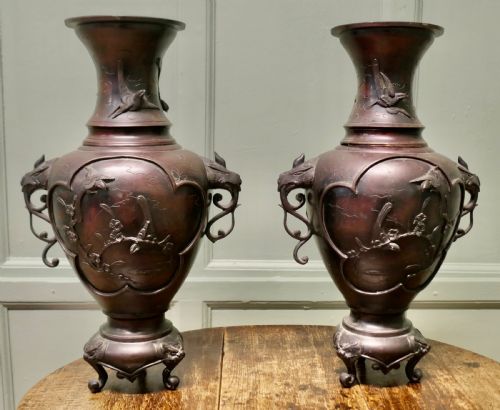
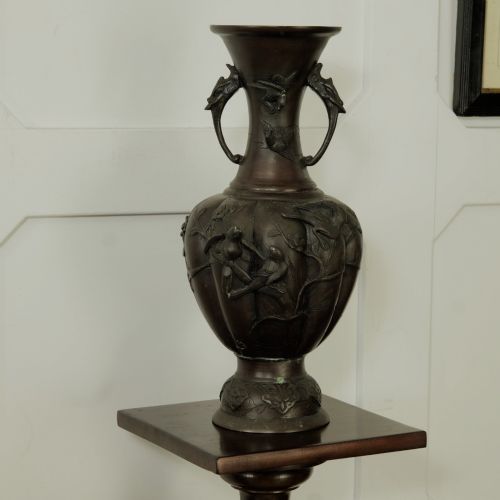
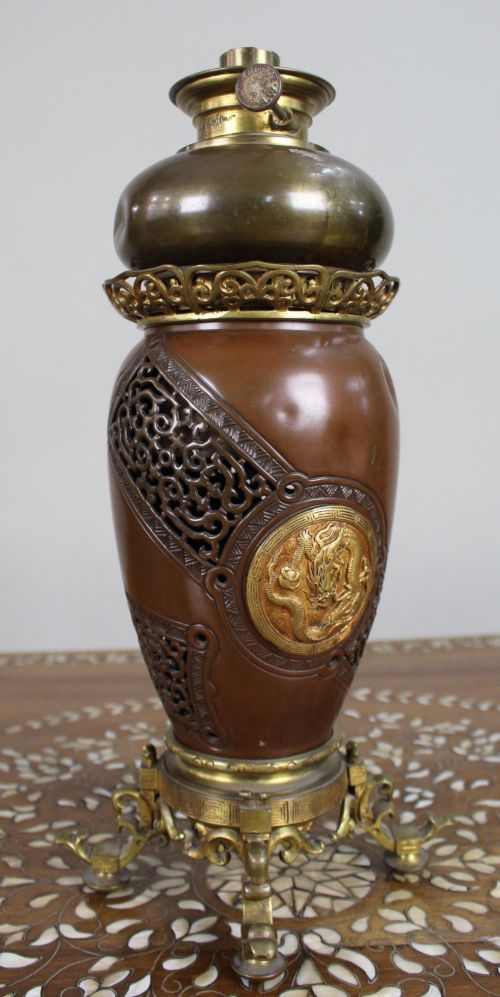
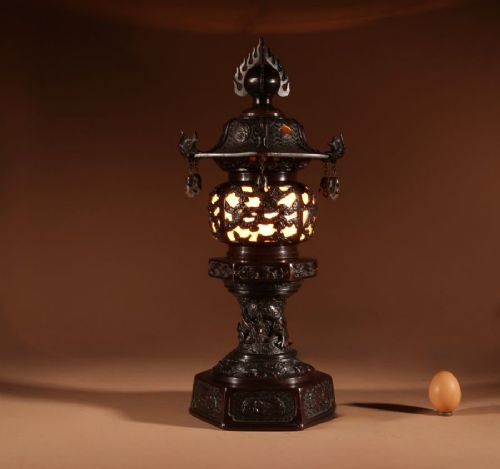
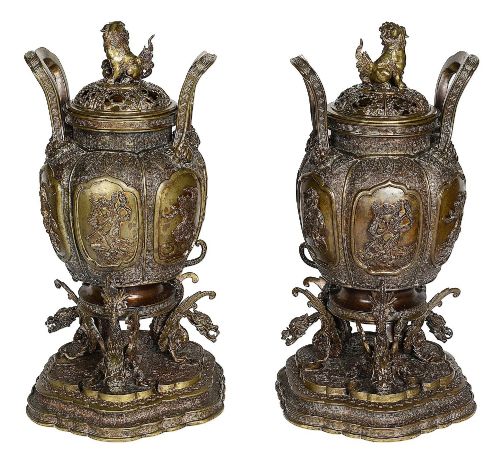
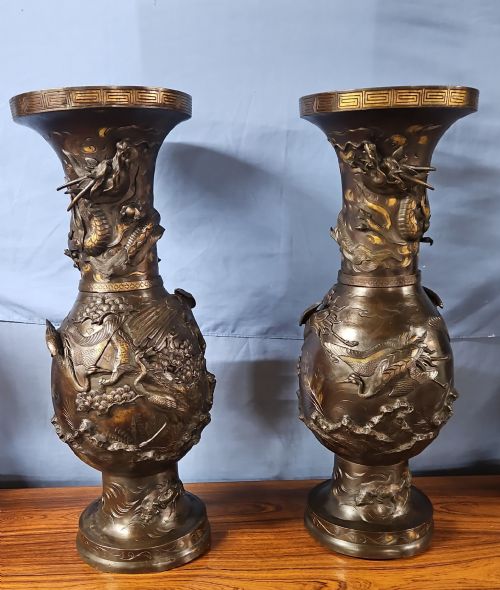
A Japanese bronze dragon covers a range of sculptural forms and vessels, including vases, okimono, table lamps, incense burners, and garden urns. These objects emerge predominantly from the Meiji period and the wider 19th century, reflecting historical Japanese metalworking traditions.
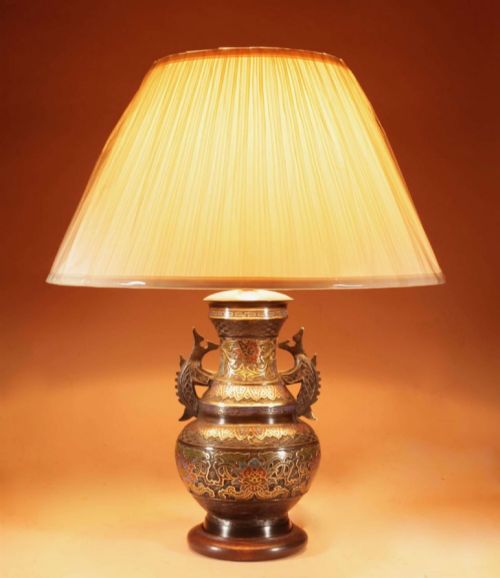
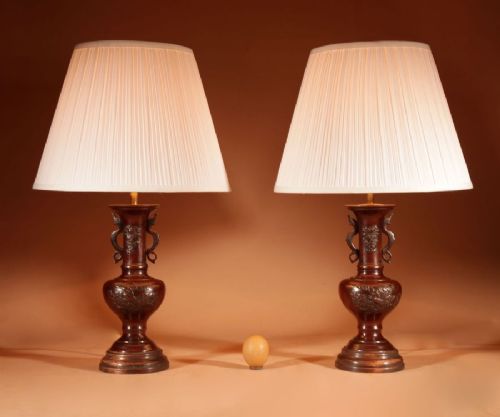
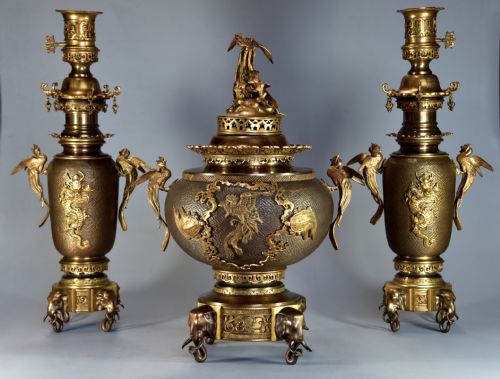
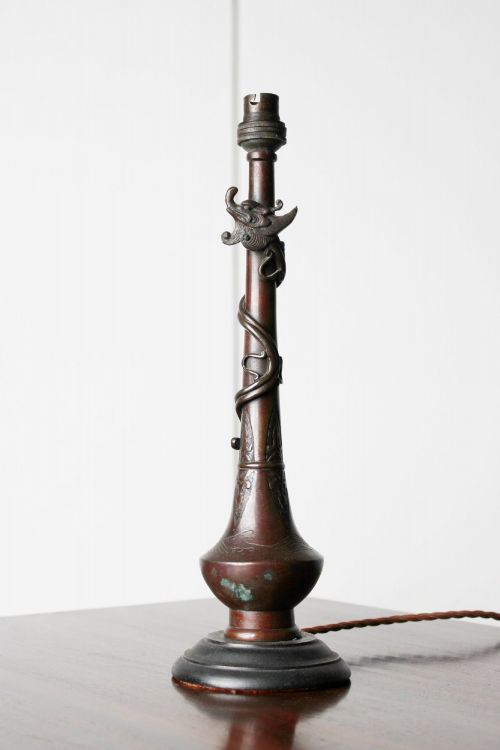
The domestic interior items span champlevé enamel decorated vases, large garniture sets, and converted oil lamps. Sculptural figures and okimono present dragons alongside figures or as standalone bronze animals.
Collectors also encounter chargers, dishes, and jardinières displaying dragons through high relief work, mixed-metal onlays, and cloisonné enamel. These diverse domestic and decorative pieces form the core of the available selection.
How they were made
Metalworking techniques centre on bronze, brass, and copper, often utilising patinated or silvered finishes to create tonal depth on the metal surface. Artisans applied mixed-metal onlays and high relief casting to articulate the scales and sinuous bodies of the dragons.
Surface ornamentation incorporates champlevé and cloisonné enamel work, integrating coloured vitreous pastes into compartments across vases, dishes, and lamps. Certain works also feature wood components or gilt bronze elements to complete the decorative scheme.
Materials recorded across the inventory include bronze, brass, copper, cloisonné enamel, champlevé, gilt bronze, patinated bronze, silvered bronze, and wood.
What varies in quality
The distinction between standard production and superior craftsmanship lies in the crispness of the casting and the depth of the relief work. Highly accomplished examples display meticulous detail in the dragon scales, claws, and facial expressions, whereas lesser pieces present softer definition.
Integration of mixed-metal details and the complexity of patination or enamel work further separate ordinary items from exceptional ones. Signed works or those attributed to specific schools demonstrate the heightened skill of the master metalworker.
Hozan Yoshiyama·Kazumi
The Japanese Bronze Dragon Glossary
- Okimono
- A Japanese freestanding decorative sculpture designed for display on a shelf or in a tokonoma alcove. These figures often depict animals, deities, or mythological creatures such as dragons.
- Champlevé
- An enamel technique where troughs or cells are hollowed out in the metal surface and filled with coloured vitreous enamel before firing. It frequently appears on 19th-century vases and table lamps.
- Cloisonné
- A metalwork decoration method using thin wire soldered to the body to form compartments that hold enamel paste. Chargers and plates often utilise this technique to outline dragon motifs.
- Usubata
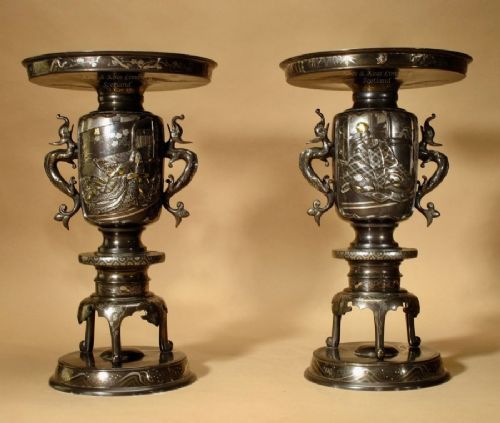
- A specific form of Japanese bronze vase traditionally used for ikebana flower arrangement, characterised by a broad flat rim or basin above a pedestal base. Garden versions of these urns appear in larger scales.
- Japonisme
- A late 19th-century Western artistic style influenced by Japanese art and design. European makers adopted these aesthetic principles when producing gilt and patinated bronze incense burners.
Japanese Bronze Dragon: Frequently Asked Questions
How do I identify a Meiji period piece?
Meiji period metalwork typically dates between 1868 and 1912, corresponding to the reign of Emperor Meiji. Pieces from this era often feature highly intricate high relief casting, mixed-metal onlays, and precise surface chasing.
Many of these objects were created for export markets following the opening of Japan to Western trade. They combine traditional casting methods with elaborate dragon and nature motifs.
Were these bronze pieces used as lamps?
Numerous antique Japanese bronze vases and urns were converted into table lamps or oil lamps during the late 19th and early 20th centuries. European and American homes frequently adapted imported vases to suit Western domestic lighting.
These conversions often retain their original handles, mounts, and dragon-themed bodies while incorporating period electrical or oil mechanisms.
What is the Komai style?
The Komai style originates from Kyoto metalworkers who specialised in iron and bronze damascene. They inlaid gold and silver wire into dark metal bases to create intricate pictorial scenes.
Dishes and plaques bearing these designs frequently incorporate deities alongside dragons in mixed-metal compositions.