
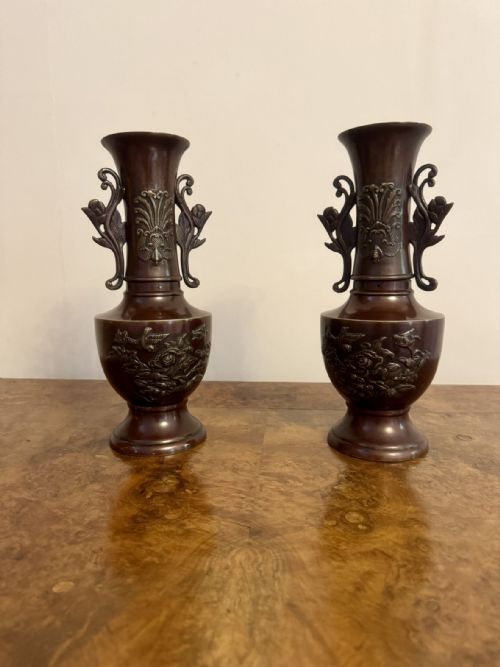


Japanese Bird Motif Urn
A Japanese bird motif urn brings together the precise metalwork and ceramic arts of the Meiji era and the late nineteenth century.
Japanese Bird Motif Urn
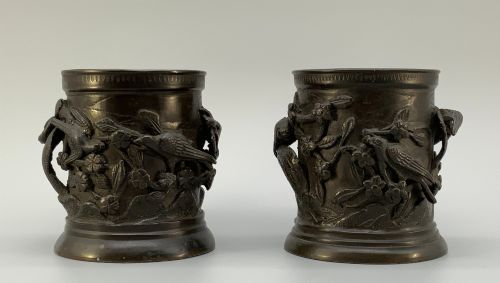
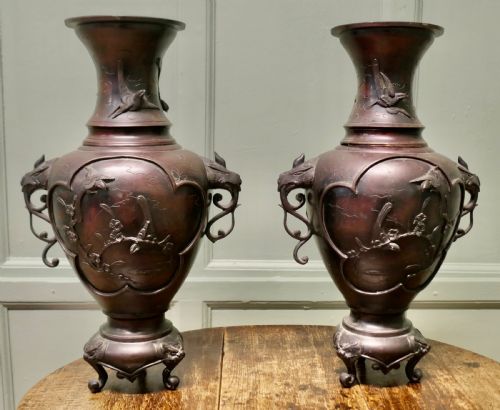
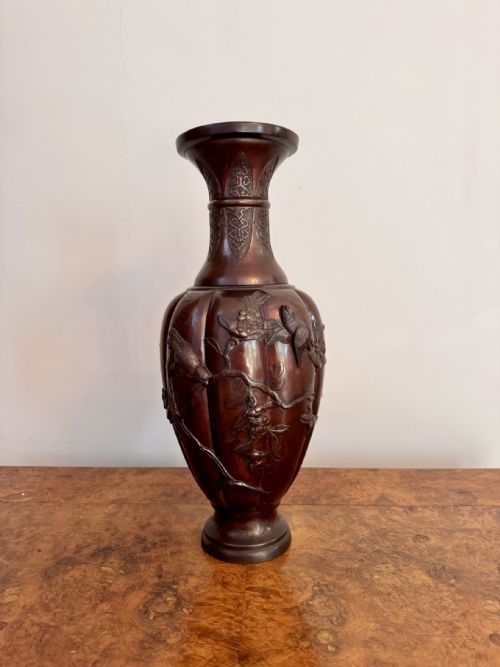
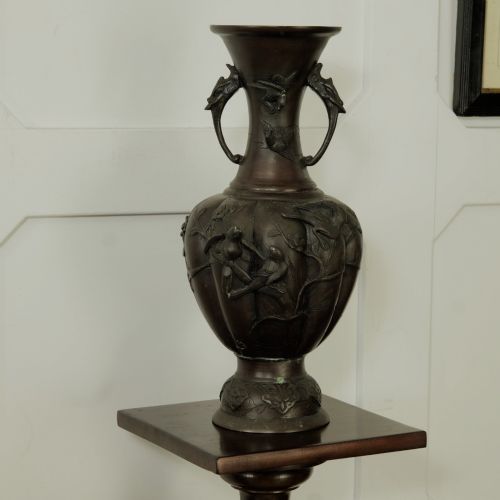
A Japanese bird motif urn typically takes the form of a bronze or porcelain vase from the Meiji period, often dated between eighteen eighty and nineteen ten. These vessels display avian imagery alongside natural elements such as blossom.
Originating largely from the late nineteenth century and the Victorian era, these objects reflect the decorative tastes of Japanese export art and Meiji period craftsmanship.
How they were made
Makers utilised bronze, patinated bronze, and porcelain as the primary foundations for these vessels. Techniques involved casting metal, applying glaze to earthenware, and incorporating gold leaf details.
Surface decoration frequently relied on carving wood for stands or adding enamel work to metal bodies. Workshops such as Kinrin produced ceramic pieces utilising traditional regional glazing methods.
Several bronze vases arrive with their original carved wood stands, having survived a century of domestic repositioning.
What varies in quality
The distinction between standard and superior pieces rests on the crispness of the casting and the depth of the patinated bronze finish. Larger pairs and works bearing workshop signatures demonstrate a higher level of artisanal skill.
The integration of bird and blossom motifs shows varying degrees of hand finishing, where finer examples display intricate detail rather than uniform stamping.
Kinrin Workshop·Fukagawa
The Japanese Bird Motif Urn Glossary
- Meiji Period
- The era in Japanese history spanning from eighteen sixty-eight to nineteen twelve, known for significant export of decorative arts. Pieces from this time often feature detailed bronze casting and Satsuma pottery.
- Patinated Bronze
- A chemically treated metal surface that produces a deliberate aged colour on bronze vessels. This finish protects the metal while enhancing the visual depth of decorative motifs.
- Satsuma
- A type of Japanese earthenware featuring a crackle glaze, typically decorated with polychrome and gold. These ceramics originated in the Satsuma Province and gained immense popularity during the Meiji period.
- Kutani
- A style of Japanese porcelain recognised by bold colours and intricate pictorial designs. Kutani wares often incorporate bird and floral scenes executed by specific regional workshops.
- Enamel
- A glassy substance fused to metal surfaces through high-temperature firing to add durable colour. This technique provides vibrant highlights to bronze urns and vases.
Japanese Bird Motif Urn: Frequently Asked Questions
What periods do these pieces date from?
The available pieces predominantly date from the Meiji period, spanning the late nineteenth century into the early twentieth century. Many items align chronologically with the Victorian era.
Datings on these works typically reference decades such as eighteen eighty, eighteen ninety, and nineteen hundred, reflecting the height of Japanese export craftsmanship.
How were these urns used originally?
These vessels functioned primarily as decorative display items within domestic interiors during the late nineteenth century. Their scale and ornamentation made them focal points for mantelpieces and reception rooms.
Pairs were often manufactured to sit symmetrically on stands or tables, accentuating the decorative bird and blossom themes common in export art.
Are these pieces found as pairs?
Many of the bronze and porcelain vessels survive as matched pairs, having been created together to satisfy Victorian and Meiji export markets. Single examples also appear frequently.
Pairs often command greater attention from buyers seeking balanced decorative arrangements for interior spaces.
What materials are most common?
Bronze and patinated bronze form the majority of the metalwork listings, often accompanied by gold leaf accents. Porcelain and earthenware represent the ceramic alternatives.
Associated materials include carved wood used for display stands and enamel applied for surface decoration.