

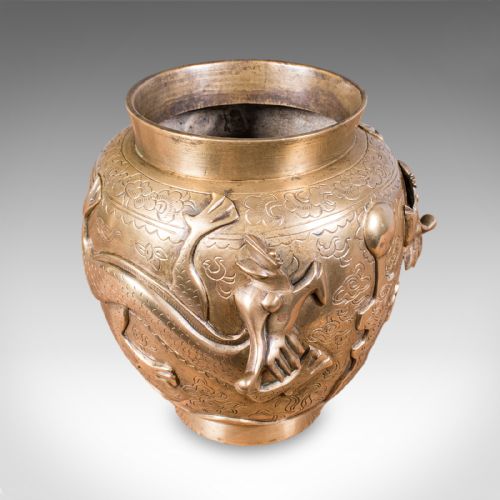
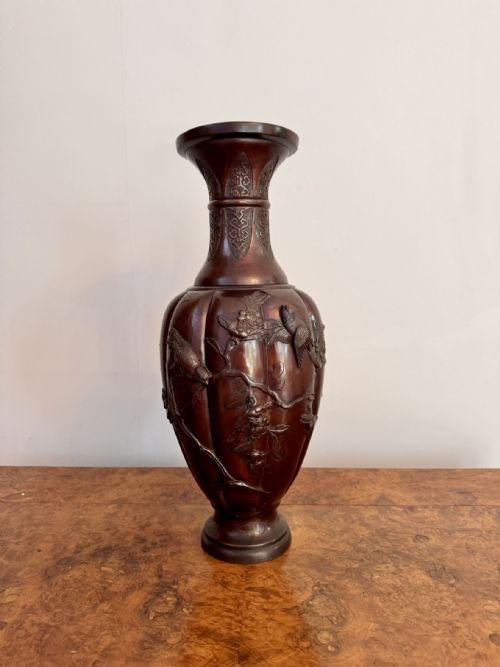


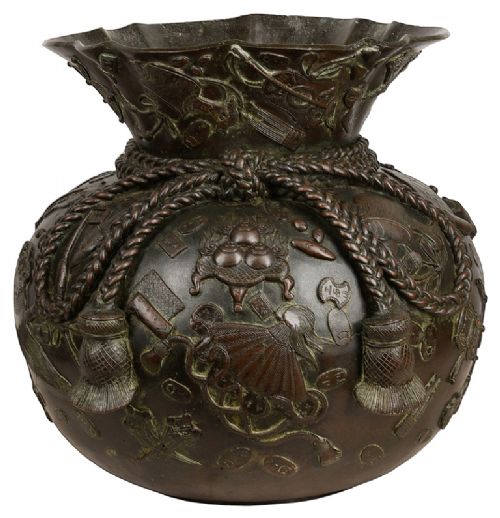
Cast Bronze Flower Vase
These cast bronze flower vase examples combine heavy metalwork with botanical display, offering both functional utility and distinct historical character.
Cast Bronze Flower Vase
When you search for cast bronze flower vase options, you encounter heavy metal vessels originating from nineteenth and early twentieth century workshops, spanning Victorian, Meiji period, and Qing dynasty aesthetics. The forms range from large jardinières and display urns to slender stem vases and bouquet pots designed to hold floral arrangements.
You are most likely to meet Japanese Meiji period examples on this page, often featuring patinated surfaces and distinct vessel shapes like the mimikuchi style or sculptural additions. These pieces sit alongside Chinese bronzes and European Victorian interpretations, including Chinoiserie designs and Art Nouveau works.
The objects serve as both sculptural statements and functional containers, frequently appearing in pairs or large single formats. Their origins cross international boundaries, reflecting global trade and aesthetic influences during the Victorian era and the turn of the twentieth century.
Materials and construction methods
The physical construction relies on metal casting techniques using bronze, frequently finished with patinated surfaces that alter the tone and texture of the metal. Makers employed patination methods to achieve dark, weathered, or verdigris effects, giving the metal a specific aged appearance from the outset.
Surface treatments vary between smooth polished finishes and textured designs, sometimes incorporating applied elements like frogs or sculptural botanical motifs directly into the bronze body. The resulting vessels combine structural weight with detailed metalwork characteristic of nineteenth century foundry production.
Cast Bronze Flower Vase Retail Price Guide 2026
Typical asking prices for cast bronze flower vase among the pieces listed under this phrase on Sellingantiques today, from the lower quarter to the upper quarter. They describe what is for sale here now, not the wider market.
Some early twentieth century bronze vases arrive complete with cast metal frogs peering over the rim, ready for imaginary pond life.
Assessing quality in metal vessels
The distinction between standard production and exceptional examples rests on the crispness of the casting and the depth of the patination. Finer pieces display deliberate weight, balanced proportions, and careful integration of decorative elements without superficial masking.
Surface finish dictates visual success, where controlled patination enhances the contours of the vase rather than concealing surface flaws. The skill of the foundry work determines whether a vessel retains architectural clarity across its form.
Jean Dunand
The Cast Bronze Flower Vase Glossary
- Patination
- The chemical or natural treatment of a metal surface to produce a coloured skin or oxide layer. This process protects the bronze while creating specific aesthetic tones.
- Meiji Period
- The era in Japanese history spanning from eighteen sixty-eight to nineteen twelve, known for distinctive bronze casting and export art. Pieces from this time frequently display detailed surface patinas.
- Jardinière
- A decorative pot or stand designed to hold large plants or floral arrangements. These heavier vessels often match the scale of large bronze vases.
- Mimikuchi
- A specific Japanese vase mouth shape featuring distinctive ear-like handles or rim configurations. This form appears frequently in nineteenth century bronze imports.
- Chinoiserie
- European interpretation of Chinese and East Asian artistic traditions, popular during the Victorian period. It influences the decorative vocabulary seen on various bronze vases.
Cast Bronze Flower Vase: Frequently Asked Questions
What is a cast bronze flower vase?
A cast bronze flower vase is a heavy metal vessel produced through foundry casting, designed to hold botanical displays while functioning as a decorative object.
These pieces originate from various periods including the nineteenth century and the early twentieth century, incorporating international styles such as Meiji period Japanese design and Victorian aesthetics.
How do I identify a Meiji period vase?
Meiji period vases typically display specific Japanese stylistic traits, often featuring patinated bronze surfaces and forms associated with late nineteenth and early twentieth century output.
They frequently arrive with distinct vessel configurations, such as mimikuchi mouths or integrated sculptural details that reflect the metalworking techniques of that era.
Where were these bronze vases made?
The pieces originate from diverse geographic workshops, predominantly spanning Japanese foundries from the Meiji period, Chinese production including Qing dynasty works, and European Victorian makers.
This international distribution reflects the cross-cultural exchange of decorative arts during the nineteenth century.
How should I clean patinated bronze?
Patinated bronze requires minimal intervention to preserve the original chemical finish and surface coloration achieved by the maker.
Dusting with a dry, soft cloth is generally sufficient, avoiding harsh chemical cleaners that can strip away verdigris or artificial patination.
Can these vases hold water?
Many cast bronze vases function adequately as water containers for floral arrangements, provided the internal metal remains structurally sound.
It is advisable to check the interior for any historical lining wear or drainage issues before filling older metal vessels.