
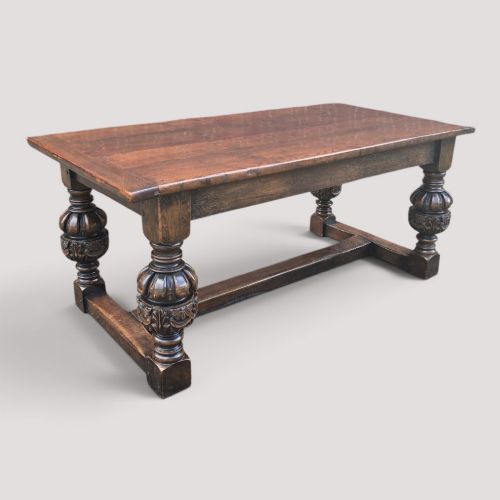
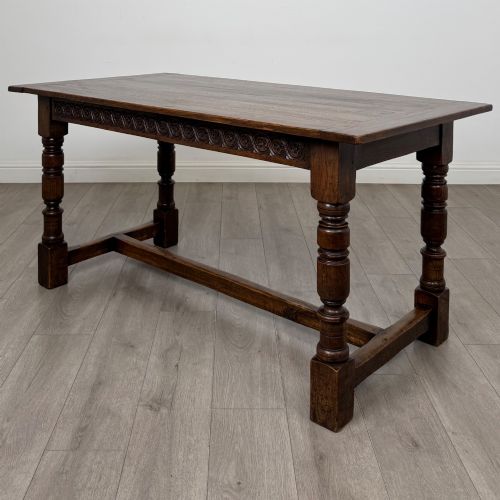
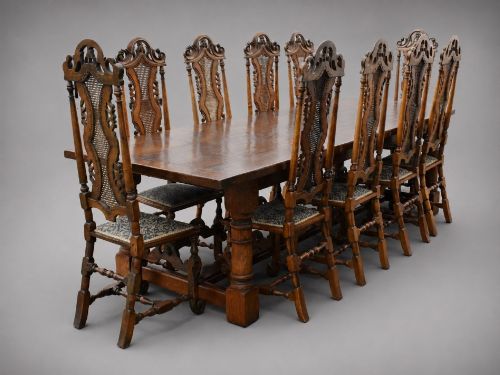
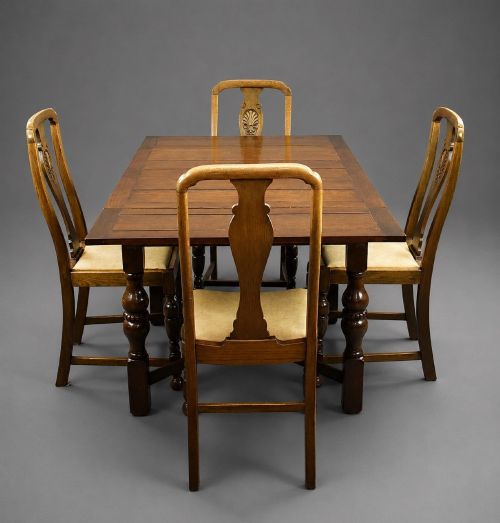
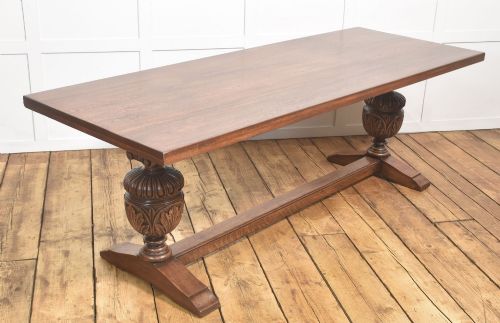
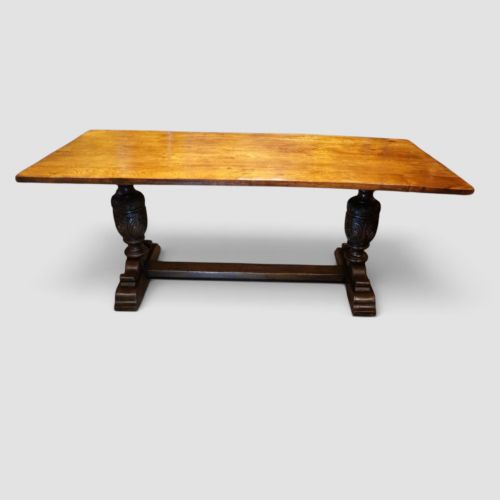
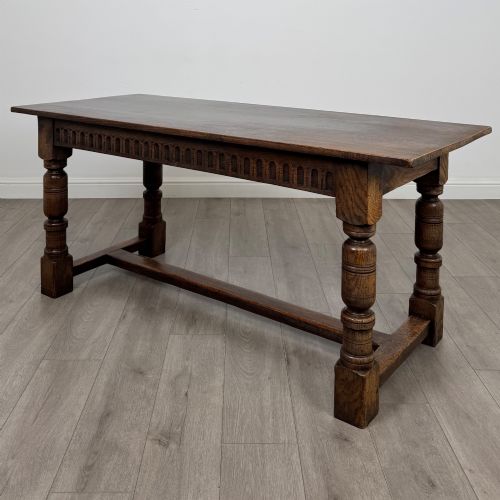
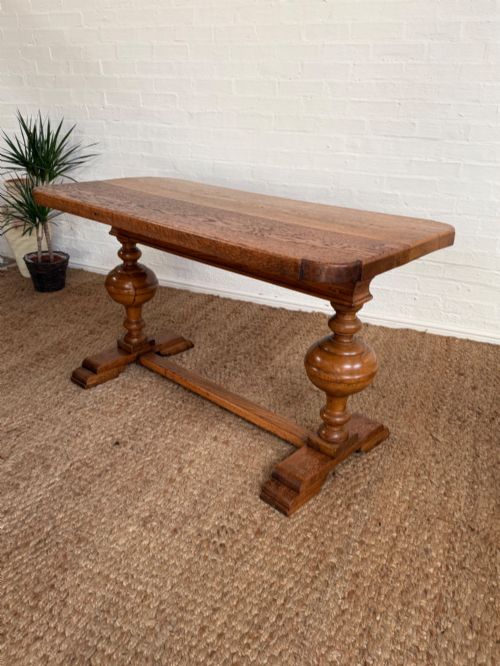
Jacobean Style Refectory Table
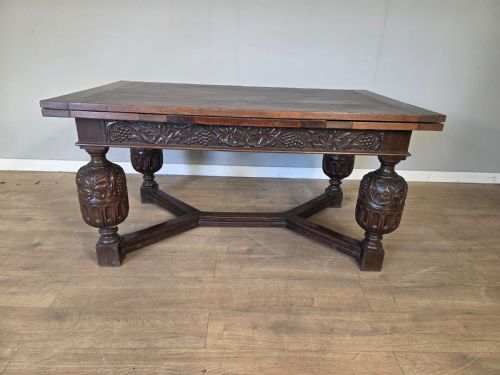
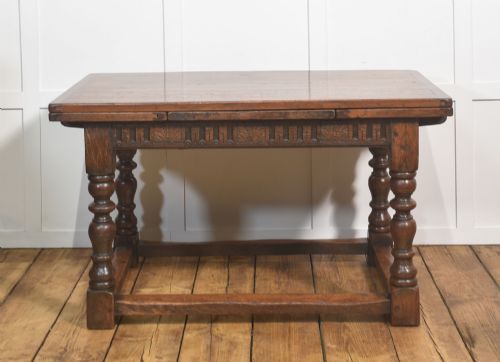
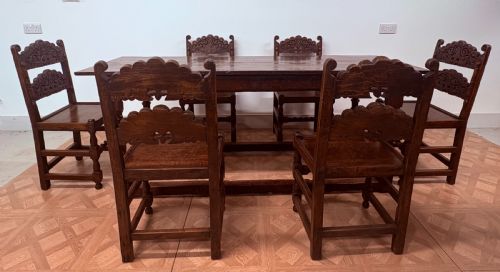
A jacobean style refectory table brings sturdy timber and historic presence to a room, built for long communal dining.
What to expect from a jacobean style refectory table
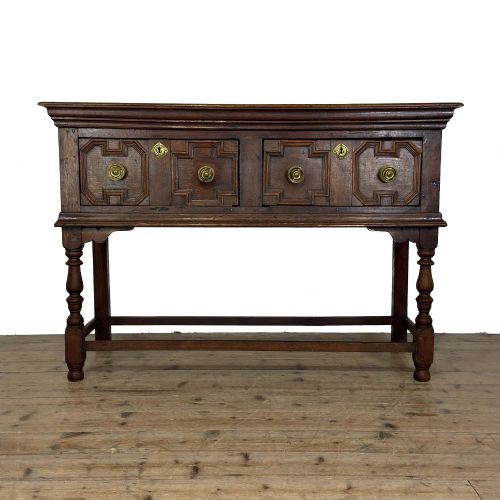
When searching for a jacobean style refectory table, buyers encounter heavy timber dining furniture spanning the seventeenth century through the twentieth century. The selection ranges from authentic period examples to nineteenth-century and early twentieth-century revival pieces created in the English country farmhouse tradition.
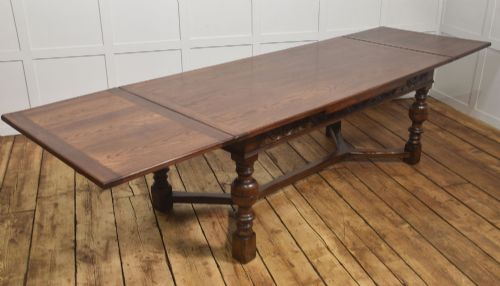
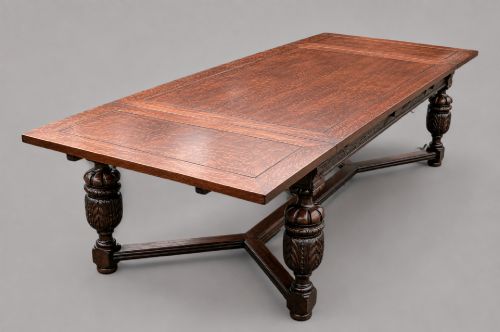
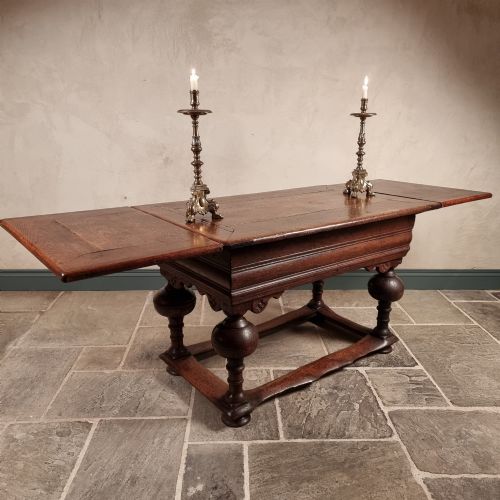
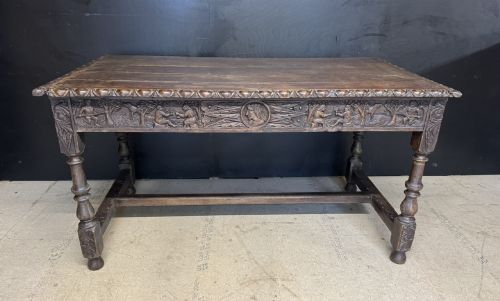
Most items appearing in this category are revival pieces dating from nineteen-ten to nineteen-thirty, alongside occasional seventeenth-century originals and nineteenth-century interpretations. These tables frequently incorporate draw-leaf mechanisms or plank tops designed to accommodate large gatherings.
Materials and construction methods
Construction relies primarily on solid oak, occasionally paired with red walnut and secured with brass hardware. Artisans built these tables using thick timber planks for the tops, supported by sturdy framing suited to heavy daily use.
Revival workshops utilised traditional joinery techniques seen in older furniture, creating robust dining tables with vernacular farmhouse characteristics. The timber surfaces show the natural grain and historic patination developed over decades of use.
Retail Price Guide 2026
Typical UK retail prices for jacobean style refectory table, calculated from the Sellingantiques database of over a million retail prices indexed since 2003. This retail price guide relies exclusively on Sellingantiques data; no external sources or auction records are used, so the figures do not describe the wider market.
Several tables measure exactly seven feet and five inches long, suggesting a standard workshop template from the revival era.
Distinctions in quality and execution
Quality separates tables built from thick, solid timber planks and stable period frames from lighter revival pieces with applied decorative elements. The choice of materials, particularly the selection of well-figured oak and walnut, dictates the visual weight and longevity of the piece.
The integrity of the construction, from the fit of the draw-leaf mechanisms to the stability of the trestle base, defines the better examples in this range. Superior pieces display thoughtful proportion and balanced integration of historic styles.
The Jacobean Style Refectory Table Glossary
- Refectory table
- A long dining table originally designed for communal meals in monastic refectories and later adapted for domestic use.
- Draw-leaf
- An extending table mechanism featuring two leaves stored beneath the main top that pull out to lengthen the surface.
- Jacobean revival
- A nineteenth- and twentieth-century design movement that reinterprets the architectural ornamentation and sturdy forms of the early seventeenth century.
- Plank top
- A table surface constructed from multiple parallel boards of timber joined together rather than a single sheet.
Frequently Asked Questions
How do I date a refectory table?
Dating relies on examining the tool marks, timber shrinkage, and joinery methods visible beneath the top and along the frame. Seventeenth-century originals show hand-carved details and pegged joints distinct from later machinery.
Revival pieces from the nineteenth and twentieth centuries often feature standardised screws and cleaner mechanical joints. Comparing the patination of the wood helps confirm the age of the structure.
Are these tables suitable for daily dining?
These robust wooden tables were originally constructed for heavy daily use and easily accommodate modern family life. Their solid timber surfaces withstand regular gathering and dining.
Protecting the wood from excessive moisture and heat preserves the historic finish. Regular maintenance keeps the surface conditioned without stripping its character.
What is a draw-leaf table?
A draw-leaf table incorporates sliding end panels stored directly beneath the main surface. Pulling these leaves outward extends the table length instantly for larger dinner parties.
This mechanism offers flexibility without requiring separate storage leaves kept away from the furniture. The design balances everyday compact proportions with expanded capacity.
How do I clean antique oak?
Cleaning antique oak requires a soft, dry cloth to remove dust settled in the grain and carved details. Avoid harsh chemical sprays that strip the aged patina.
Applying a traditional beeswax polish occasionally nourishes the dry timber and maintains a soft sheen. Gentle care protects the historic surface built up over generations.