

Jacobean Style Oak Chairs
Jacobean style oak chairs bring robust timber frames and carved regional character to dining rooms and halls.
Forms and periods
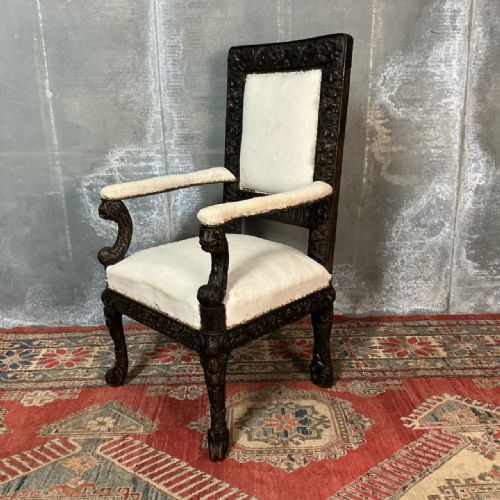
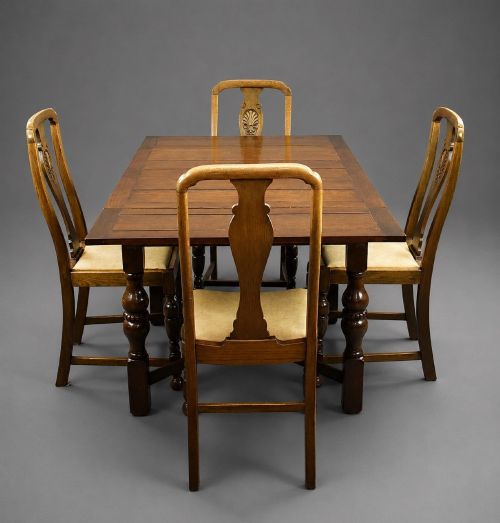
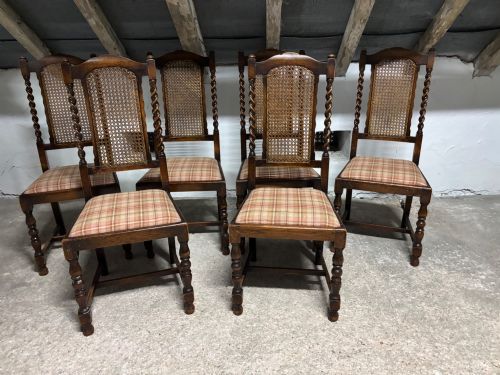
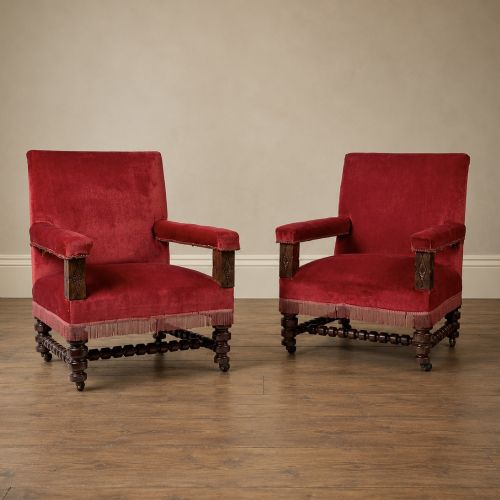
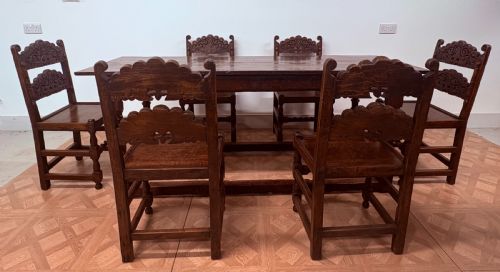
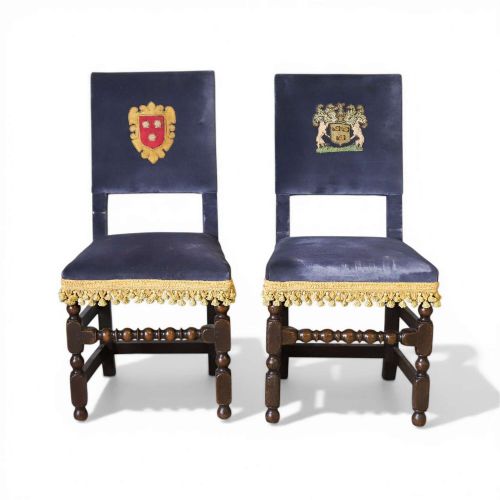
Jacobean style oak chairs encompass dining chairs, armchairs, side chairs, hall chairs, and elbow armchairs designed with seventeenth-century revival characteristics. Pieces appear from the seventeenth century, the Victorian era, and through the nineteenth and twentieth centuries, including items dated around 1700, 1880, 1890, 1920, and 1930.
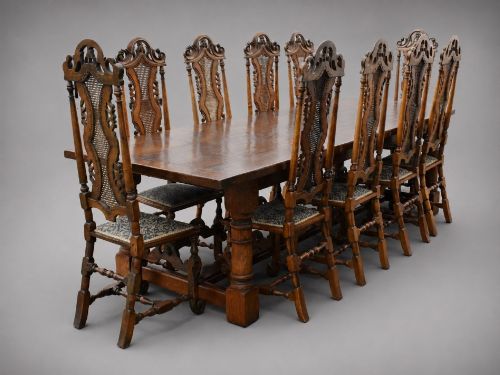
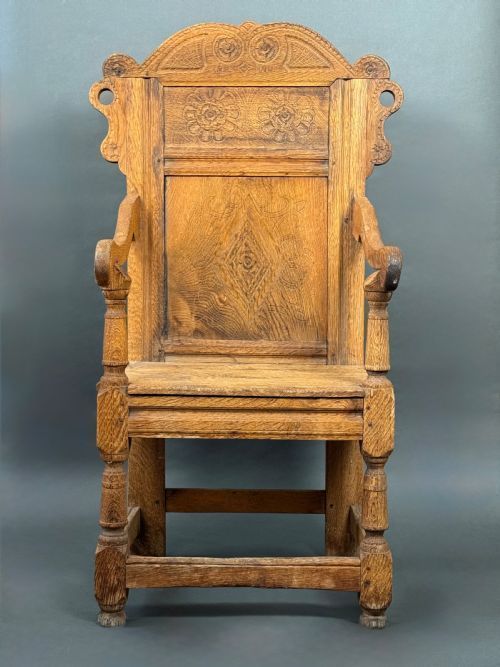
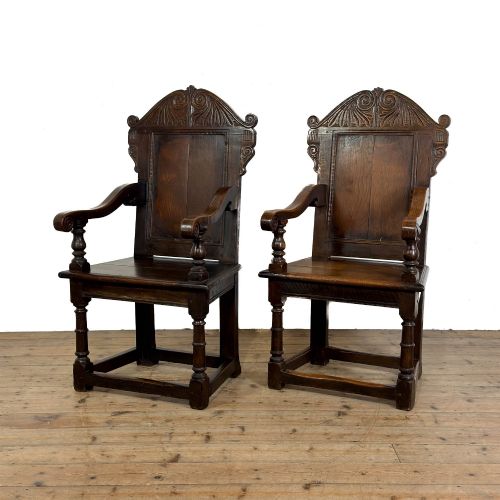
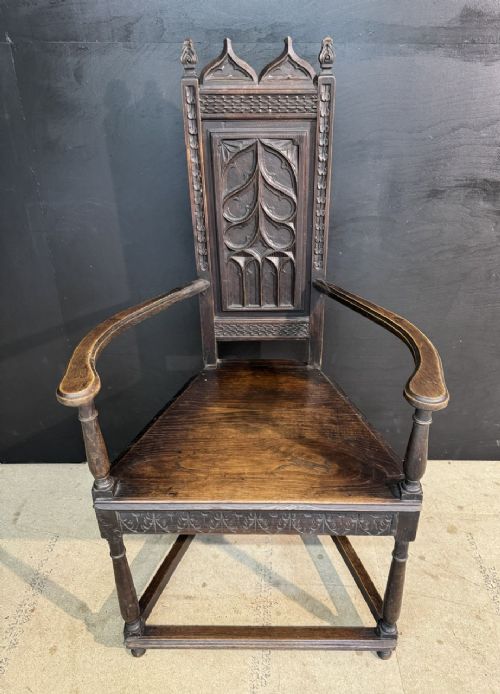
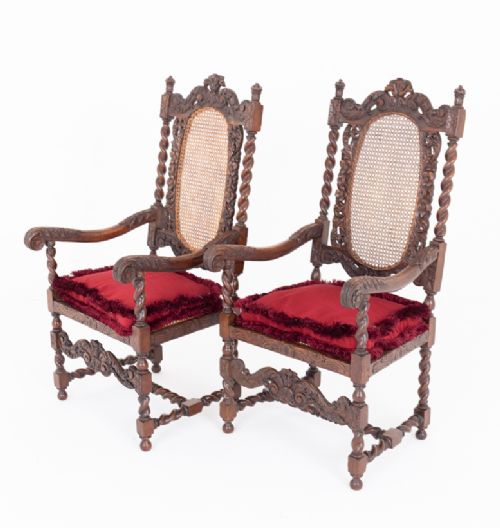
The selection frequently includes large matched sets for dining tables, alongside pairs of highback chairs, Yorkshire chairs, wainscot chairs, and Gothic variants. These seating forms draw on Jacobean, Carolean, Renaissance Revival, and Jacobean Revival aesthetics to deliver solid timber construction.
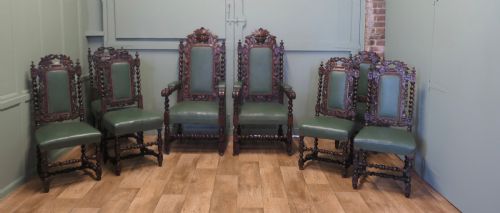
Buyers encounter individual pairs as well as extensive suites numbering six, eight, ten, or fourteen matching seats. These diverse configurations originate from various revival periods, reflecting ongoing historical interest in heavy oak furniture.
Defining quality
Quality rests upon the depth and crispness of the carved details across the oak frame, alongside the integrity of large matching sets. Sets numbering ten or fourteen uniform chairs demonstrate greater consistency than assembled groups.
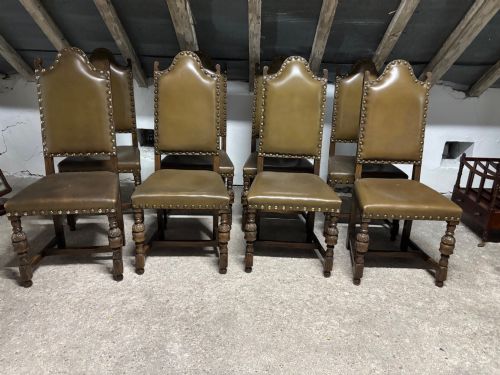
The integration of materials also distinguishes tiers of production, particularly where supple leather panels meet heavy timber frames secured by solid brass hardware. Period execution, whether from the nineteenth-century revival movements or earlier centuries, dictates the structural substance of each chair.
Retail Price Guide 2026
Typical UK retail prices for jacobean style oak chairs, calculated from the Sellingantiques database of over a million retail prices indexed since 2003. This retail price guide relies exclusively on Sellingantiques data; no external sources or auction records are used, so the figures do not describe the wider market.
The archive records large matched dining sets numbering up to fourteen pieces alongside pairs of wainscot and highback chairs.
The Jacobean Style Oak Chairs Glossary
- Jacobean Revival
- A nineteenth and twentieth-century design movement that reinterprets seventeenth-century forms, heavy carving, and upright proportions. This style heavily influences Victorian and later oak seating.
- Wainscot chair
- An enclosed wooden armchair featuring a solid panel back and solid seat construction. These early forms provide substantial timber framing.
- Barley twist
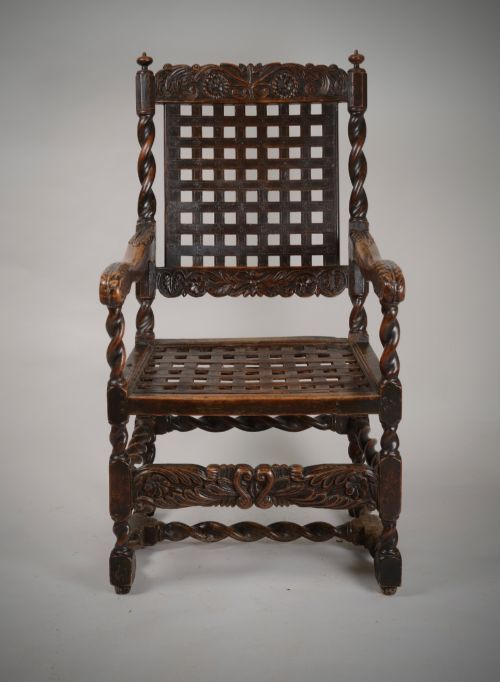
- A decorative turning technique resembling a twisted rope, carved into chair legs and supports. This detail appears frequently on revival dining chairs.
- Elbow armchair
- A seating form equipped with armrests, often paired with matching side chairs in large dining sets. These pieces provide broader proportions than standard dining seats.
- Highback chair
- A chair featuring an elongated vertical backrest designed to increase visual presence and support. These tall forms frequently incorporate carved detailing.
Frequently Asked Questions
How do I spot a true period chair?
Distinguishing original seventeenth-century seating from later revival pieces requires careful examination of timber shrinkage, joinery methods, and tool marks. True early examples display wear patterns and construction techniques specific to seventeenth-century joinery.
Revival pieces made during the Victorian era or the twentieth century often utilise mechanised cutting tools and show standardised construction methods across matched sets.
Are large sets harder to find?
Assembling or finding matching sets of eight, ten, or fourteen chairs proves more challenging than locating single pairs. Dining sets remained vulnerable to attrition over centuries, making large surviving groups uncommon.
Most larger suites originate from nineteenth-century revival periods when workshops produced extensive matching dining arrangements for large houses.
How do I care for leather upholstery?
Leather inserts on oak chairs require stable humidity levels and occasional conditioning to maintain suppleness. Avoiding direct sunlight prevents the hide from drying and cracking over time.
Brass studs securing the leather should remain dry to prevent oxidation from marking the surrounding timber grain.
Where were highback chairs used?
Highback chairs functioned as formal seating around large dining tables or as decorative items in halls and reception rooms. Their tall proportions added formal weight to domestic interiors.
In revival settings, these chairs complemented refectory tables and heavy oak architecture.