
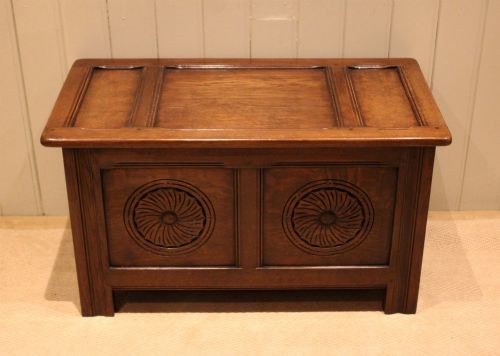
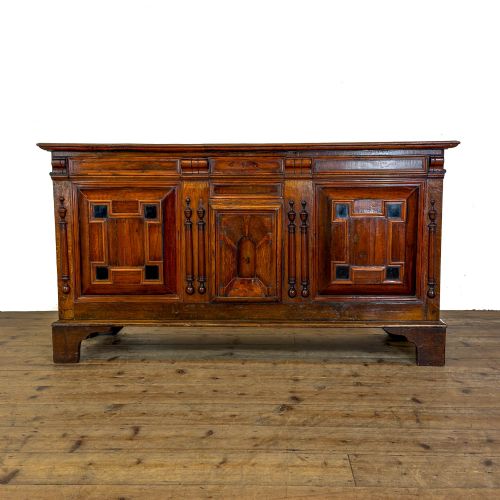
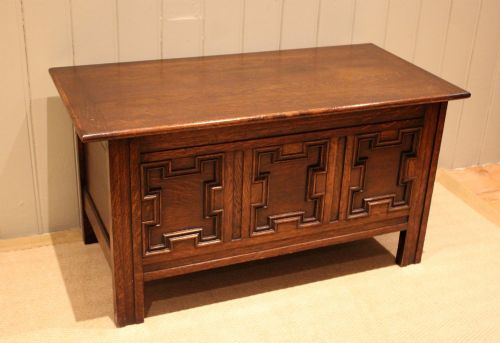
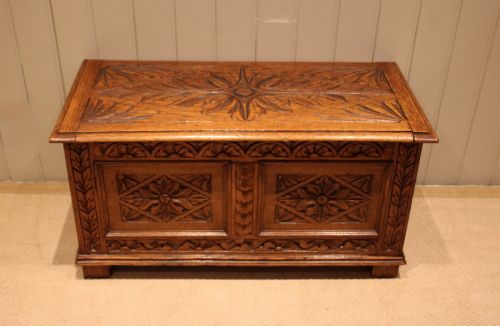


Jacobean Style Coffer
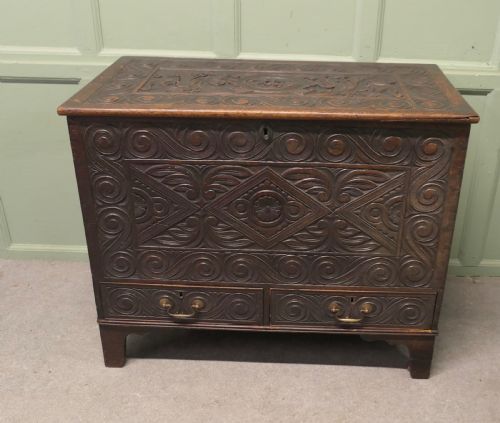
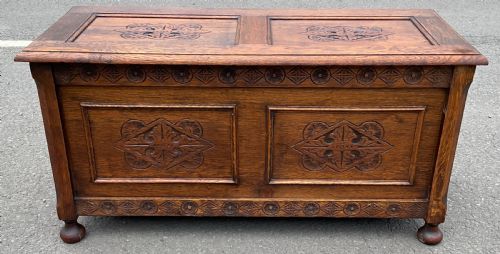
A jacobean style coffer brings solid timber storage into a room, offering sturdy utility and centuries of carved design.
Jacobean Style Coffer
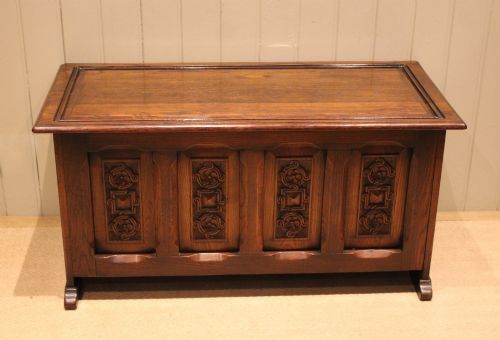
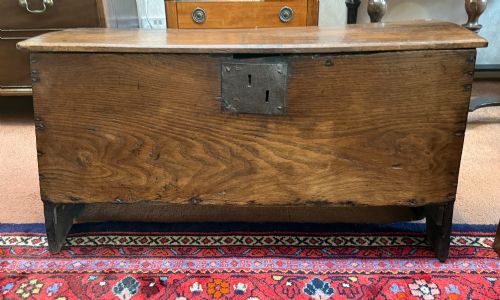
When searching for a jacobean style coffer, buyers encounter heavy wooden storage chests rooted in seventeenth-century forms. These pieces serve as blanket boxes, hall storage, or occasional tables depending on their proportions.
The versions most commonly met on this page span both original seventeenth-century pieces and later revival works from the nineteenth and twentieth centuries. Oak dominates the selection, appearing alongside fruitwood and occasional metal hardware.
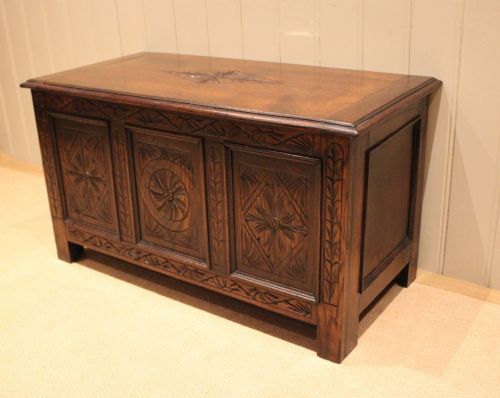
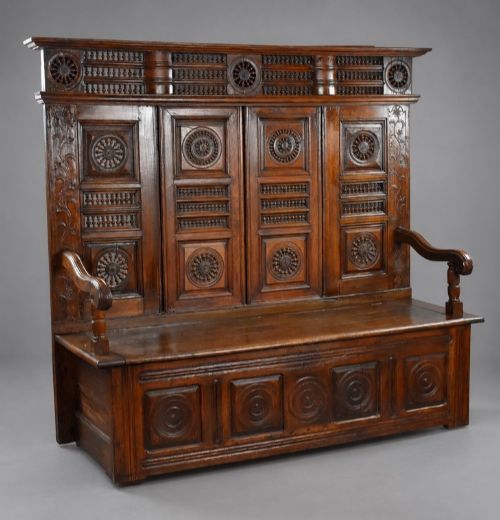
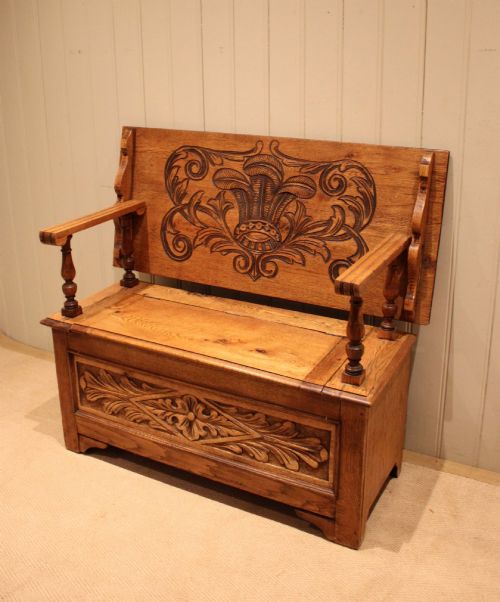
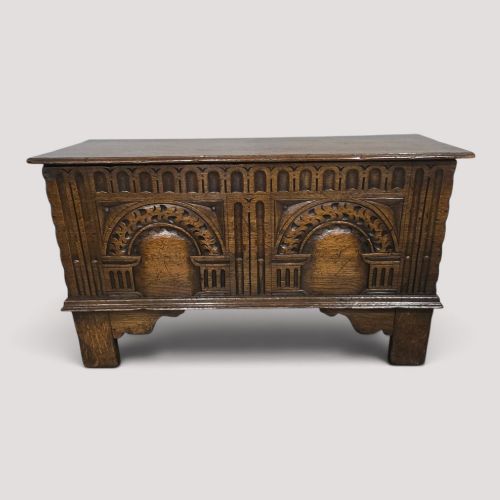
Makers across different eras drew on Elizabethan and Jacobean motifs, producing panelled construction with carved decoration. Buyers find standard large chests alongside smaller blanket boxes and related forms like settles and monks benches.
Materials and Construction
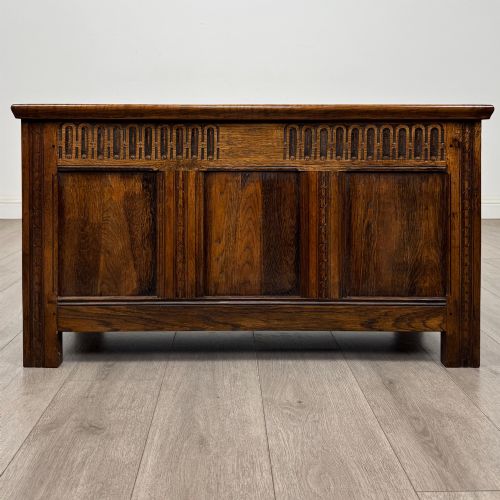
Carpenters built these storage pieces primarily using solid oak, occasionally selecting fruitwood or ebonised wood for specific decorative effects. Construction typically relies on framed and panelled joints designed to accommodate the natural movement of timber over time.
Surface decoration relies heavily on hand carving, utilising geometric patterns, strapwork, and figural motifs such as the Green Man. Iron and brass hinges, locks, and brackets provide functional reinforcement and secure closure for the heavy lids.
Jacobean Style Coffer Retail Price Guide 2026
Typical asking prices for jacobean style coffer among the pieces listed under this phrase on Sellingantiques today, from the lower quarter to the upper quarter. They describe what is for sale here now, not the wider market.
Keep an eye out for hidden compartments inside, where ancestors once hid spare coinage from tax collectors.
Assessing Quality and Craftsmanship
Quality in these storage chests rests on the crispness of the timber carving and the integrity of the panelled joints. Superior examples display deeply chiselled ornament that retains sharp relief across the front panels and stiles.
The choice of raw material also dictates standing, with dense, well-figured solid oak sitting above lesser hardwoods. Original hinges, locks, and timber floorboards contribute significantly to the enduring integrity of an individual piece.
The Jacobean Style Coffer Glossary
- Coffer
- A large wooden chest used historically for storing valuables, textiles, or documents. These sturdy boxes often feature hinged lids and raised feet.
- Mule chest
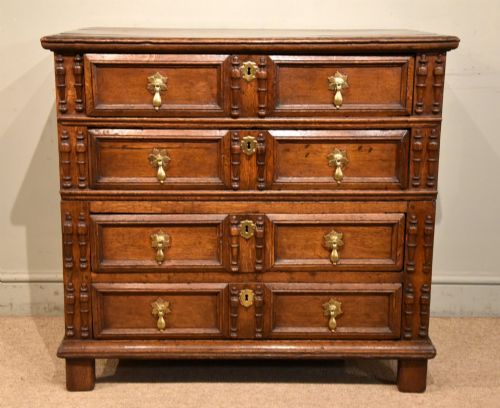
- A storage chest equipped with one or more drawers beneath the main internal compartment. This form developed in the eighteenth century to provide easier access to stored linens.
- Monks bench
- A convertible piece of furniture featuring a hinged top that transforms a solid seat into a table. This form appears frequently in revival furniture from the early twentieth century.
- Stile
- The vertical upright member in a frame and panel construction. Stiles provide the primary structural support for the front and sides of a coffer.
- Green Man
- A decorative architectural motif depicting a human face carved with leaves or vines issuing from the mouth. This ancient symbol appears frequently on carved oak panels.
Jacobean Style Coffer: Frequently Asked Questions
What is a jacobean style coffer used for?
These wooden chests function primarily as practical storage for blankets, linens, and household items. Many buyers also use them as hall benches or occasional surfaces in living spaces.
Their heavy construction and flat lids allow them to double as casual seating or display tables within traditional interiors.
How do I tell an original from a revival piece?
Distinguishing period pieces from later revivals requires examining the tool marks, timber shrinkage, and assembly methods used in the carcass. Seventeenth-century originals display hand- split boards and historical joinery that differ from twentieth-century production.
Revival pieces often utilise machine-sawn timber or twentieth-century hardware while successfully emulating earlier Jacobean decorative vocabulary.
What wood are these coffers made from?
Solid oak serves as the primary material for the vast majority of these storage chests. Craftsmen also employed alternative hardwoods such as fruitwood and ebonised timber for specific decorative contrasts.
Iron and brass frequently appear as structural hinges, locking mechanisms, and decorative keyplates attached to the main body.
How do I care for an antique oak chest?
Maintaining these timber pieces involves keeping them away from direct heat sources and sudden temperature fluctuations. Regular dusting with a soft cloth preserves the dry wax finish typically found on antique oak.
Avoiding excessive moisture protects the historic joints and prevents the solid wood from warping or splitting over time.