


Jacobean Revival Oak Table
These jacobean revival oak table examples bring heavy timber architecture and rich period carving directly into modern rooms.
Jacobean Revival Oak Table
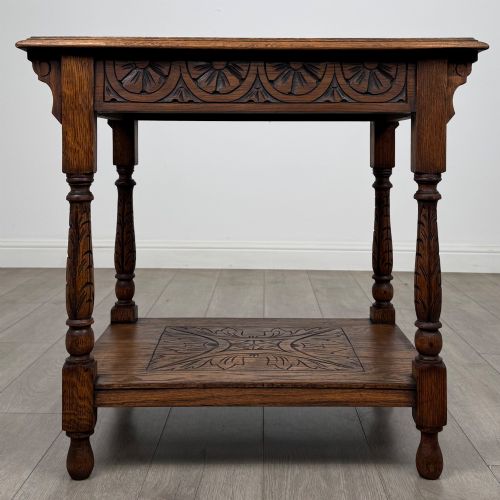
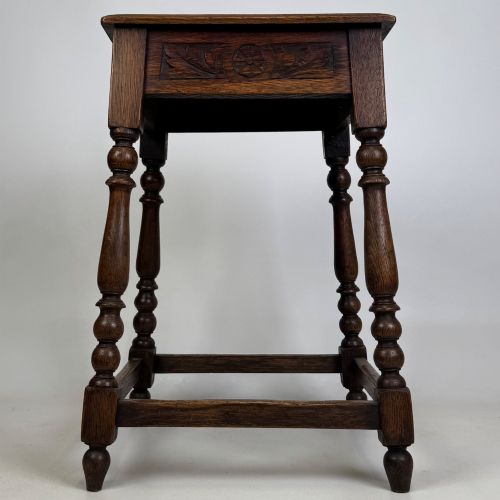
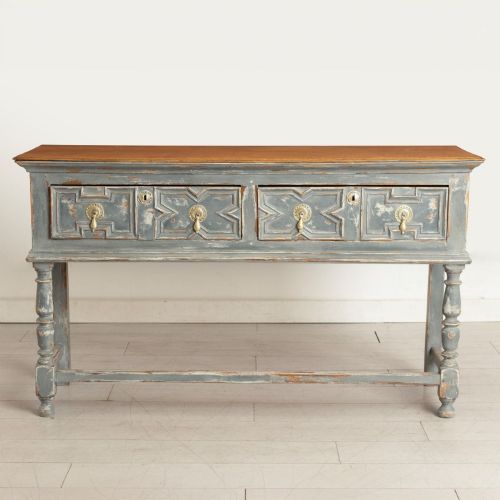
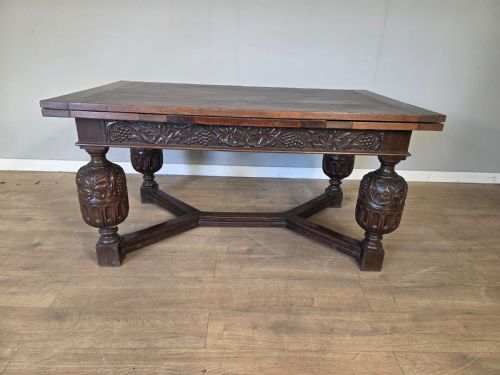
A jacobean revival oak table draws upon sixteenth and seventeenth-century forms, reinterpreted primarily during the Victorian, Edwardian, and 1920s periods. Buyers seeking this phrase encounter sturdy dining pieces, refectory designs, and smaller occasional items built to last.
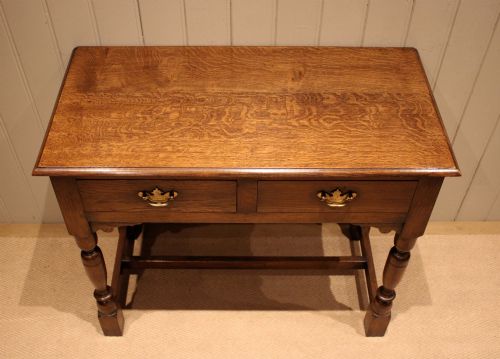
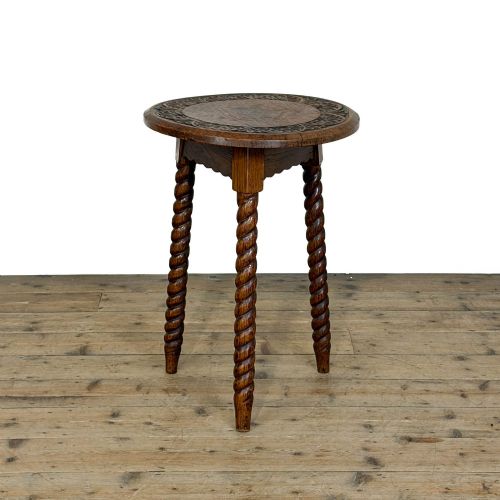
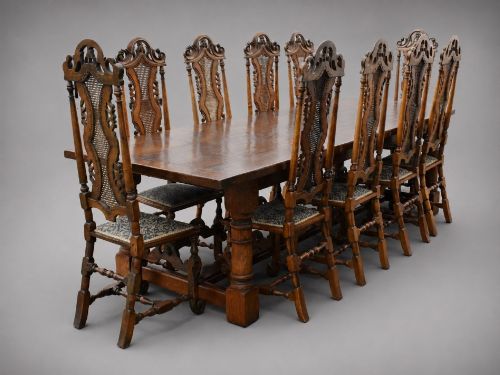
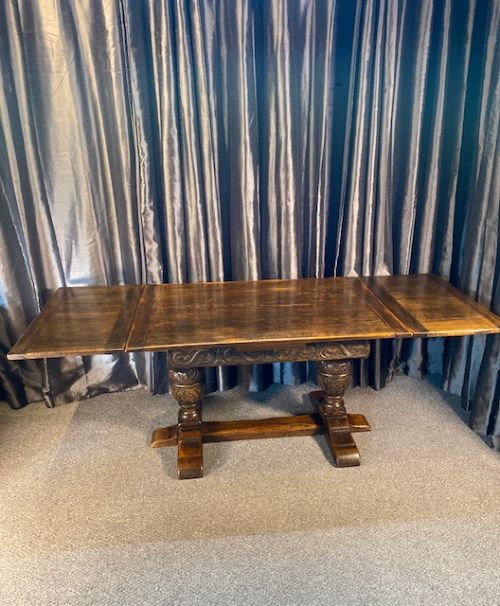
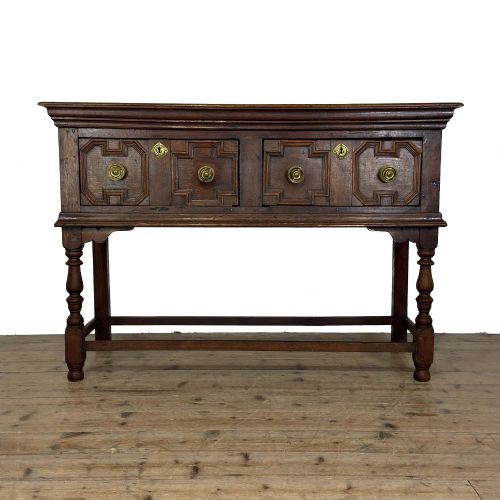
The selection ranges from expansive extending dining models and draw-leaf tables to compact side tables, hall furniture, and tripod cricket tables. These forms suit daily dining and hallway placement alike.
Origins span late nineteenth-century Victorian workshops through to early twentieth-century production, capturing Tudor and Elizabethan stylistic influences in solid timber.
What varies in quality
Quality rests upon the choice of timber, distinguishing solid oak construction from pieces utilising secondary woods or lighter construction methods.
The crispness and depth of the carved ornamentation separate standard production from superior pieces, alongside the mechanical smoothness of draw-leaf and extending actions.
Listings feature periods spanning from the Victorian era through the Edwardian years up to the 1930s.
The Jacobean Revival Oak Table Glossary
- Jacobean Revival
- A nineteenth and twentieth-century stylistic movement mimicking the heavy geometric forms, turned legs, and carved ornamentation of the early seventeenth century.
- Refectory Table
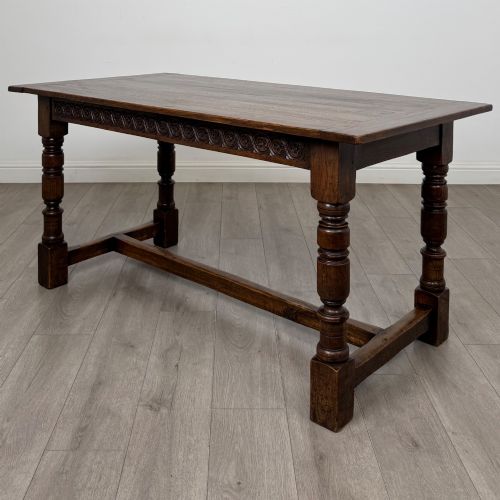
- A long, narrow dining table traditionally used in monasteries and large halls, characterised by heavy legs connected by floor-level stretchers.
- Draw-Leaf Table
- A dining table fitted with pull-out leaves stored beneath the main top, allowing the surface area to expand easily.
- Barley Twist
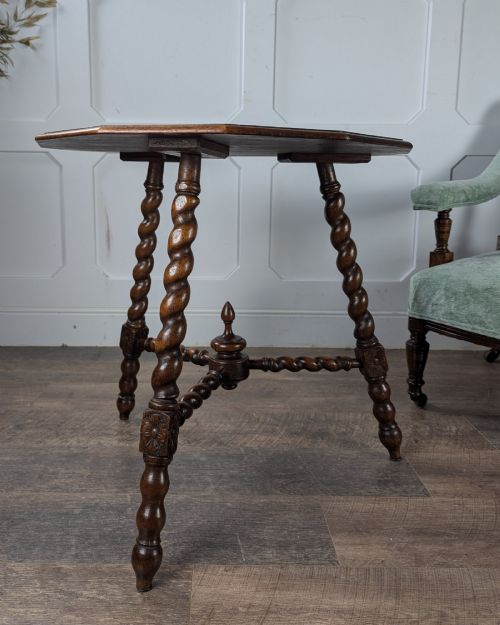
- A spiral-turned wooden column or leg popular in seventeenth-century furniture and revived extensively during the Victorian and Edwardian eras.
- Cricket Table
- A small, light occasional table featuring three splayed legs and a round top, designed originally for uneven cottage floors.
Jacobean Revival Oak Table: Frequently Asked Questions
How do I identify a jacobean revival table?
Look for heavy turned supports, dark oak timber, and deep geometric carvings across the apron and legs. These design cues point directly to nineteenth and twentieth-century revival output.
Check the construction underneath for modern fixings or machine marks, which distinguish a revival piece from genuine seventeenth-century joinery.
What is a draw leaf dining table?
A draw leaf table contains two hidden extension leaves tucked beneath the main surface. Pulling them outwards extends the tabletop instantly.
This mechanism allows the table to remain compact for daily use while accommodating extra guests during dinner parties.
Are these tables made of solid oak?
Many examples utilise solid oak throughout the top, frame, and legs, providing substantial weight and durability. Some pieces pair solid oak tops with complementary timber frames.
Reviewing individual listings confirms whether a specific table uses solid timber or veneered surfaces.
How do I care for antique oak furniture?
Maintain the finish by dusting regularly with a soft, dry cloth and avoiding direct exposure to strong sunlight or heat sources. Occasional application of suitable wax preserves the timber.
Keep humidity levels stable within the room to prevent the solid oak from splitting or moving over time.