

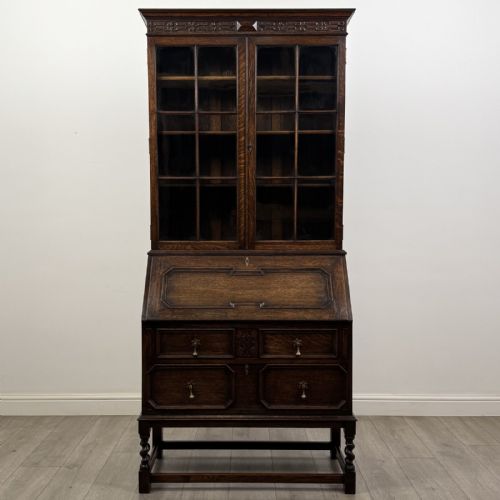
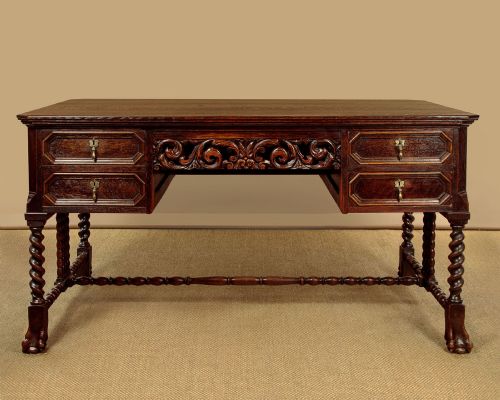
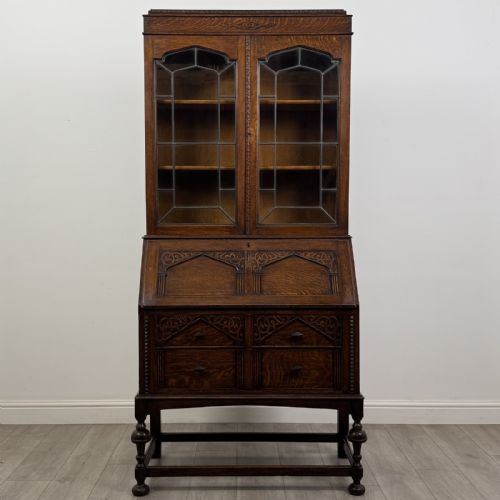
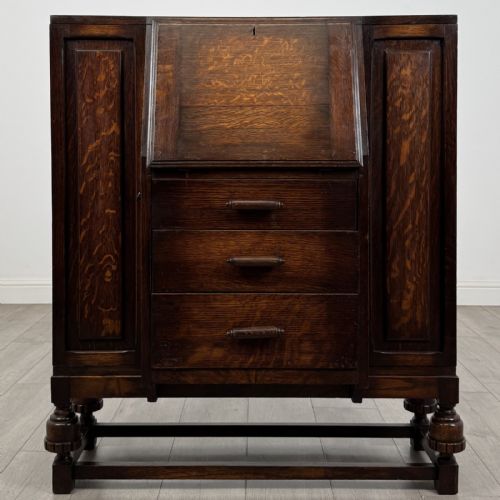


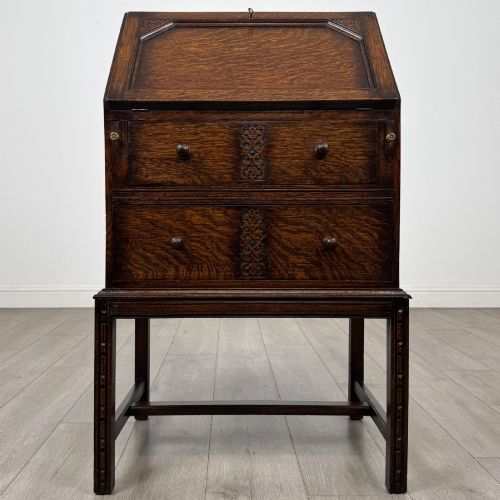
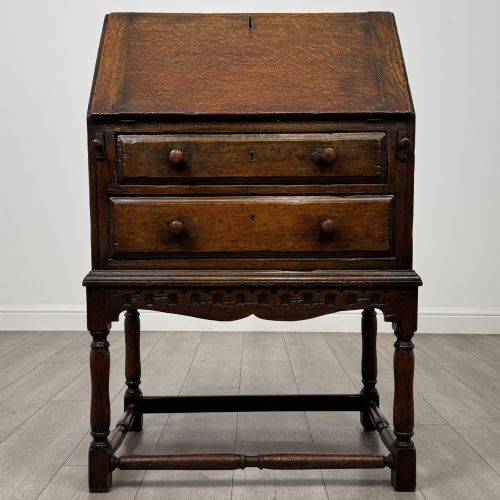
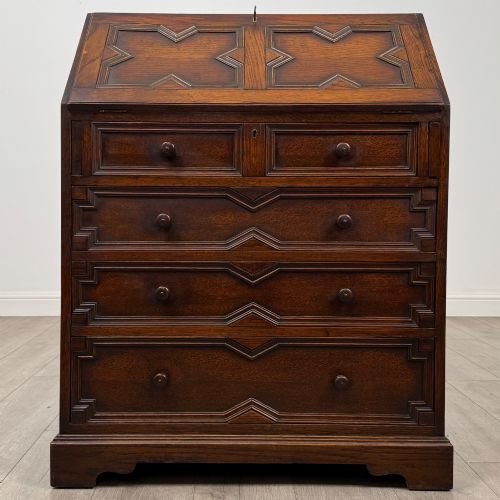
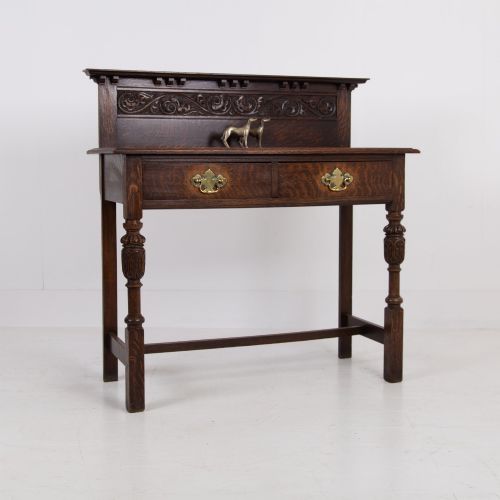
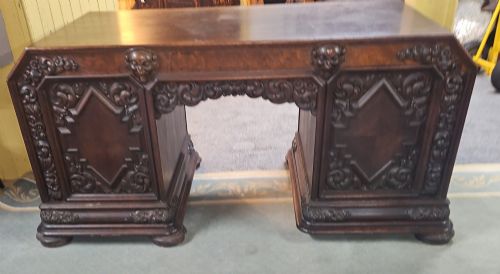

Jacobean Revival Oak Desk
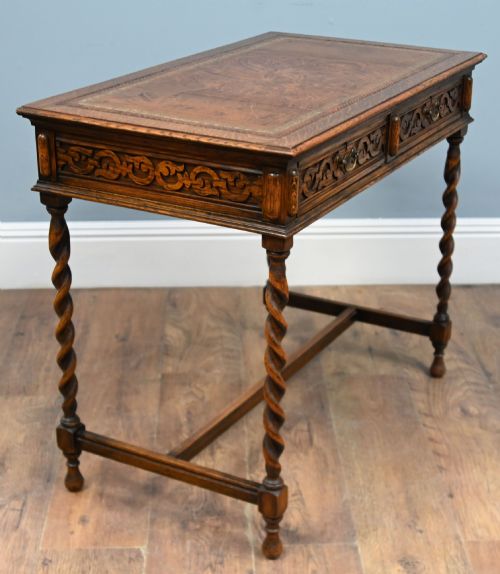
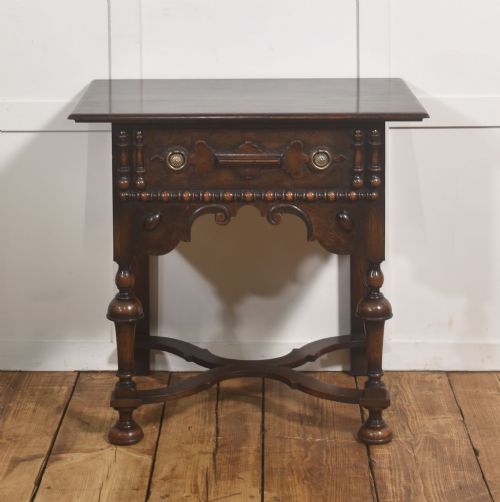
These jacobean revival oak desk pieces channel seventeenth-century motifs into practical nineteenth and twentieth-century writing furniture for the home.
Jacobean Revival Oak Desk
A jacobean revival oak desk brings heavy timber construction and historic ornament into domestic workspaces. Buyers searching this phrase encounter pieces produced across the nineteenth and twentieth centuries, particularly from the Edwardian era and the decades around eighteen-eighty to nineteen-twenty.
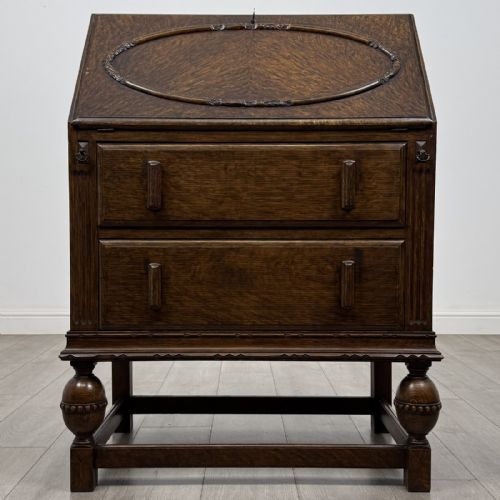
The selection on this page centres primarily on desks, writing tables, and bureaux, alongside related forms such as bureau bookcases and pedestal desks. These items draw heavily upon Tudor, Carolean, and Elizabethan design vocabularies while serving modern writing needs.
What Varies in Quality
Quality rests upon the crispness of the hand carving and the selection of the timber. Finely executed relief work and well-figured solid oak separate superior examples from simpler commercial production.
Proportion and structural integrity define the higher tier of these desks. Thoughtful integration of period hardware, original leather inserts, and balanced architectural proportions elevate an ordinary writing table into a distinguished piece.
Jacobean Revival Oak Desk Retail Price Guide 2026
Typical asking prices for jacobean revival oak desk among the pieces listed under this phrase on Sellingantiques today, from the lower quarter to the upper quarter. They describe what is for sale here now, not the wider market.
Several desks feature fierce little carved wooden greenmen staring out from beneath the drawers, keeping a watchful eye on your correspondence.
Gillows Of Lancaster
The Jacobean Revival Oak Desk Glossary
- Jacobean Revival
- A nineteenth and twentieth-century design movement that reinterprets seventeenth-century English styles. It draws upon the heavy turned legs, panelled construction, and strapwork ornamentation of the Jacobean period.
- Linenfold
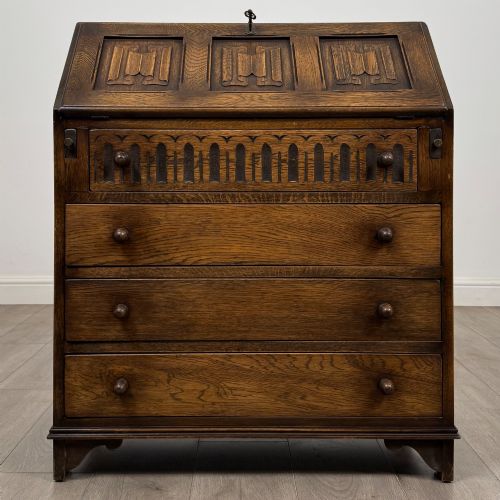
- A style of wood carving that mimics folded parchment or fabric. This motif frequently appears on the vertical panels of bureaux and cabinet doors.
- Bureau
- A sloping desk form that opens to reveal internal compartments and pigeonholes. Edwardian examples in oak often incorporate linenfold carving.
- Pedestal Desk
- A freestanding writing table supported by two banks of drawers. These large pieces offer substantial storage beneath the main writing surface.
- Carolean Style
- A design classification referencing the reign of Charles the Second, associated with ornate scrolling woodwork and rich upholstery. Pieces in this style often feature dynamic turned supports.
Jacobean Revival Oak Desk: Frequently Asked Questions
What is a jacobean revival oak desk?
It is a piece of nineteenth or twentieth-century writing furniture influenced by seventeenth-century English design. These items combine historic timber framing with functional workspace arrangements.
They often feature characteristic elements like carved panels, geometric mouldings, and turned legs. The style reflects a Victorian and Edwardian fascination with historicism.
How do I date a jacobean revival desk?
Dating relies on examining construction methods, secondary timbers, and hardware. Pieces from the Victorian period tend to display heavier, deeper carving and darker finishes.
Edwardian and nineteen-twenty iterations often present brighter golden oak or lighter construction. Archive examples and documented maker pieces also provide reliable comparative dates.
What materials are used on these desks?
Oak serves as the primary structural and visual timber across all listings. Many writing surfaces incorporate inset panels of leather for a durable writing plane.
Additional materials include brass drop handles or key escutcheons and occasional glass doors on bureau bookcase variants. Solid construction predominates, though oak veneers appear on select forms.
How do I care for an oak desk?
Protect the timber by maintaining stable room humidity away from direct heat sources. Regular dusting with a dry lint-free cloth preserves the finish.
Leather inserts benefit from occasional gentle conditioning to prevent cracking. Avoid harsh chemical cleaners that can strip historic wax or polish.
Where were these desks used?
They were originally designed for libraries, studies, and grand reception rooms in period homes. Their imposing timber presence suited formal domestic administrative tasks.
Today, they transition easily into modern home offices or studies. They offer practical surface area while maintaining a distinct historic character.