


Jacobean Revival Monks Bench
These jacobean revival monks bench pieces are heavy timber seats that transform into tables, offering sturdy utility and carved historical charm for the hall.
Jacobean Revival Monks Bench
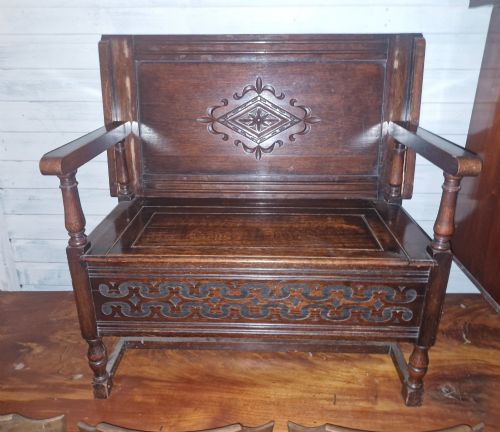
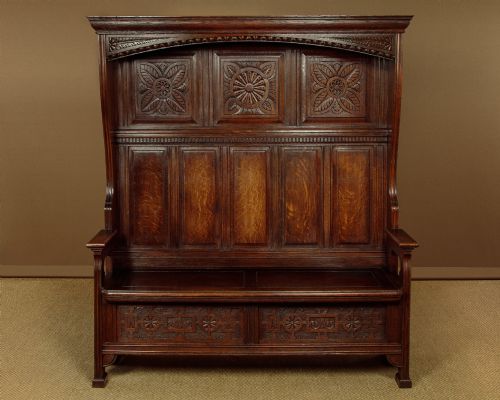
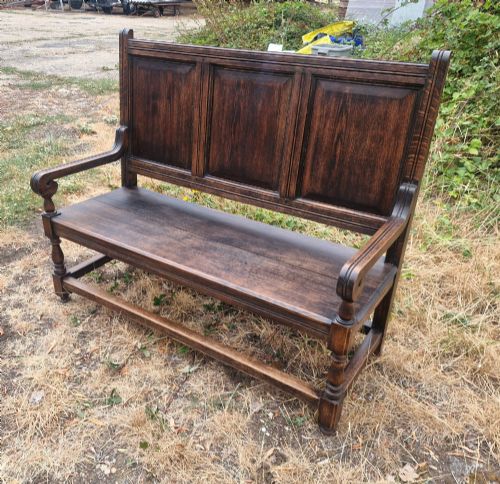
When you search for a jacobean revival monks bench, you are looking at substantial wooden furniture designed primarily for entrance halls and reception spaces. The forms on this page span several decades, reaching from the late nineteenth century through to the 1930s, encompassing pieces described as settles, hall seats, and monks benches.
The version you are most likely to meet on this page is an oak hall seat featuring a lift-up lid for storage, a high panelled back, and a fold-over top mechanism. Variations include canopy top box settles and armchair formats, drawing stylistic inspiration from Jacobean, Victorian Baronial, Gothic, and Renaissance revivals.
These items were built to occupy prominent positions in hallways, serving simultaneously as seating, storage chests, and occasional tables. Their presence reflects a sustained nineteenth and twentieth century taste for heavy, carved woodwork reminiscent of earlier centuries.
Materials and Construction
Oak is the dominant material across these listings, providing the structural integrity and heavy weight required for large hall seats and settles. Joinery techniques rely on traditional panelled construction, utilising pegged joints and solid boards to build deep storage boxes and high, supportive backs.
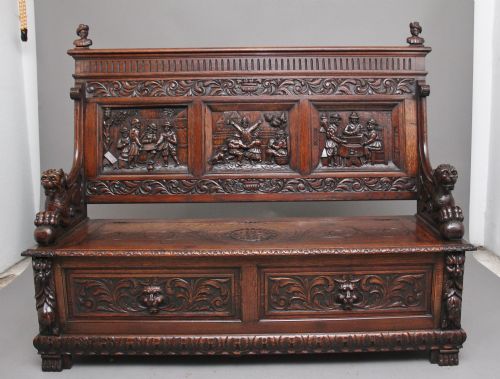
Carving is central to the decoration of these pieces, applied to panels, arms, and crest rails to render motifs such as the Green Man or geometric strapwork. Metal hinges, iron brackets, and occasionally fabric elements support the folding mechanisms and interior upholstery where present.
Keep an eye out for the occasional Green Man peering out from the carved oak foliage.
Judging the Quality
Quality in these pieces is determined by the depth and crispness of the timber carving, as well as the selection of the oak itself. Pieces exhibiting deeply chiselled relief work and well-figured grain stand apart from simpler, more plainly panelled examples.
Construction methods also separate the range, with superior items displaying carefully fitted joints, substantial timber thickness, and robust mechanisms for folding tops and lift-up lids. The integration of structural elements like canopy tops or elaborate arm supports further distinguishes the finer examples.
The Jacobean Revival Monks Bench Glossary
- Monks bench
- A dual-purpose piece of furniture featuring a back that folds down to create a table top over a seat with storage beneath. This form became particularly popular during revival periods.
- Settle
- A wooden bench with a high solid back, solid arms, and a box base for storage, traditionally placed near hearths or in hallways to block draughts. They are typically constructed from heavy oak.
- Green Man
- A sculptural architectural ornament depicting a human face disgorged from or entwined with foliage and vines. It frequently appears on carved woodwork from revival periods.
- Cofer
- An antique chest or box with a lid, used for storage and sometimes incorporated into the base of a bench or settle. In these listings, coffer fronts often feature panelled and carved decoration.
- Canopy top
- An architectural overhead projection supported by the back uprights of a settle or seat. It creates a sheltered enclosure for the person sitting beneath it.
Jacobean Revival Monks Bench: Frequently Asked Questions
What is a monks bench used for?
A monks bench serves as both a hallway seat and a small table through a pivoting or folding top mechanism. The enclosed space beneath the seat provides storage for items like gloves and hats.
Historically, the convertible top allowed the seat to double as an occasional table in smaller rooms or halls. Today, they function primarily as decorative and practical entrance hall furniture.
How do I date an oak settle?
Dating relies on examining the construction methods, hardware, and style of the carving. Pieces from the Victorian and Edwardian periods often utilise machine-sawn timber alongside hand finishing.
Revival pieces adopt historical motifs from the seventeenth century and earlier, but the timber preparation, interior linings, and hinge types usually reveal a later nineteenth or early twentieth century origin.
Where should I place a hall bench?
These benches suit entrance halls, corridors, and large reception rooms where their substantial depth and high backs can be accommodated against a wall. They require adequate floor space to allow the lift-up lid or folding top to operate.
Placing them away from direct heat sources helps protect the solid oak timber from drying out and splitting over time.
How do I care for antique oak furniture?
Maintenance involves dusting with a dry or slightly damp cloth and occasionally applying traditional beeswax to nourish the oak surface. Avoid using silicone-based sprays that can build up on the wood.
Keeping the furniture away from direct sunlight and sudden temperature changes prevents the timber from warping or cracking.