



Edwardian Oak Monks Bench
These edwardian oak monks bench pieces combine multi-functional seating and table surfaces with sturdy craftsmanship, offering practical charm for a hallway or living space.
Edwardian Oak Monks Bench
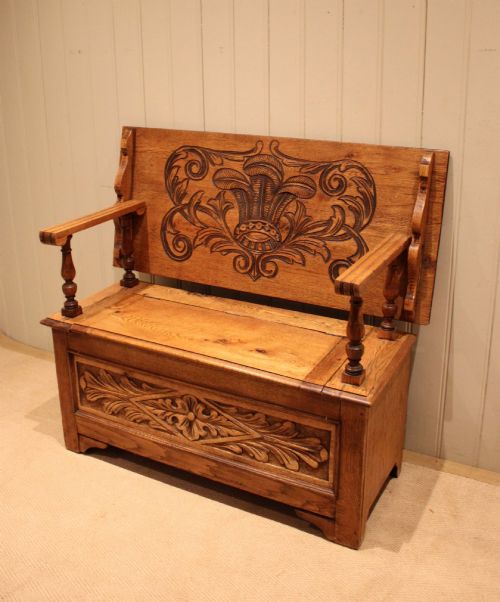
An edwardian oak monks bench serves as a dual-purpose piece of furniture that typically converts from a seat with a high back into a table. The version most commonly met on this page dates from the early twentieth century, reflecting the tastes of the Edwardian era.
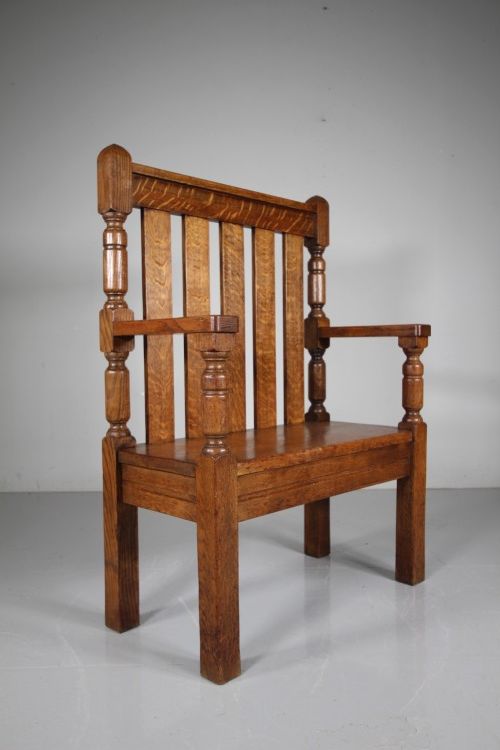
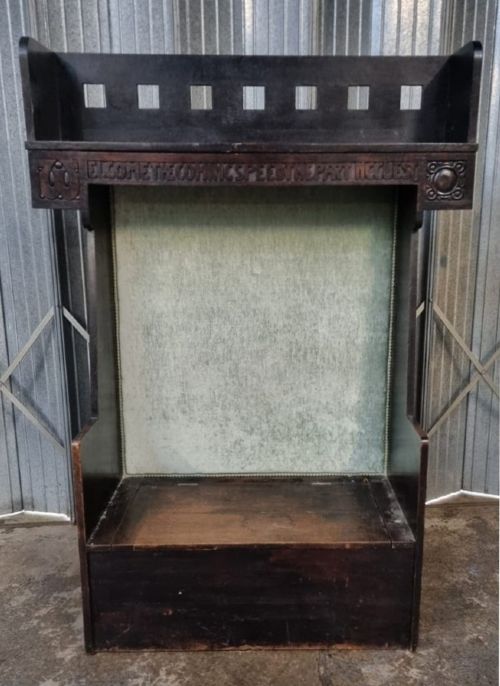
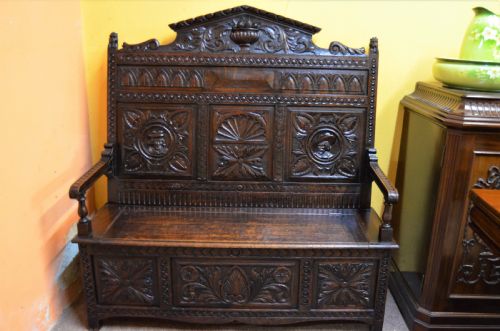
Makers often drew upon earlier design motifs, resulting in pieces finished with Jacobean Revival carving or Arts and Crafts simplicity. These benches double as hall seats with lift-up lids for storage, making them suitable for entryways.
How they were made
The primary material found across these listings is solid oak, selected for its durability and characteristic grain. Workshops utilised traditional joinery methods alongside panelled construction to build the main body of each bench.
Metal fittings such as brass hinges, iron brackets, and pivoting mechanisms were incorporated to allow the backrest to tilt forward smoothly and form a table top.
Listings feature oak combined with iron and brass hardware, spanning periods from the Victorian era through the nineteen thirties.
What varies in quality
The depth and crispness of the carving distinguish a standard production piece from finer workshop examples. Relief panels featuring motifs inspired by the Arts and Crafts movement or Gothic Revival show greater hand-carved detail.
The structural integrity of the pivoting mechanism and the quality of the timber selection also separate pieces. Benches fashioned from solid oak with well-fitted storage compartments and sturdy panel construction represent the higher end of the range.
Liberty·Shapland and Petter·Justice of Dundee
The Edwardian Oak Monks Bench Glossary
- Monks bench
- A piece of furniture with a hinged back that flips forward to convert a chair or settle into a table top. This design allowed dual utility in compact living spaces.
- Settle
- A wooden bench featuring a high back, solid arms, and often an enclosed base with storage beneath the seat. They were traditionally placed near hearths to block draughts.
- Jacobean Revival
- A nineteenth and early twentieth century style that imitates seventeenth-century English furniture. It is characterised by heavy proportions, dark finishes, and geometric mouldings.
- Hall seat
- A sturdy wooden bench intended for an entryway or hallway, frequently incorporating a lift-up lid for storing hats, gloves, or walking sticks.
Edwardian Oak Monks Bench: Frequently Asked Questions
How do you convert a monks bench into a table?
The high wooden backrest pivots forward on side hinges or wooden pegs until it rests horizontally upon the arms of the seat. This creates a flat surface positioned at table height.
Lifting the backrest back into the vertical position restores the piece to a chair or settle. The mechanism relies on balanced joints rather than complex metal gearing.
Where should I place a monks bench?
These benches sit well in hallways, entrance porches, or large living rooms where their dual function as a seat and table can be utilised. Placing them against a solid wall allows the high backrest proper support.
Because they incorporate storage beneath the lid, they help keep entryways tidy by holding everyday items. Ensure there is enough floor clearance in front of the piece for the back to flip into a table.
How do I care for oak furniture?
Maintain the timber by dusting regularly with a soft cloth and applying a traditional beeswax polish occasionally to nourish the oak. Avoid placing the piece in direct sunlight or near heat sources to prevent the wood from drying out.
Spills should be wiped away promptly with a dry or slightly damp cloth. Using coasters on the table surface protects the antique finish from moisture marks.
How do I identify an Edwardian monks bench?
Edwardian examples typically date from around nineteen hundred to the nineteen tens, featuring lighter oak finishes or traditional dark polish. They often combine Jacobean Revival carving with practical storage compartments under the seat.
Looking at the construction of the joints and the type of metal hinges can help confirm the period. Many pieces reflect the lingering influence of the Arts and Crafts movement in their clean structural lines.