
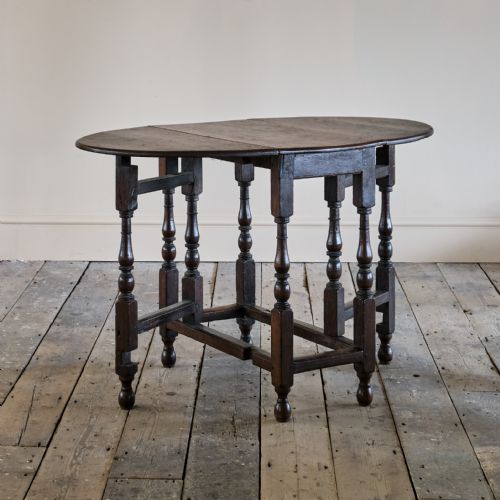

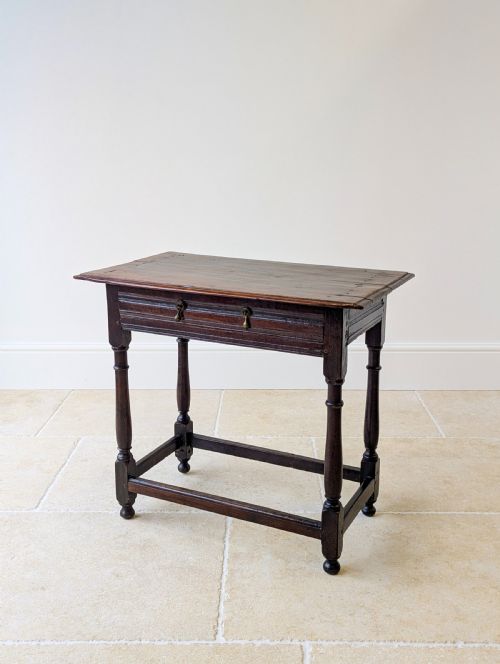
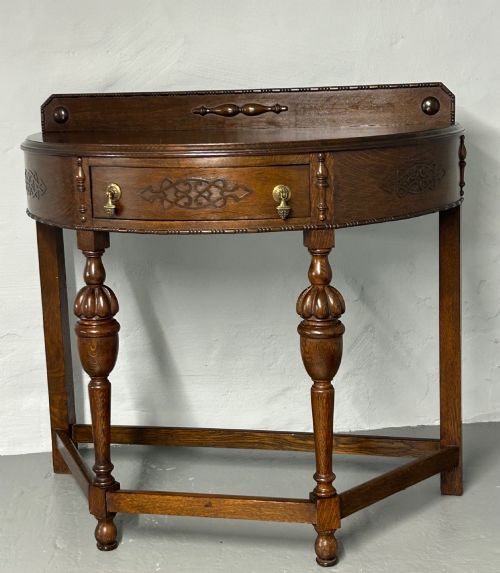


Jacobean Oak Side Stool
These jacobean oak side stool selections offer sturdy construction and historic character for practical seating or surface space.
Jacobean Oak Side Stool
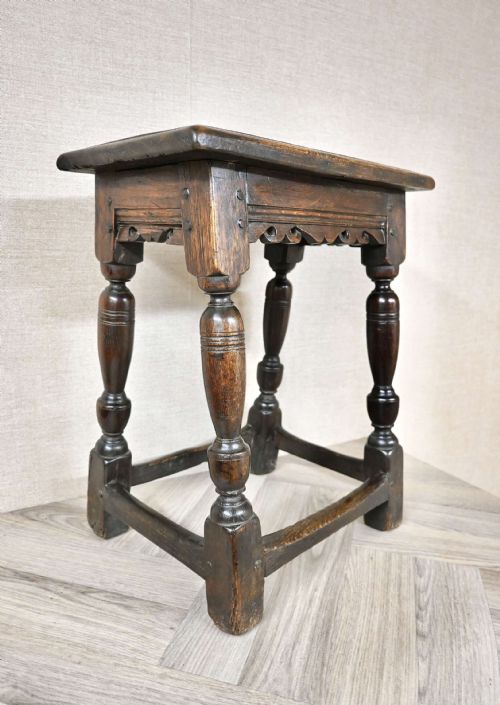
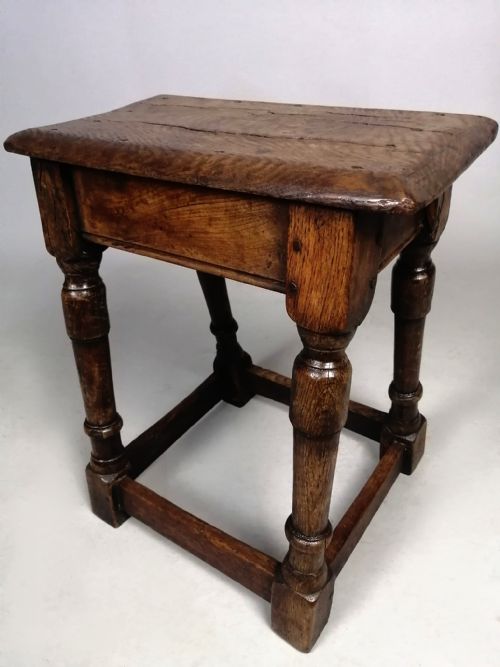
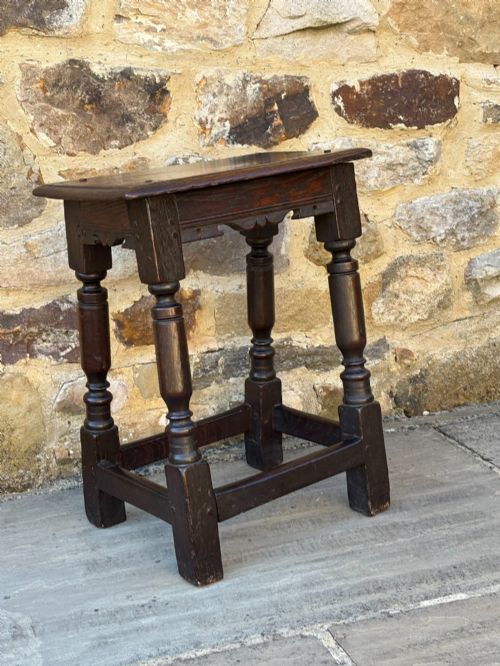
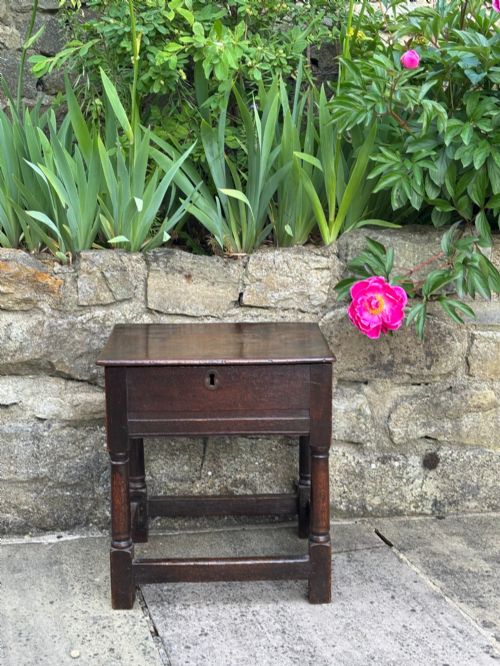
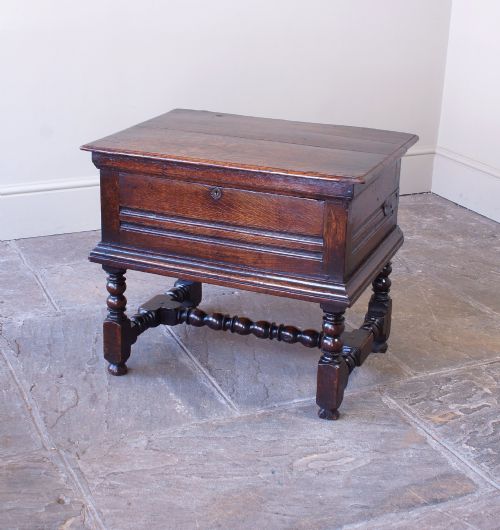
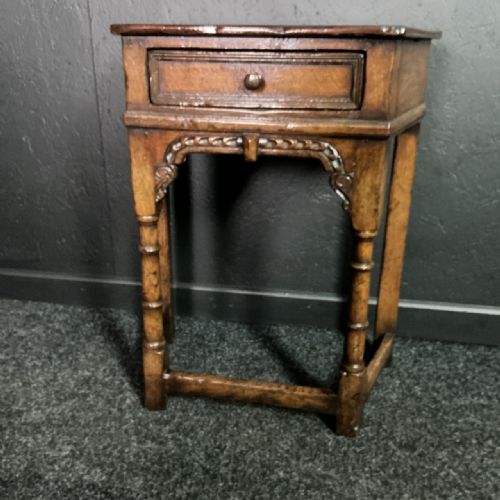
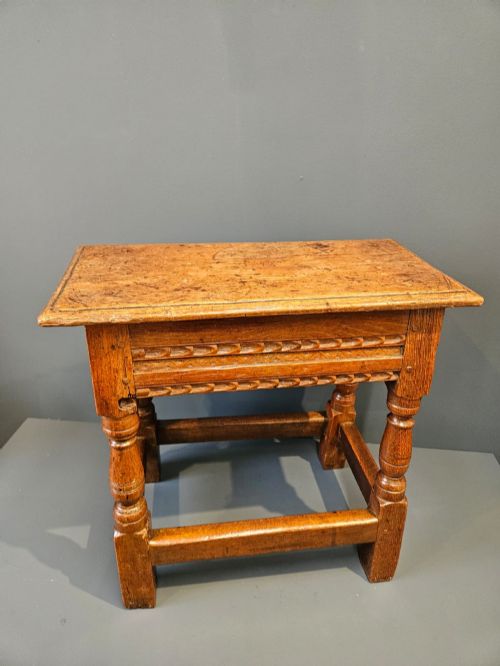
A jacobean oak side stool is a functional seating form rooted in seventeenth-century English tradition, built to serve daily household needs. These pieces appear as simple joint stools, box stools, and occasional variants designed for portability and robust utility.
Buyers encounter examples spanning original seventeenth-century construction alongside later revival periods from the nineteenth and twentieth centuries. The primary forms combine rectilinear wooden frames with pegged joinery, reflecting traditional craftsmanship across various eras.
Materials and Construction
Solid timber forms the core of these items, utilising sturdy oak alongside occasional secondary woods like elm for seats and structural components. Blacksmith hardware such as iron and brass occasionally appears in hinges, fastenings, or decorative elements.
Makers utilised mortise and tenon joinery secured with wooden pegs to build rigid frames capable of enduring heavy daily use. Surface finishes rely on natural ageing, polishing, and occasional hand carving rather than complex veneers.
The selection includes periods ranging from the seventeenth century through Georgian eras to twentieth-century revivals.
Assessing Quality and Authenticity
Quality rests upon the integrity of the original timber framing and the honesty of the surface patination accumulated over generations of use. Untouched examples retain their original pegged joints and natural wear patterns without heavy modern intervention.
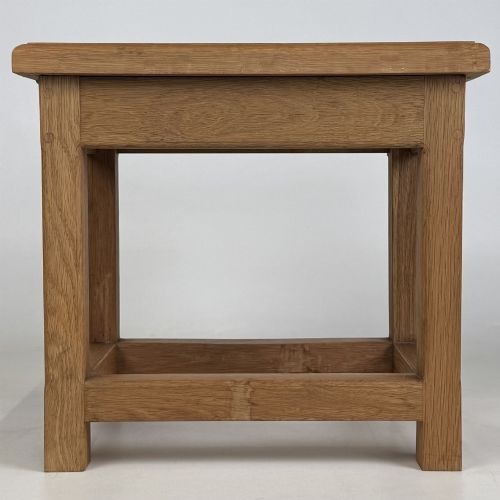
Later revival pieces from the nineteenth and twentieth centuries vary according to the fidelity of their historic stylistic details and the density of the oak utilised in their frames. Greater craftsmanship shows in crisp mortises, balanced proportions, and well-balanced seating surfaces.
The Jacobean Oak Side Stool Glossary
- Joint Stool
- A sturdy wooden stool constructed using mortise and tenon joints rather than simple dowels or nails. These pieces were common in early households for seating and reaching high places.
- Box Stool
- A seating form featuring a compartment beneath the lid for storage. This dual-purpose design accommodated small household items or linens.
- Jacobean Revival
- A nineteenth or twentieth-century design movement recreating the architectural styles and heavy oak furniture of the early seventeenth century. Makers copied historic forms using contemporary woodworking tools.
- Elm
- A tough, interlocking wood species frequently utilised for seat boards due to its resistance to splitting under pressure. It provides a contrasting grain texture against straight oak frames.
- Back Stool
- An early form of chair featuring a vertical backrest mounted onto a stool base. These items provided rudimentary back support during meals or work.
Jacobean Oak Side Stool: Frequently Asked Questions
What is a joint stool?
A joint stool is an early wooden seat constructed with tight mortise and tenon joints pinned together by wooden pegs. These sturdy items served as everyday seating or small elevated surfaces in historic homes.
Their rigid frames allowed them to withstand heavy daily use across centuries without losing structural stability.
How do I spot a revival piece?
Revival pieces display nineteenth or twentieth-century manufacturing traits, machine tooling marks, or standardised timber dimensions beneath historic styling. Examination of the peg placement and interior surfaces reveals the true age of construction.
Comparing the wear patterns to genuine seventeenth-century examples clarifies the timeline of manufacture.
What did box stools store?
Box stools provided concealed storage beneath lift-up wooden seat lids for small household goods, documents, or textiles. This kept essential items close at hand while maintaining a tidy room.
The hinged lids allowed quick access during daily domestic tasks.
Where were these stools used?
These stools functioned throughout the home as portable seats near hearths, tables, or bedsides. Their compact footprints permitted easy movement from room to room as required by household activities.
Their utilitarian design made them adaptable furniture pieces for dining, working, or resting.