





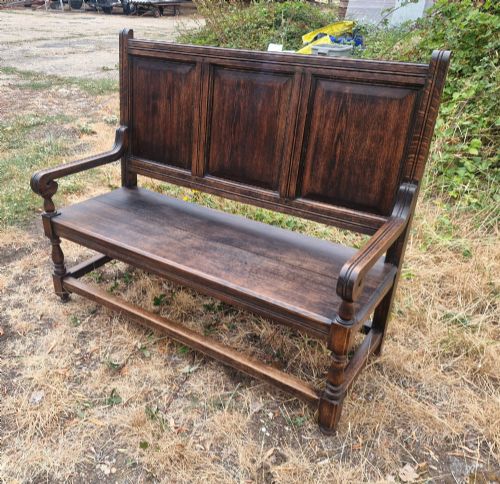
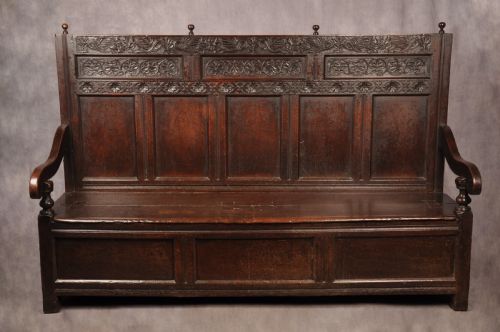

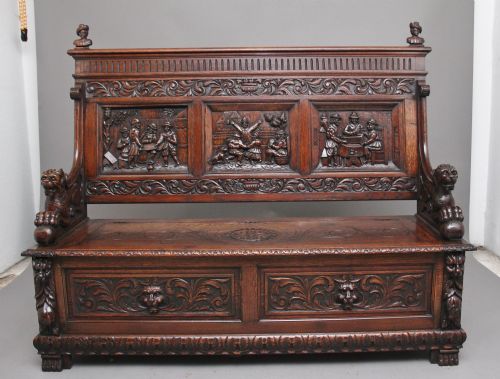


Jacobean Oak Monks Bench
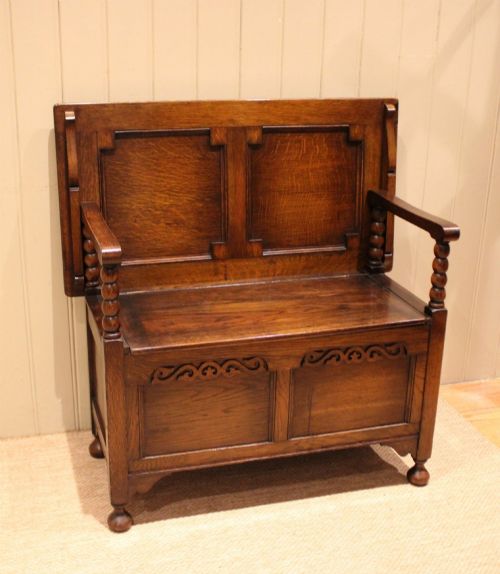
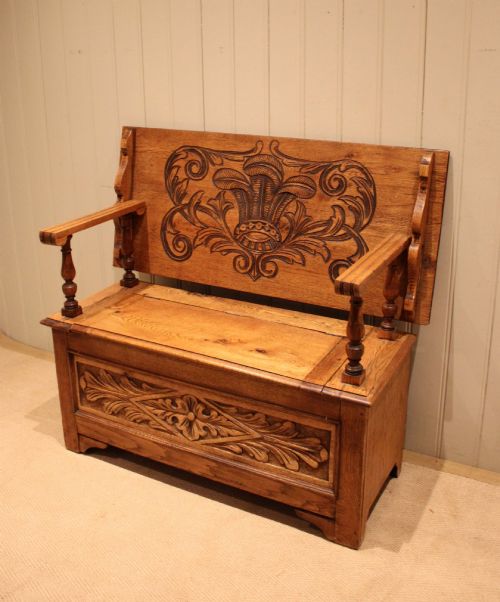
A jacobean oak monks bench is a dual-purpose timber seat that transforms into a table, offering solid utility and period presence in a hallway or living space.
Jacobean Oak Monks Bench
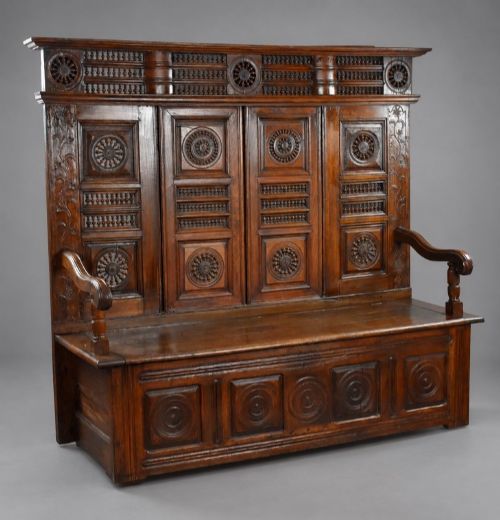
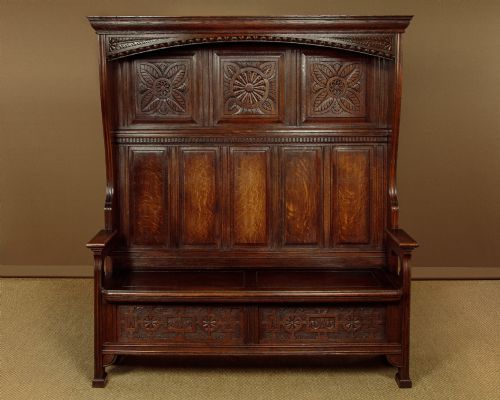
A jacobean oak monks bench combines the functions of a seat and a table, alongside box settles and hall benches that serve similar domestic roles. These pieces range from authentic seventeenth-century examples to later revival interpretations produced across the Victorian, Edwardian and early twentieth-century eras.
The version most commonly met on this page is the early twentieth-century or Edwardian revival monks bench, often featuring a fold-over top and carved panelled construction. Original seventeenth-century settles and chair-tables appear less frequently, alongside nineteenth-century baronial and revival variants.
Quality and Proportion
Quality rests in the integrity of the timber selection and the crispness of the carved ornamentation on the panels and backrests. Heavier, solid oak builds with balanced proportions distinguish better examples from lighter, more utilitarian pieces.
The cleverness of the pivoting mechanism for fold-over tops and the tightness of the joinery mark the division between standard workshop production and superior cabinet work.
Jacobean Oak Monks Bench Retail Price Guide 2026
Typical asking prices for jacobean oak monks bench among the pieces listed under this phrase on Sellingantiques today, from the lower quarter to the upper quarter. They describe what is for sale here now, not the wider market.
Keep an eye out for the occasional leafy Green Man staring out from the oak panels, watching over your hallway.
The Jacobean Oak Monks Bench Glossary
- Monks Bench
- A dual-purpose wooden seat with a hinged back that folds down to form a table top. This clever piece saved space in historic homes.
- Box Settle
- A high-backed wooden bench featuring a concealed storage compartment beneath the lift-up seat. It kept draughts away from inhabitants in large halls.
- Wainscot
- A wooden panelled construction style utilising framed timber boards. This technique provided structural strength to seventeenth-century seating.
- Green Man
- A sculptural architectural motif depicting a face carved with leaves and vines. It appears frequently on revival oak furniture from the nineteenth and twentieth centuries.
Jacobean Oak Monks Bench: Frequently Asked Questions
What is a monks bench used for?
These pieces function primarily as hallway seating while offering hidden storage beneath lift-up lids. Folding the back forward transforms the unit into a convenient table surface.
Historically, this dual utility suited compact living spaces where furniture needed to serve multiple purposes throughout the day.
How do I tell seventeenth century from revival?
Authentic seventeenth-century pieces display hand-riven timber, pegged joints and natural wear patterns accumulated over centuries of use. Revival items from the Victorian and Edwardian periods often show machine sawing and lighter, more uniform oak.
Examining the underside and interior fixings usually reveals the tool marks and construction methods specific to each era.
Where should I place a hall settle?
A hallway or entrance lobby provides the traditional setting for these high-backed wooden seats, welcoming guests while catching hats and gloves in the box base. Living rooms also accommodate them well, especially versions that convert into small tables.
Keep timber furniture away from direct heat sources to prevent the oak from drying out and splitting over time.
What styles match these benches?
Jacobean revival, Gothic revival and Victorian baronial styles complement the heavy timber aesthetic of these benches. They pair naturally with other dark wood furniture and textured fabrics.
Mixing seventeenth-century vernacular pieces with early twentieth-century revivals creates a layered interior that emphasises craftsmanship across different eras.