







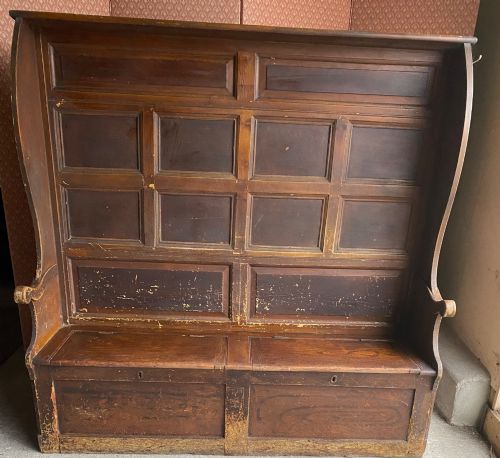
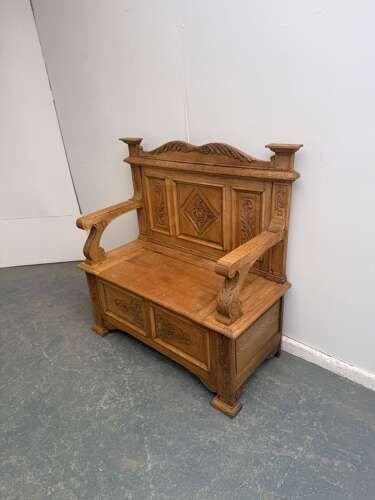

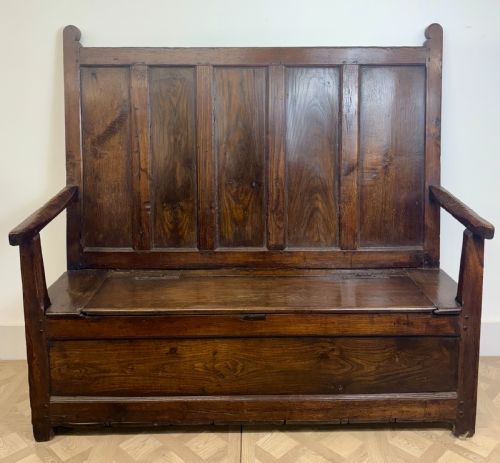
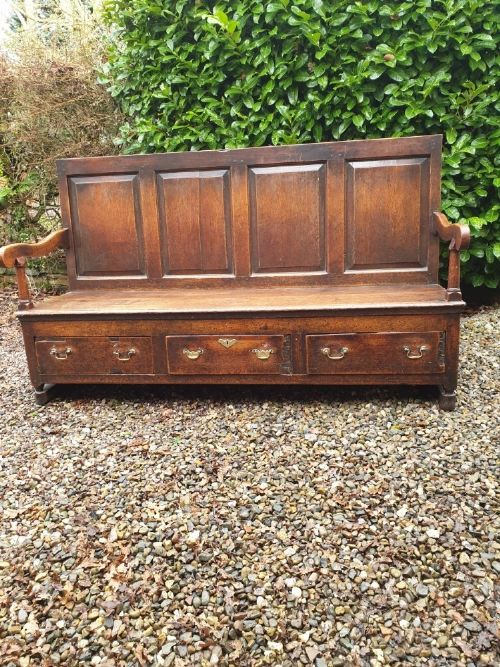
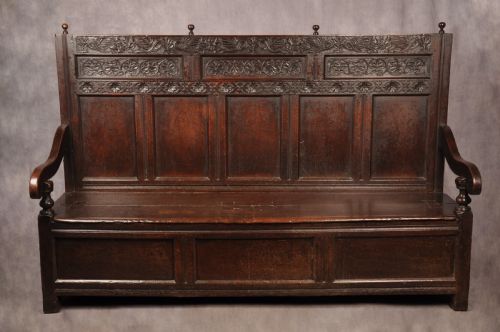
Oak Storage Box Settle
An oak storage box settle combines high-backed seating with a concealed compartment beneath, offering both a place to sit and a practical chest.
Oak Storage Box Settle
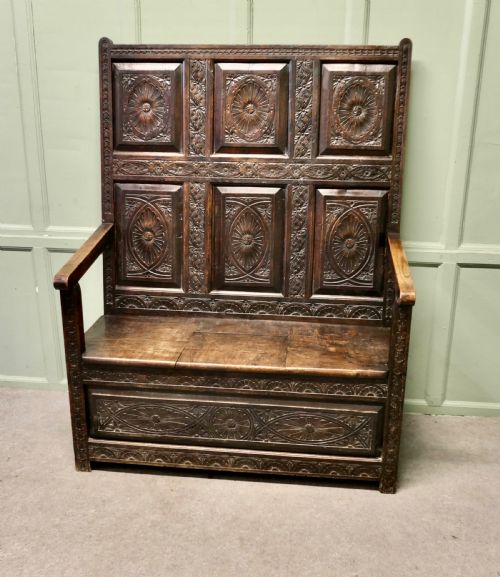
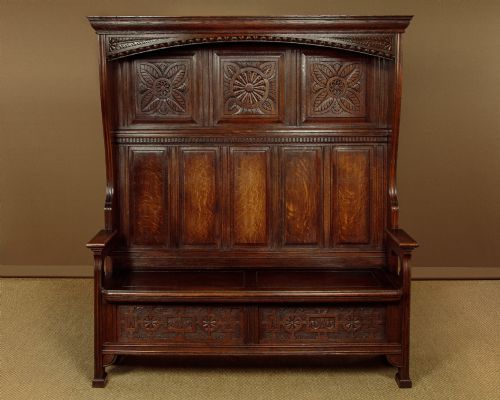
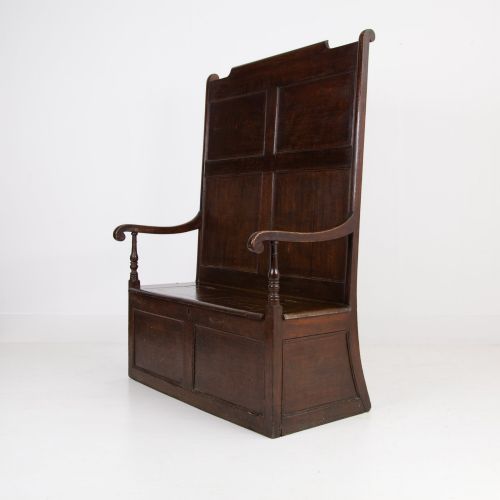
An oak storage box settle serves as a substantial dual-purpose seat, featuring a hinged or lift-up lid that accesses an internal compartment for storing household items. The selections range from early country pieces originating in the seventeenth and eighteenth centuries to later revivals from the Victorian, Edwardian, and nineteen-twenties periods.
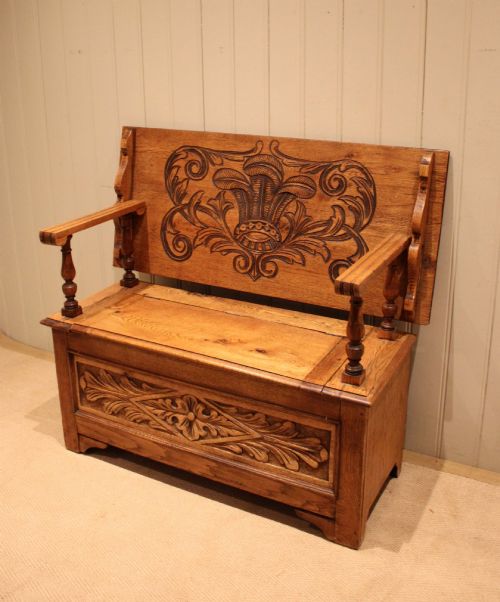
Buyers will encounter various structural configurations, including high-backed hall benches, carved monk benches with fold-over tops that convert into tables, and panelled tavern settles. These items function primarily in hallways, passages, and principal living rooms.
Geographic variations and vernacular traditions emerge through regional examples such as Welsh and North Country pieces, alongside French Renaissance revival models. The primary material framework relies on solid timber construction, frequently incorporating secondary woods like elm, ash, and pine.
Materials and Construction Methods
Carpenters constructed these settles predominantly from solid oak, sometimes pairing it with elm, ash, and pine for secondary framing or internal boards. Surface finishes range from traditional waxed treatments to stripped golden oak and darker patinated surfaces.
Joinery techniques relied on pegged mortise and tenon frames alongside robust panelled construction to support the weight of daily use. Decorative embellishments include surface carving, marquetry inlay, and figural details such as Green Man motifs.
Oak Storage Box Settle Retail Price Guide 2026
Typical asking prices for oak storage box settle among the pieces listed under this phrase on Sellingantiques today, from the lower quarter to the upper quarter. They describe what is for sale here now, not the wider market.
Several golden oak settles keep watch over hallways with carved Green Man faces peering out from the woodwork.
Distinctions in Grade and Execution
The degree of hand-carving and decorative ambition separates utilitarian country workshops from sophisticated urban commissions. Early seventeenth and eighteenth-century examples exhibit distinct regional panel work and patination achieved through centuries of use.
The integrity of the timber, the retention of original hardware such as hinges on the lift-up seats, and the crispness of applied mouldings or marquetry inlay determine the overall standing of an individual piece.
The Oak Storage Box Settle Glossary
- Settle
- A wooden bench with a high back, solid arms, and a closed base. It was historically positioned near firesides to block draughts.
- Monks Bench
- A dual-purpose piece featuring a hinged back that folds down over the arms to form a table top above a box seat.
- Marquetry Inlay
- Decorative patterns formed by fitting contrasting pieces of wood veneer into prepared recesses within the solid timber surface.
- Coffer
- A large wooden chest used for storage, which forms the base structure of many box settles beneath the seat.
- Vernacular
- Regional furniture built by local craftsmen using traditional methods and locally available materials rather than adhering to high-style academic designs.
Oak Storage Box Settle: Frequently Asked Questions
Where should I place an oak storage box settle?
These pieces suit entrance halls and spacious corridors where the internal compartment provides practical storage for footwear and accessories.
They also function effectively against living room walls, where the high wooden back creates a defined seating enclosure.
How do I use the storage compartment?
The seat functions as a lift-up lid, providing access to the hollow box base beneath.
Early examples feature simple plank lids, while later revival pieces often incorporate framed panel construction.
What is the difference between a settle and a monk bench?
A standard settle maintains a fixed high back and arms designed exclusively for seating.
A monk bench includes a hinged back mechanism that pivots downward to rest on the arms, converting the upper section into a flat table top.
How can I tell the period of an oak settle?
Seventeenth and eighteenth-century pieces display hand-cut joinery, pegged framing, and deep natural patination developed through age.
Nineteenth-century and later revival examples often feature machine-sawn elements, standardised hardware, and revival styles such as Jacobean or Art Nouveau.