








Vintage Oak Monk Table
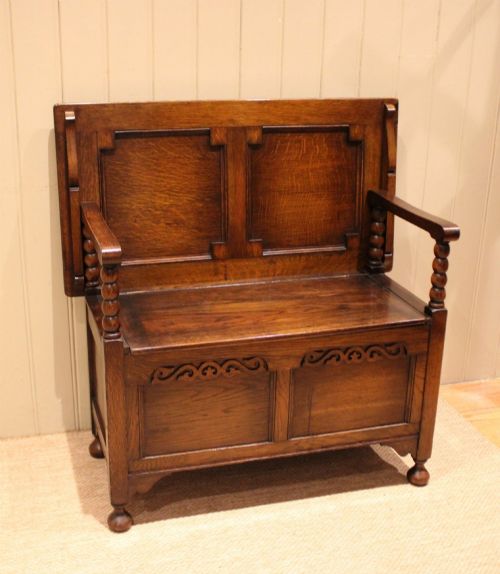
A vintage oak monk table offers clever dual-purpose design, combining a seat with a table top that folds down when needed.
Vintage Oak Monk Table
When you search for a vintage oak monk table, you are looking at multi-functional furniture designed to save space in smaller rooms or grand hallways. These pieces typically function as a comfortable bench or settle with a solid back that tilts or folds forward to create a table surface.
The versions you are most likely to meet on this page hail from the late nineteenth century through to the 1930s. They range from rustic farmhouse forms and Victorian Gothic revival items to carved Jacobean revival examples in dark or golden oak.
How they were made
Makers relied primarily on solid oak and timber, frequently employing thick planks to handle the daily strain of folding mechanisms. Joinery relied on sturdy traditional methods to ensure the heavy top remained stable in both its upright backrest position and its lowered table configuration.
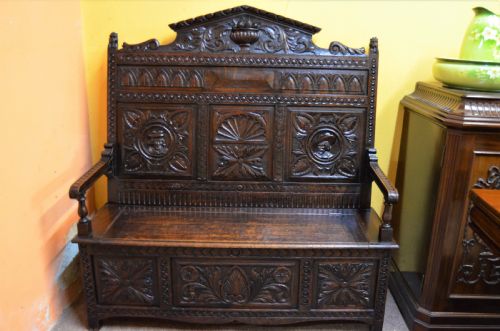
Surface ornamentation on these items often involved hand carving along the panels, arms, and skirts. Common decorative motifs span geometric Jacobean patterns, flowing Art Nouveau linework, and heavier Gothic revival detailing.
Vintage Oak Monk Table Retail Price Guide 2026
Typical asking prices for vintage oak monk table among the pieces listed under this phrase on Sellingantiques today, from the lower quarter to the upper quarter. They describe what is for sale here now, not the wider market.
Some models double as armchairs, proving that Victorians loved furniture that could perform gymnastics in the hallway.
What varies in quality
The distinction between ordinary and exceptional examples rests heavily on the crispness of the timber carving and the cleverness of the folding mechanism. Superior pieces operate smoothly without excessive play in the wooden pegs or metal pivots that secure the back to the seat base.
Proportion and timber selection also drive the standard of the piece, with richly figured golden or dark oak outperforming plain, utilitarian timber. Well-balanced proportions ensure the item looks correct both as a high-backed settle and as a functional table.
The Vintage Oak Monk Table Glossary
- Monks bench
- A dual-purpose piece of furniture featuring a hinged back that folds down over the arms to form a table top. This historic form allowed monastic and domestic spaces to serve multiple functions throughout the day.
- Settle
- A wooden bench with a high back, solid arms, and often a storage compartment beneath the seat. They were historically placed near firesides to block draughts.
- Gothic revival
- An architectural and decorative style drawing inspiration from medieval design. It employs pointed arches, heavy linenfold carving, and imposing proportions.
Vintage Oak Monk Table: Frequently Asked Questions
How do monk tables work?
The hinged back of the bench pivots forward on wooden pegs or metal pins to rest flat upon the arms. This transforms the high back into a horizontal surface suitable for dining or writing.
Lifting the back upright restores the piece to a traditional hall seat or settle. Many examples also feature a lift-up seat lid revealing storage space underneath.
Where should I place a monk table?
These items suit hallways, landings, and principal living rooms where space is at a premium. Their dual nature makes them practical in tighter quarters where a dedicated dining table and bench would crowd the room.
Keep them away from direct heat sources and radiators to prevent the solid oak panels from drying out and splitting over time.
How do I date a monk table?
Dating relies on observing the decorative style, wood finish, and construction marks. Pieces featuring heavy linenfold carving and dark finishes often align with Jacobean revival revivals spanning the late nineteenth and early twentieth centuries.
Art Nouveau and Art Deco influences point toward items made around nineteen hundred up to the nineteen thirties, displaying softer floral motifs or cleaner geometric lines.
Are these tables made of solid wood?
The listings show that these pieces are constructed from solid oak, pine, and general timber. Oak is by far the most dominant material used for the structural frames and decorative panels.
Because they were built to withstand the physical stress of conversion between seat and table, makers relied on heavy timber rather than thin veneers.