
Jacobean Oak Dresser Base
A jacobean oak dresser base anchors a room with timber weight, offering deep drawers and low surface space built for country house utility.
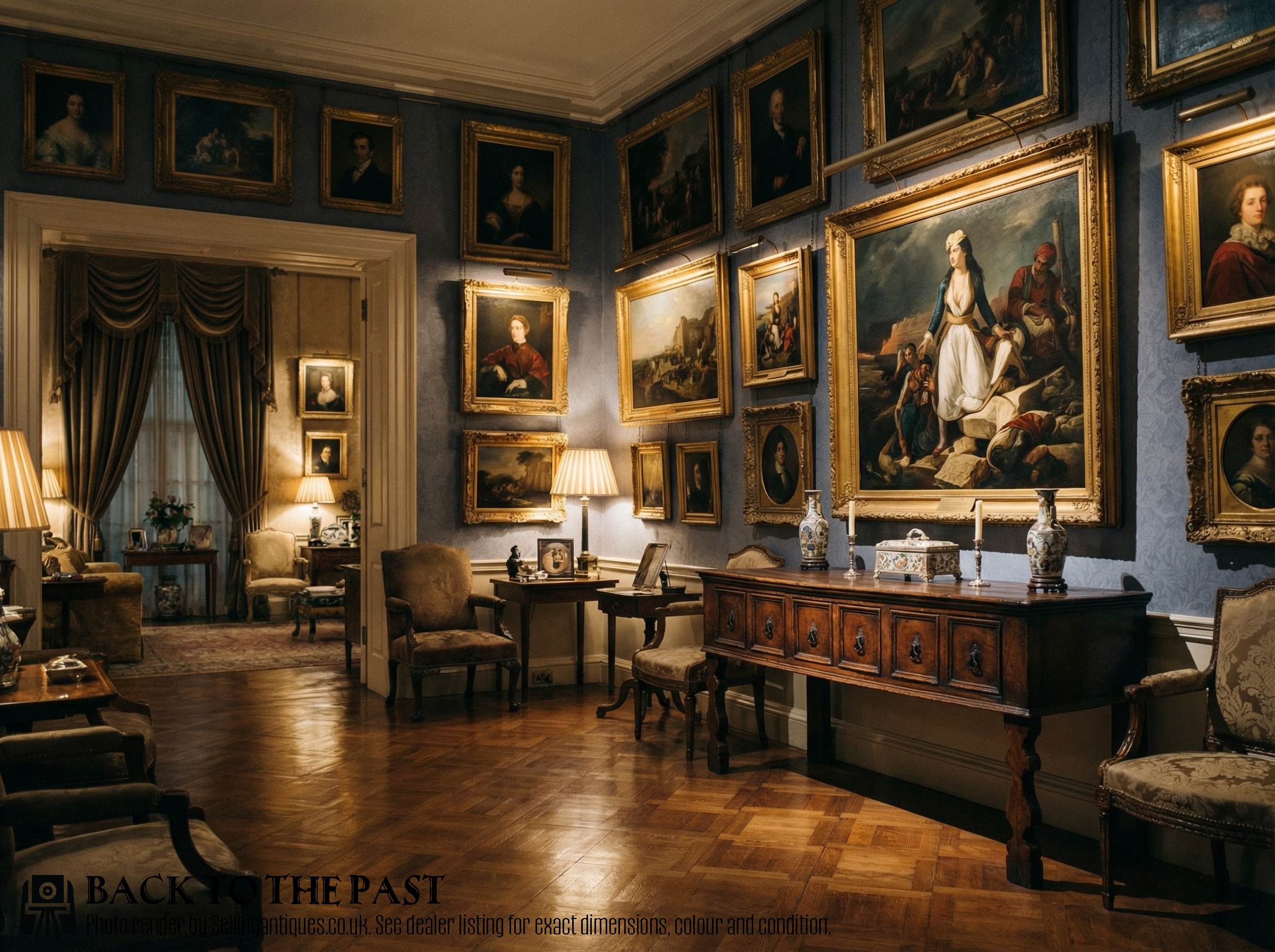
Jacobean Oak Dresser Base
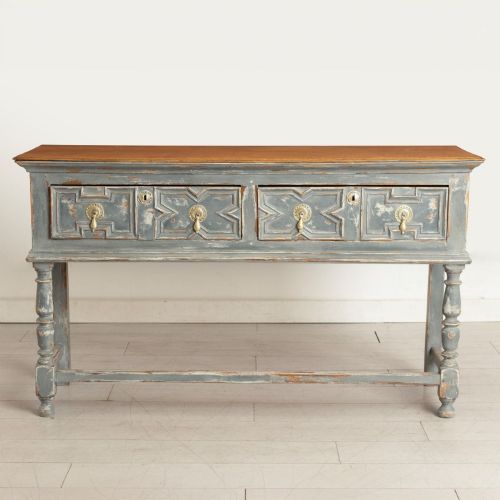
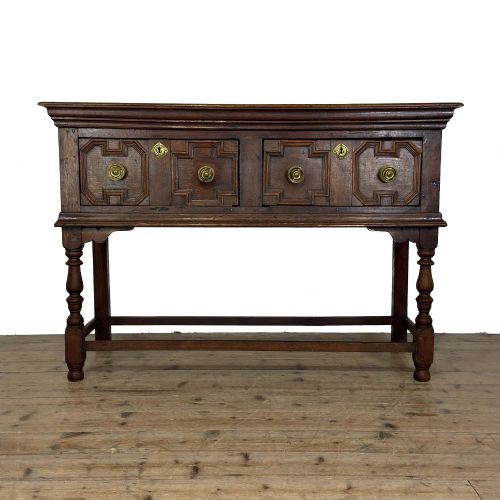
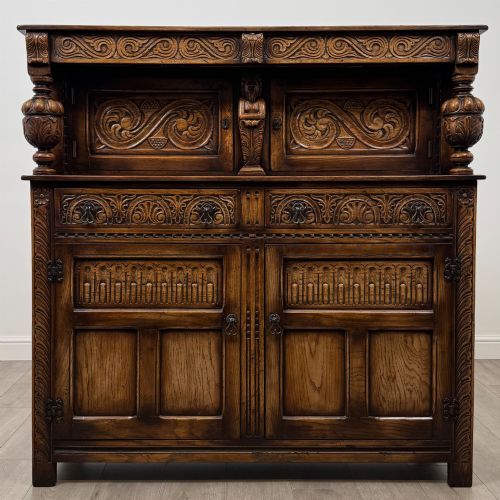
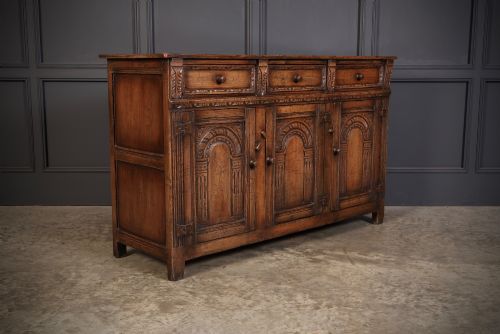
A jacobean oak dresser base stands as a heavy low storage unit designed originally for serving food and holding dining plate in large houses. The form appears in seventeenth-century originals as well as later nineteenth- and twentieth-century revival interpretations.
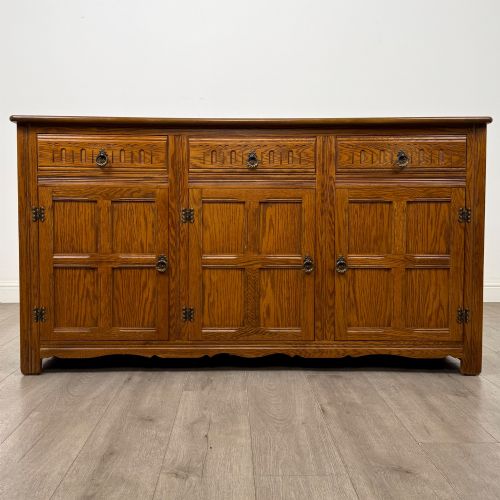
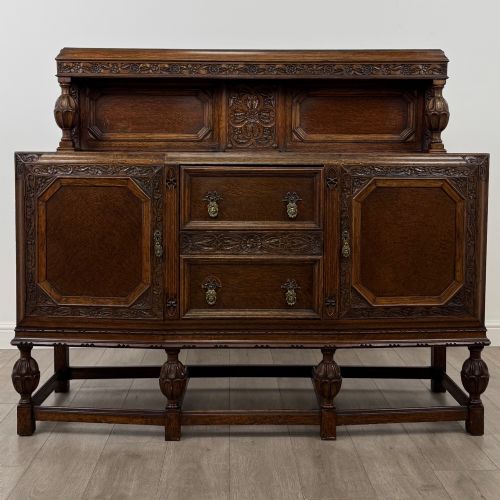
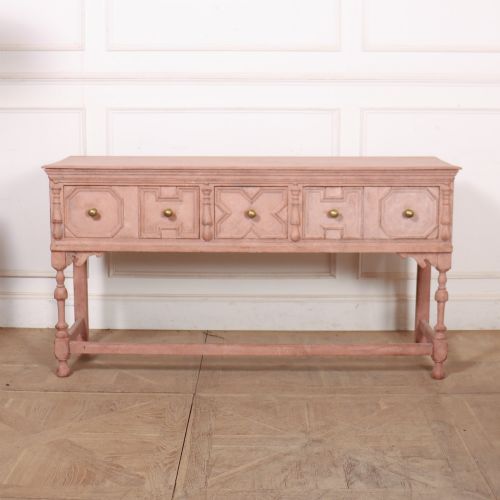
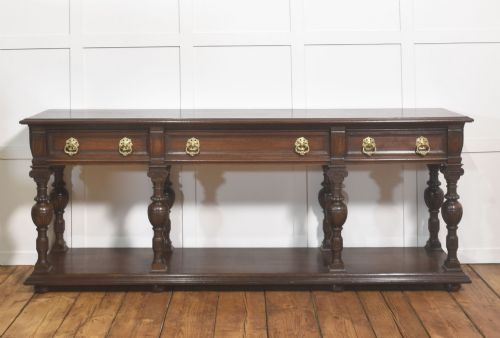
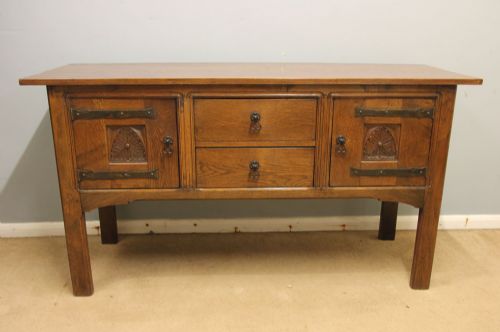
Buyers encountering this phrase find long low boards featuring banks of drawers, panelled doors, and open potboards beneath. The selection bridges authentic period pieces from the seventeen-hundreds with substantial revival furniture made during the nineteen-twenties and nineteen-thirties.
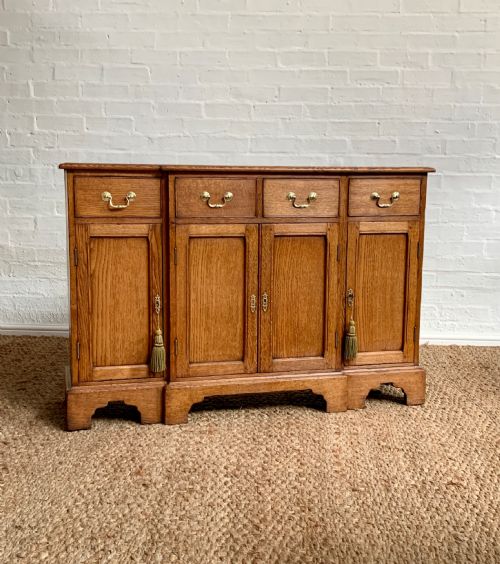
Proportions vary from small serving cupboards to expansive multi-drawer sideboards, yet all share a reliance on solid timber construction. These low tables serve modern interiors equally well as hall consoles, dining room servers, or media units.
Materials and Construction
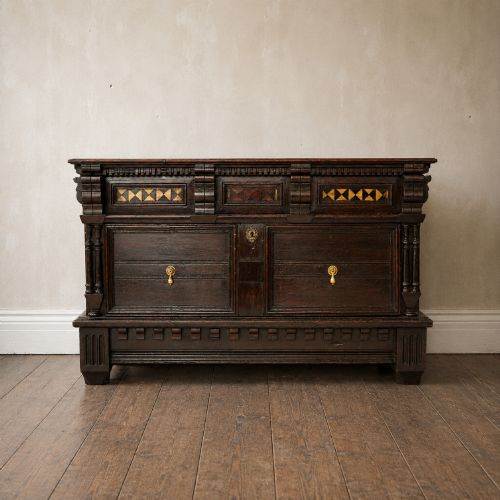
Makers built these pieces primarily from solid English oak, sometimes combining secondary woods like walnut for geometric drawer front details. Timber surfaces display distinct medullary rays from quarter-sawing, giving the wood a characteristic mottled grain.
Traditional joinery relies on mortise and tenon frames secured with wooden pins rather than modern fixings. Structural integrity comes from heavy framing, heavy plank tops, and panelled construction that allows the timber to move naturally with seasonal humidity.
Listings feature oak, brass, iron, and glass across periods ranging from the seventeenth century through to nineteen-thirty.
Judging Quality and Execution
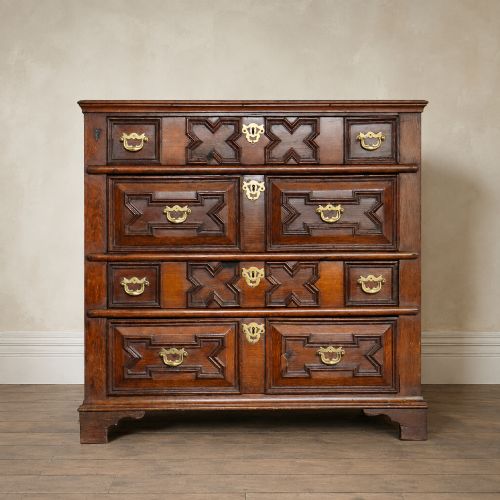
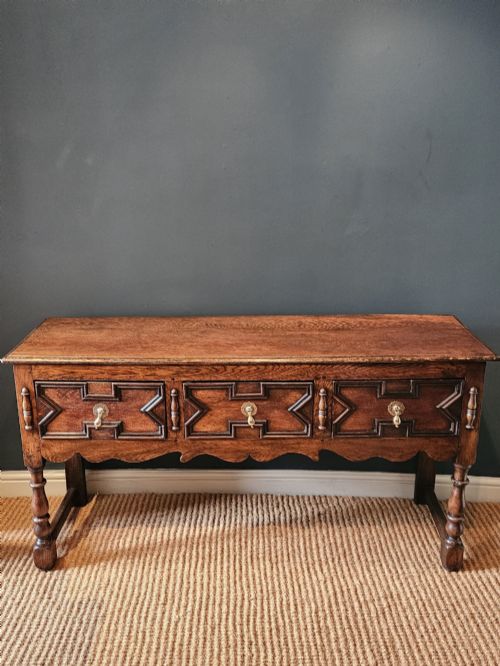
Quality rests on the crispness of hand-carving and the depth of geometric mouldings applied to drawer fronts. Superior examples show thoughtful timber selection where grain patterns match across adjacent panels and drawer tiers.
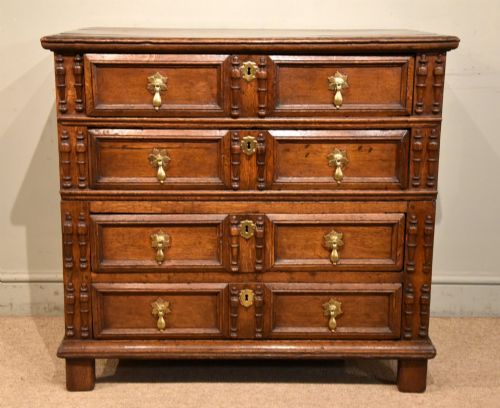
Original hardware such as brass drop handles, iron latches, and hinges elevate a piece significantly above examples fitted with later replacements. The integrity of the lower potboard and the tightness of the frame joints distinguish fine cabinet work from simpler vernacular output.
The Jacobean Oak Dresser Base Glossary
- Potboard
- An open lower shelf beneath a dresser base designed originally to display pewter or ceramic platters. This lower platform runs parallel to the floor, supported by four or more upright legs.
- Geometric moulding
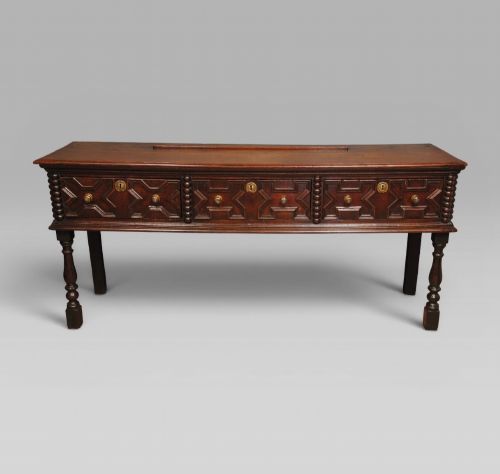
- Raised decorative wooden mouldings applied in intersecting geometric shapes across drawer fronts. This technique defined much of the cabinet work during the seventeenth century.
- Bolster turned
- A rounded, swelling lathe-turned leg profile resembling a bolster cushion. These sturdy supports lift the heavier dresser bases off the floor.
- Court cupboard
- A heavy enclosed upper and lower storage cabinet featuring recessed upper sections. These structural forms share the same heavy oak vocabulary as dresser bases.
- Carolean revival
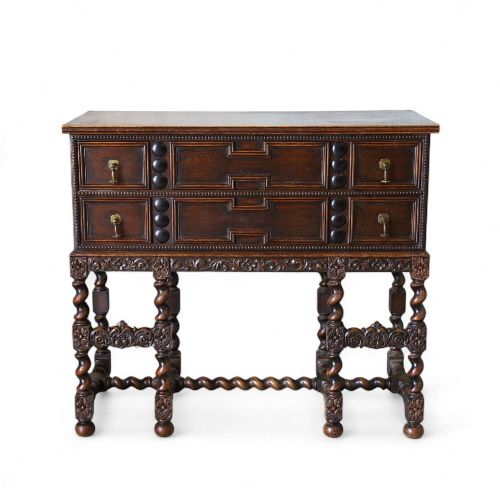
- A nineteenth- and twentieth-century design movement copying the exuberant carved styles of Charles II. Furniture from this revival utilises barley-twist supports and deep relief carving.
Jacobean Oak Dresser Base: Frequently Asked Questions
What is a dresser base used for?
These low cabinets served historically as serving tables in dining halls, holding food platters and tableware ready for meals. In modern homes, they function as sideboards, hallway consoles, or media cabinets.
The deep drawers and flat timber top provide practical storage while anchoring a room with historic presence.
How do I date an oak dresser?
Dating relies on examining the construction marks, timber preparation methods, and style of the mouldings. Seventeenth-century pieces show hand-riven timber and pegged frame joinery, while revival pieces from the twentieth century often display machine-cut elements.
Hardware holes, timber shrinkage patterns, and secondary woods inside the drawers also help determine the age of the piece.
Are these pieces made of solid wood?
Authentic period examples and quality revival pieces utilise solid oak throughout the frame, top, and drawer construction. Secondary timbers like pine or walnut occasionally appear inside drawer linings or backboards.
Solid construction ensures the heavy timber can support daily use and develop a rich patina over decades.
How do I care for antique oak?
Protect antique oak surfaces by keeping them away from direct heat sources and sudden temperature shifts that dry out the timber. Applying a traditional beeswax polish occasionally maintains the lustre of the wood without building up heavy chemical residues.
Avoid placing damp items directly onto the unsealed wooden top to prevent water marking the historic finish.