

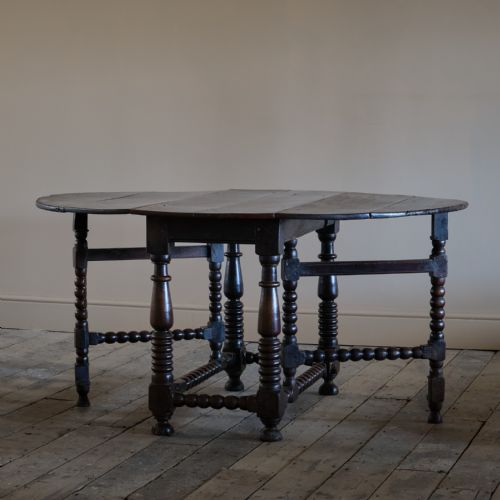


Jacobean Drop Flap Table
A jacobean drop flap table brings solid oak construction and folding leaves into a room, offering adaptable surface space for dining or occasional use.
Jacobean Drop Flap Table
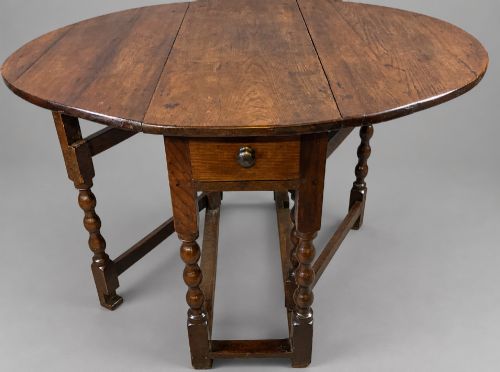
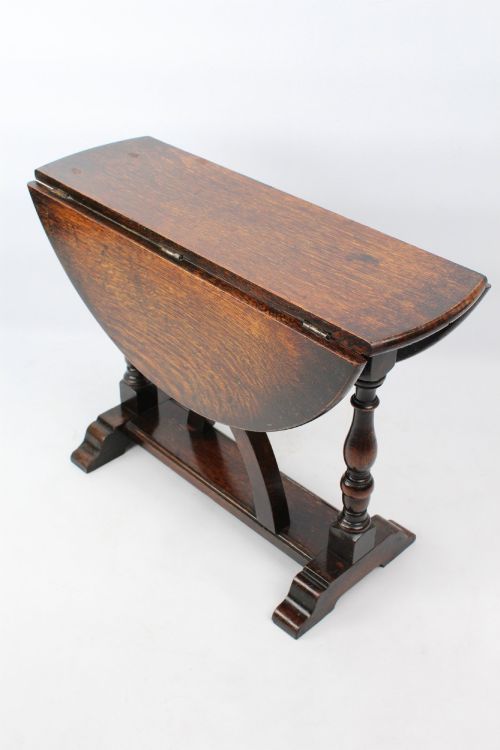
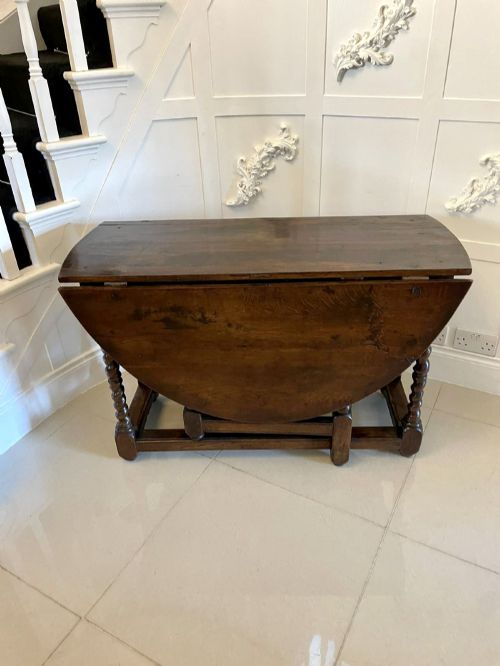
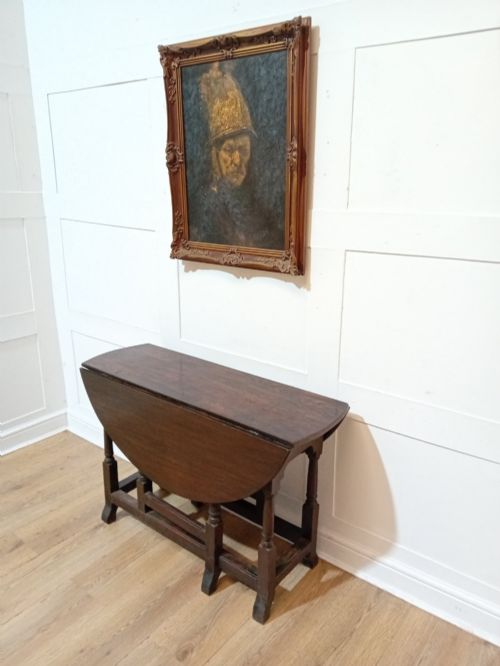
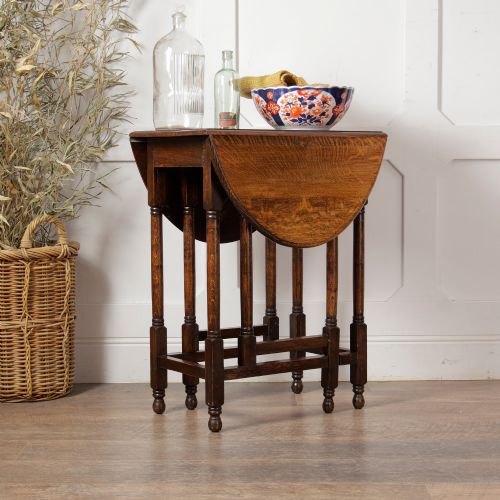
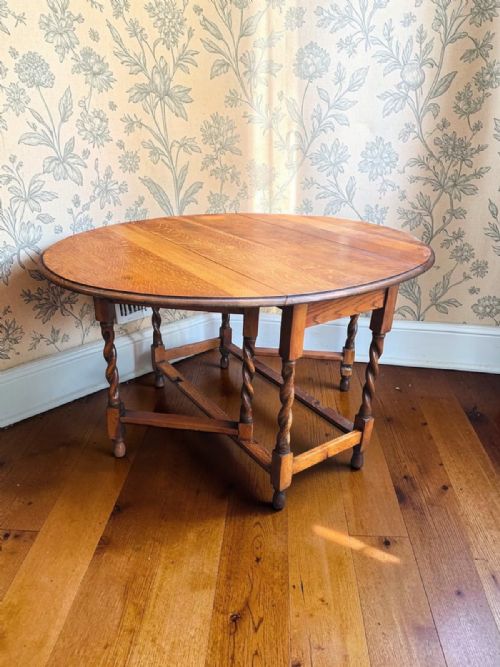
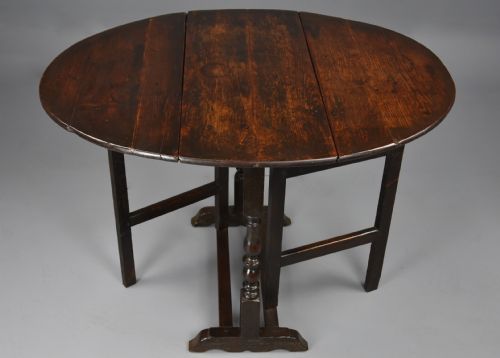
A jacobean drop flap table typically takes the form of a gateleg table with hinged leaves that lift to expand the surface area. Buyers searching for a jacobean drop flap table will find pieces ranging from genuine 17th century examples to later revival interpretations from the 1920s and 1930s.
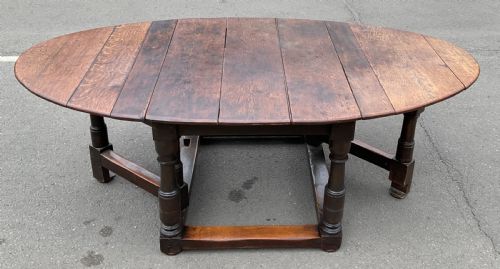
The form appears across various sizes, from small coffee and side tables to large dining tables designed to seat several people. Most pieces encountered on this page are constructed from oak, often featuring oval tops supported by swing legs.
How they were made
Construction relies heavily on solid oak joined to create sturdy frames capable of supporting folding leaves. Turnery forms a central part of the manufacturing technique, utilising bobbin turned, barley twist, and baluster post legs to support the drop flaps.
Metal hinges and brass or iron components are incorporated to allow the gateleg action to function smoothly. Surfaces often display carved details or rely on the natural grain of the timber finished with wax or polish.
Jacobean Drop Flap Table Retail Price Guide 2026
Typical asking prices for jacobean drop flap table among the pieces listed under this phrase on Sellingantiques today, from the lower quarter to the upper quarter. They describe what is for sale here now, not the wider market.
Listings feature oak predominantly, alongside occasional examples in mahogany, brass, iron, and metal.
What varies in quality
The standard of timber selection and the crispness of the turnery on the legs distinguish different grades of the form. Early 17th century pieces demonstrate hand-carving and period construction methods, whereas 20th century revivals utilise machinery of their era.
Proportions also affect desirability, with smaller proportions and original surface patination holding particular appeal for collectors. The integrity of the gateleg mechanism and the fit of the leaves when raised remain consistent indicators of workshop capability.
The Jacobean Drop Flap Table Glossary
- Gateleg table
- A table with hinged leaves supported by legs that swing outward like a gate. This design allows the surface to fold down compactly when not in use.
- Barley twist
- A type of column turning resembling a twisted rope. This decorative woodwork appears frequently on the legs of 17th century and 1920s revival tables.
- Bobbin turned
- A style of leg decoration formed by turning wood on a lathe to create a series of spherical or spool-like shapes. It is common on pieces from the 17th century.
- Baluster post
- A vertical support member shaped with a swollen or vase-like profile. These posts form the structural legs on specific gateleg tables.
- Drop-leaf
- A table top configuration comprising a central fixed section and hinged flaps that lower or rise. This mechanism adjusts the overall footprint of the furniture.
Jacobean Drop Flap Table: Frequently Asked Questions
How do I use a drop flap table in a small room?
Keep the drop flaps folded down against the sides to minimise the footprint when floor space is tight. Raise one or both leaves only when you need an extended surface for dining or working.
Position the table against a wall or in a corner as an occasional piece until you require its full capacity. The folding mechanism makes it straightforward to adapt the furniture to daily spatial demands.
What is the difference between a 17th century table and a 1920s revival?
Tables originating in the 17th century exhibit period construction techniques, hand-turned elements, and centuries of natural wear on the oak timber. These pieces carry the structural characteristics and patination of their original manufacturing era.
Revival tables made around 1920 replicate these earlier styles using the machinery and finishing methods typical of the early 20th century. While they adopt similar gateleg forms and barley twist legs, their age and tool marks reflect a later period of production.
How do I care for an antique oak surface?
Dust the oak surface regularly with a soft, dry cloth to prevent grit from accumulating in the grain or carved details. Apply a quality beeswax periodically to nourish the timber and maintain the natural lustre of the finish.
Avoid placing the table near direct heat sources or in strong sunlight, which can cause the solid oak to dry out or split. Use mats under hot dishes or liquids to protect the polished surface from water rings and heat damage.
Can these tables be used for everyday dining?
Solid oak gateleg tables provide sturdy surfaces capable of handling daily meals when the leaves are fully raised and supported by the swing legs. The robust construction of hardwood frames accommodates regular family use.
Ensure the gateleg action is securely positioned beneath the flaps before placing heavy items on the extended edges. Using protective table linens helps guard the historic or vintage timber against daily wear.