
Jacobean Dining Table
When you search for a jacobean dining table, you encounter heavy oak boards and sturdy frames built for centuries of communal meals.
Jacobean Dining Table
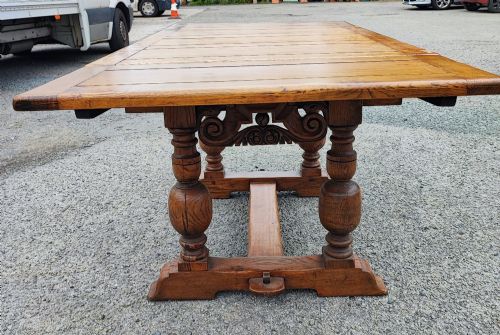
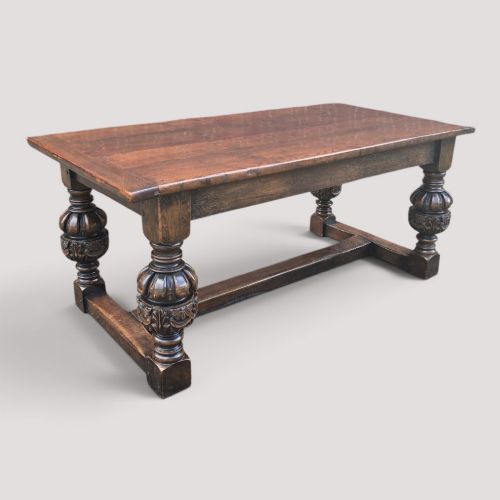
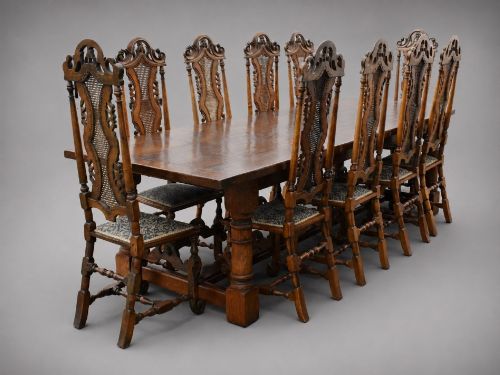
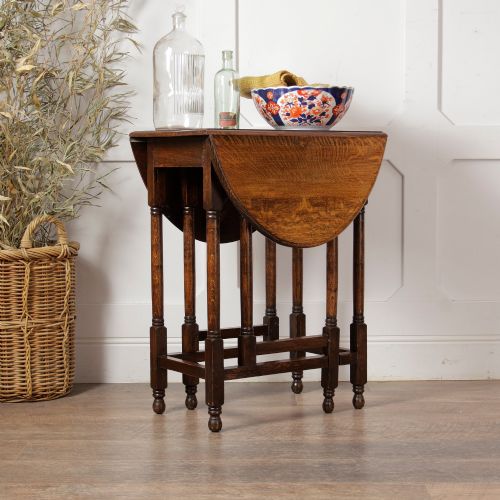
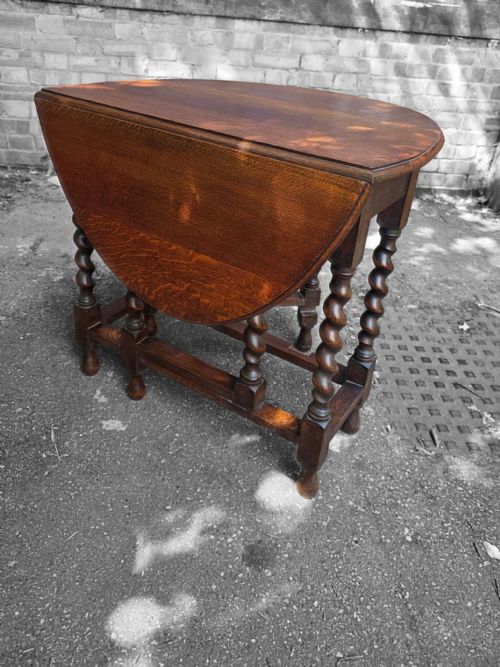
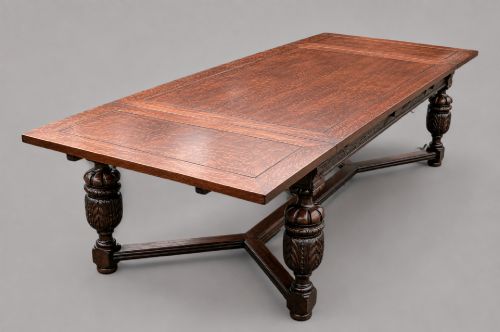
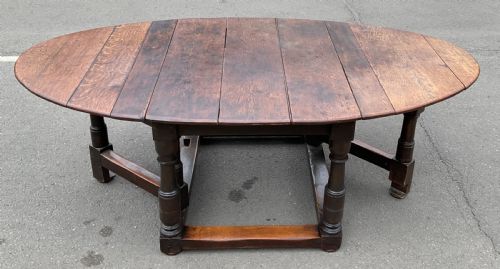
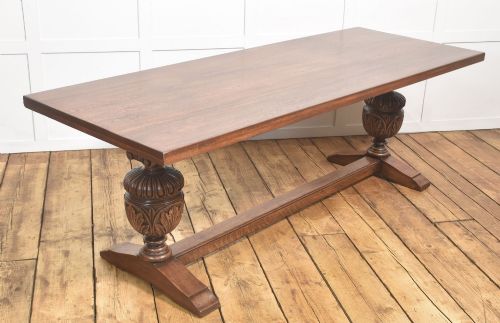
A jacobean dining table typically presents as a long refectory board or a folding gateleg structure rooted in seventeenth century English traditions. Many examples on this page date from later revival periods in the early twentieth century, echoing the proportions and dark timber tones of the original era.
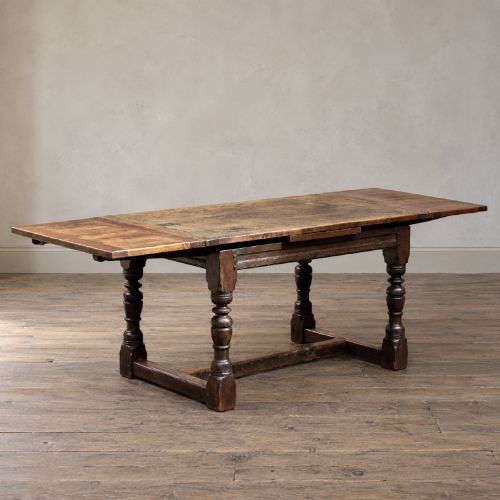
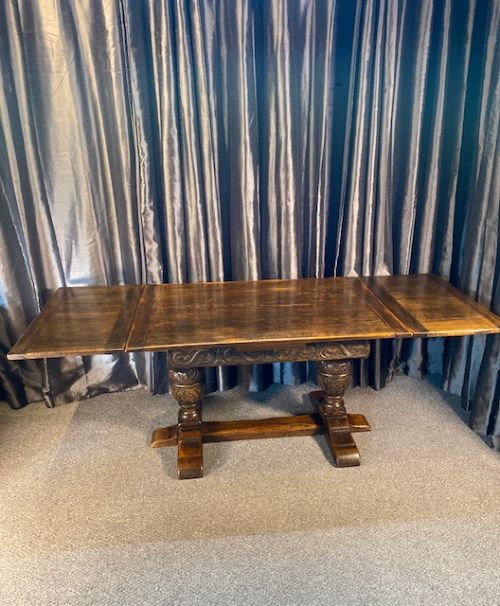
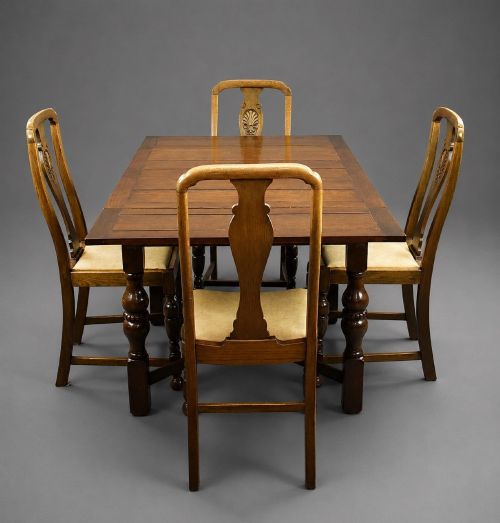
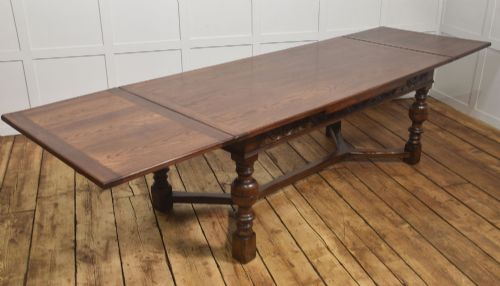
Buyers encounter solid oak construction coupled with functional formats like draw leaves and drop leaves designed to expand seating capacity. These pieces range from intimate gateleg tables suited for smaller chambers to large refectory boards flanked by high-back carved chairs.
How they were made
Carpenters relied principally on solid oak, occasionally incorporating elm for specific planks, shaping the timber with hand tools to form thick tops and sturdy stretchers. Joinery relied heavily on pegged mortise and tenon joints to ensure rigidity across long spans.
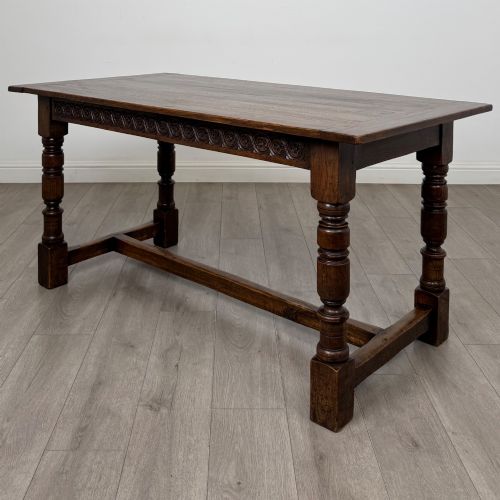
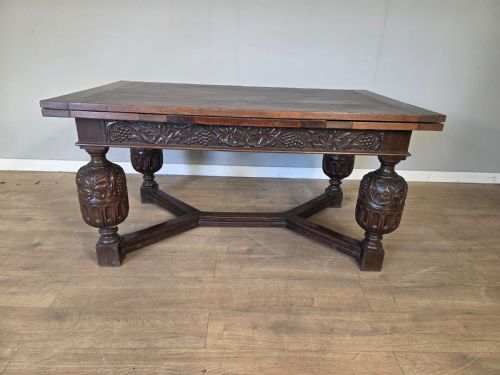
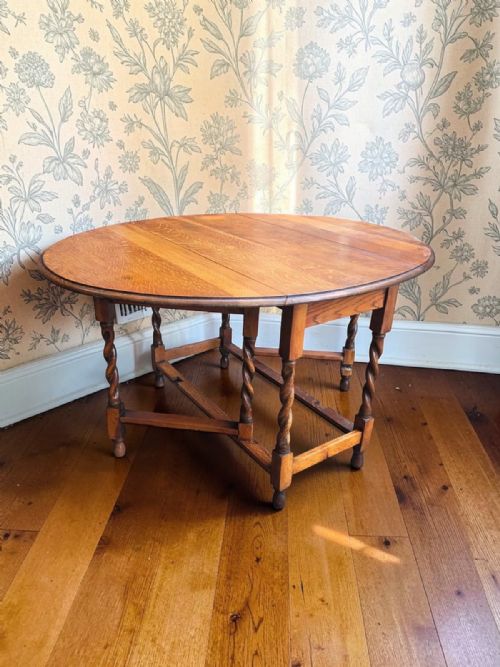
Turned legs emerged from the lathe in various profiles including barley twist, bobbin, and baluster shapes, while decorative elements often featured shallow carved geometric patterns along the aprons and rails.
Listings span multiple eras from the seventeenth century through Edwardian revivals up to the nineteen-thirties, using oak, elm, brass, and iron.
What varies in quality
The distinction between tiers rests upon the choice of timber and the depth of the hand-carving applied to the friezes and legs. Superior items display single plank tops and rich, established patination developed through age and wax application.
Construction methods also separate standard commercial reproductions from finer cabinet work, where tight joints and balanced proportions remain intact through generations of use.
The Jacobean Dining Table Glossary
- Refectory table
- A long, narrow dining table traditionally used in monasteries and great halls, characterised by sturdy legs connected by a low perimeter stretcher.
- Gateleg table
- A drop-leaf table featuring hinged flaps supported by swing-out legs that pivot outward like a gate to bear the weight.
- Draw leaf table
- An extending table equipped with sliding leaves stored beneath the main top that pull out to lengthen the surface.
- Barley twist
- A decorative turning technique resembling a spiralling rope column, common on seventeenth-century and revival furniture legs.
- Patina
- The deep, lustrous surface sheen developed on wood over decades through oxidation, friction, and repeated polishing.
Jacobean Dining Table: Frequently Asked Questions
How do I seat ten people at these tables?
Many refectory and draw leaf formats extend significantly to accommodate large dining parties comfortably. Pull-out extensions and gateleg swing flaps provide temporary extra surface area.
Buyers often pair these tables with high-back dining chairs or benches to maximise seating capacity along the long oak spans.
Are these tables from the seventeenth century?
Original pieces from the seventeenth century exist, though many options found on the market stem from revival periods during the nineteenth and twentieth centuries. These later interpretations faithfully copy the older styles using solid oak and traditional construction methods.
Examining the underside, joinery marks, and wood movement helps determine whether a table belongs to the original period or the later revival eras.
How do I care for a solid oak top?
Maintaining solid oak involves regular dusting with a soft cloth and occasional treatment with quality beeswax to nourish the timber. Avoiding direct sunlight and excessive heat prevents the planks from drying out or splitting.
Promptly wiping away moisture protects the surface finish and preserves the natural patina built up over decades of use.
What is the difference between a refectory and a gateleg table?
Refectory tables offer a fixed, long rectangular surface supported by rigid legs and stretchers designed to remain permanently in position. Gateleg tables feature hinged drop leaves supported by pivoting legs that fold inward to save space when not in use.
Choosing between them depends entirely on the available room dimensions and whether you require a folding or stationary dining surface.