
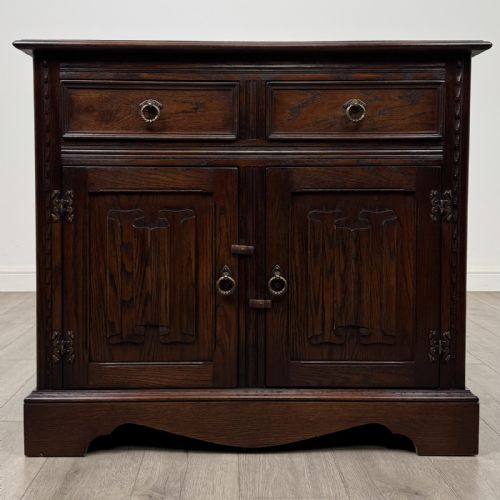
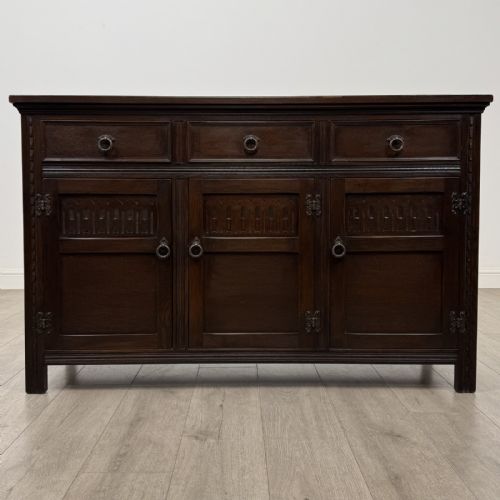
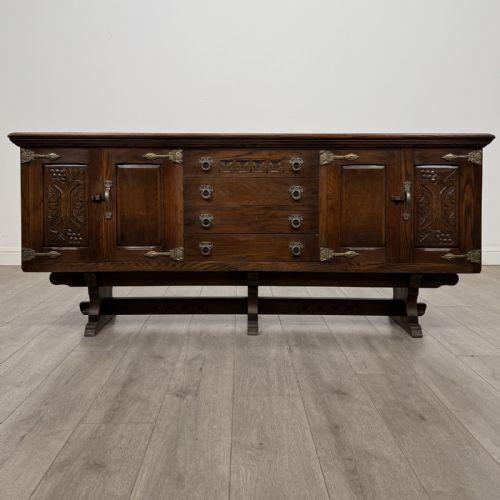
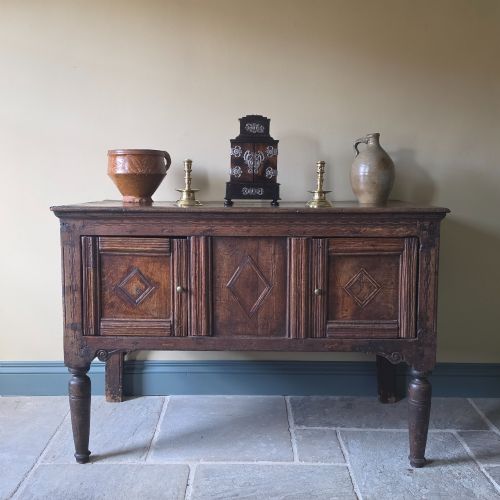
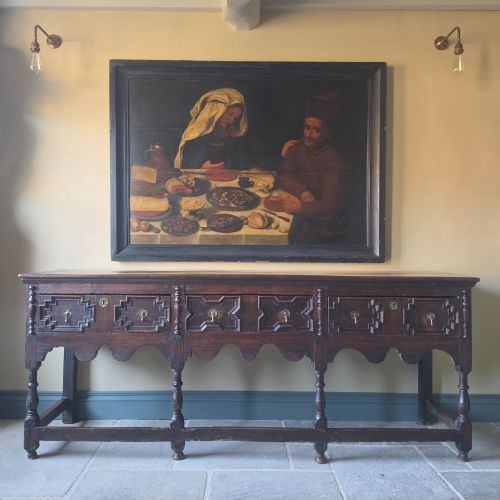
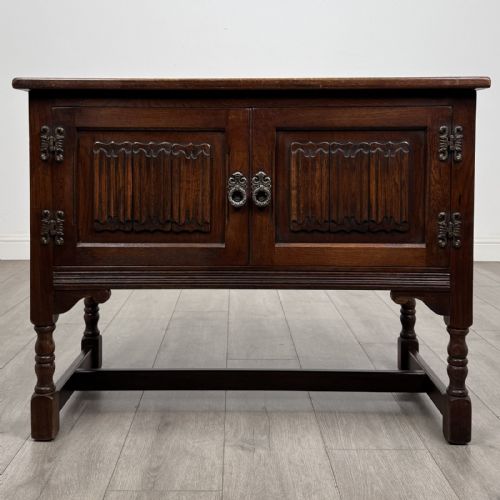
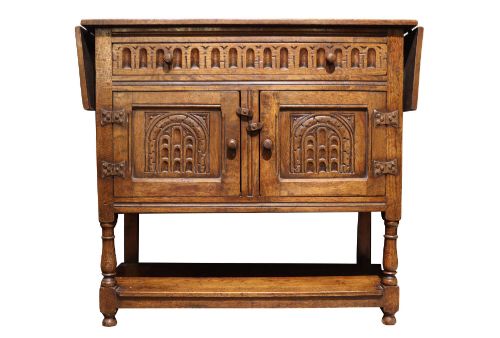
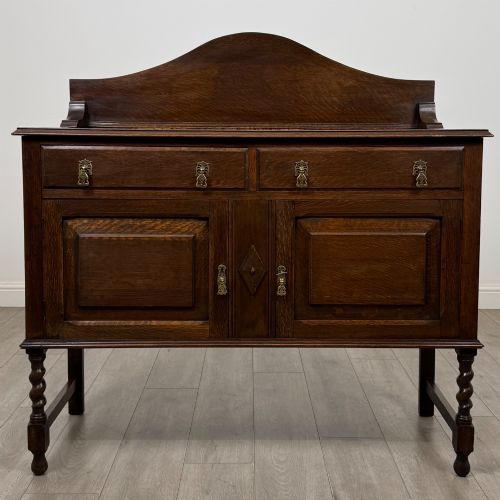
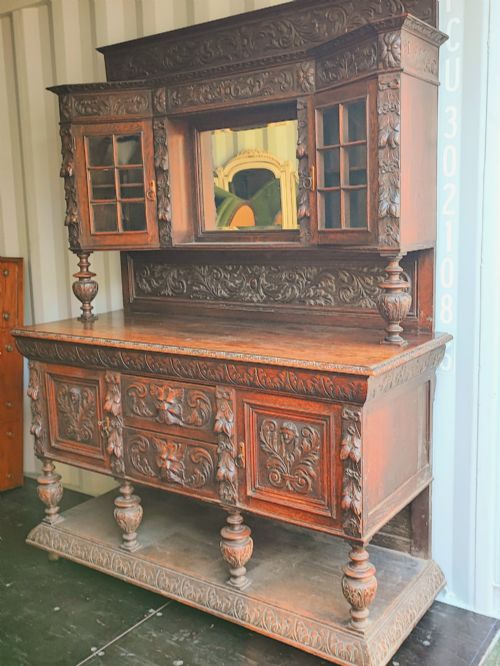
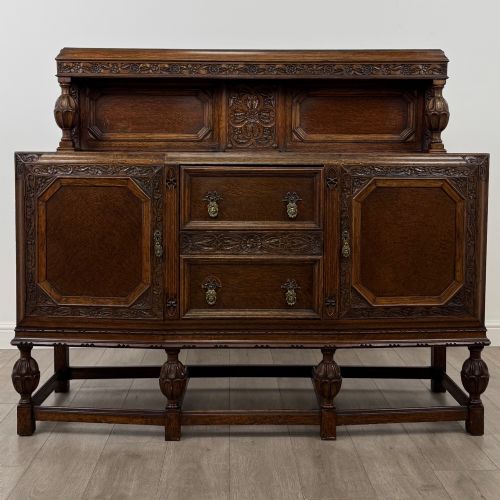
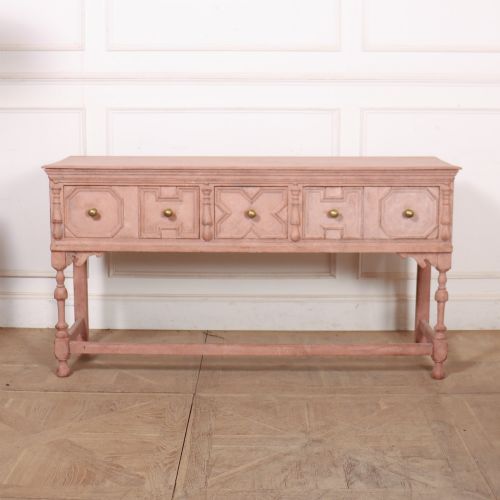
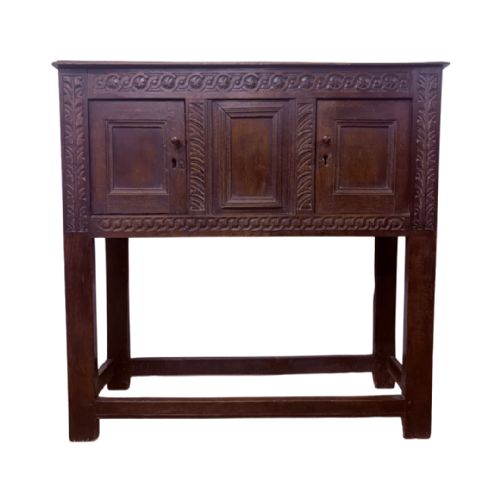
Jacobean Carved Sideboard
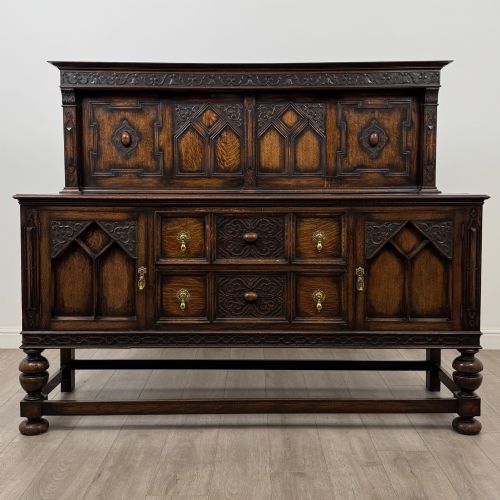
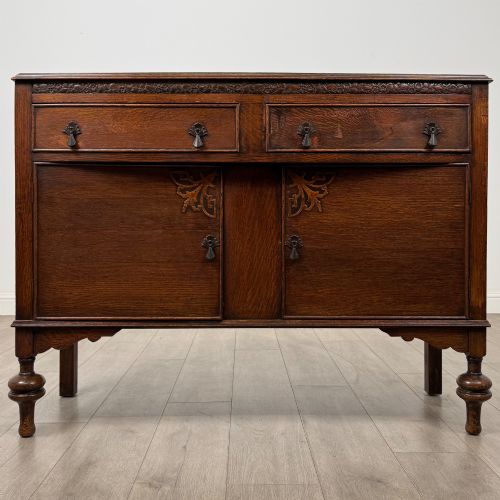
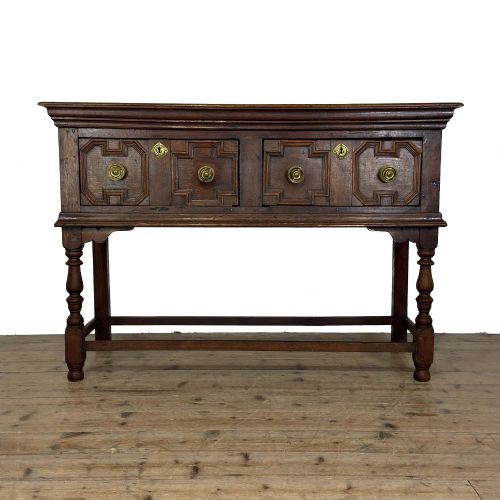
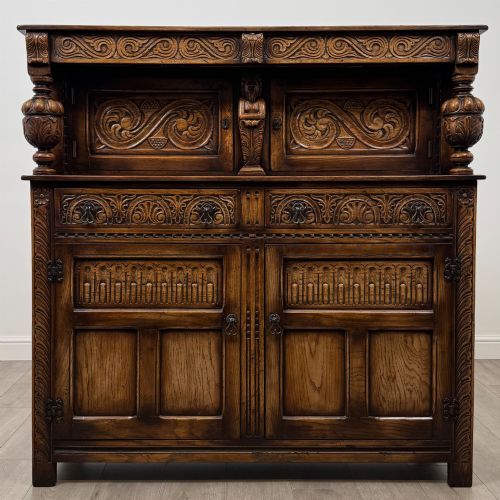
A jacobean carved sideboard brings heavy timber, deep panel relief, and centuries of domestic utility straight into a modern room.
Jacobean Carved Sideboard
A jacobean carved sideboard encompasses heavy timber storage units, dresser bases, court cupboards, and press cupboards spanning from original seventeenth-century examples to later revival interpretations.
Buyers meet Edwardian and 1920s revival pieces most frequently alongside nineteenth-century interpretations, all adopting the architectural door panels and heavy proportions of earlier periods.
Forms range from long serving tables and low dresser bases with potboards to tall cupboards fitted with geometric mouldings and barley-twist supports.
Assessing quality
Quality rests in the crispness of the hand-carved relief work and the depth of the timber's natural patina rather than surface polish.
The integrity of the joined oak frame and the retention of original hardware separate superior cabinetwork from later reproductions.
Recorded materials span oak, walnut, fruitwood, brass hardware, and glass, appearing across court cupboards, dressers, and side cabinets.
The Jacobean Carved Sideboard Glossary
- Court cupboard
- A heavy enclosed storage cabinet featuring a recessed upper section supported by pillars.
- Dresser base
- A long low table fitted with drawers and sometimes a lower shelf or potboard, designed for serving and storage.
- Barley-twist
- A turned column shaped in a helical screw pattern, popular on revival furniture legs and supports.
- Linenfold
- A style of carved wooden panelling that resembles folded vertical folds of cloth.
- Potboard
- An open lower shelf fitted beneath a dresser base or sideboard, originally intended for pots and pans.
Jacobean Carved Sideboard: Frequently Asked Questions
What is a court cupboard?
A court cupboard is an enclosed storage piece featuring a stepped design with a recessed upper cabinet supported by short columns.
These pieces provided secure storage for household valuables and foodstuffs in seventeenth-century homes.
How do I spot a revival piece?
Revival pieces display machine tooling marks, standardised timber widths, and lighter overall construction compared to seventeenth-century originals.
Edwardian and 1920s workshops frequently copied earlier styles using golden oak and applied turnings.
What was a dresser base used for?
A dresser base served as a functional surface for food preparation and serving in large domestic kitchens or dining halls.
The drawers held cutlery and linens while the top surface supported serving platters during meals.
How do I care for solid oak?
Solid oak requires minimal intervention beyond occasional waxing to nourish the grain and protect the natural surface patina.
Keep these timber pieces away from direct heat sources and sudden humidity changes to prevent splitting.