
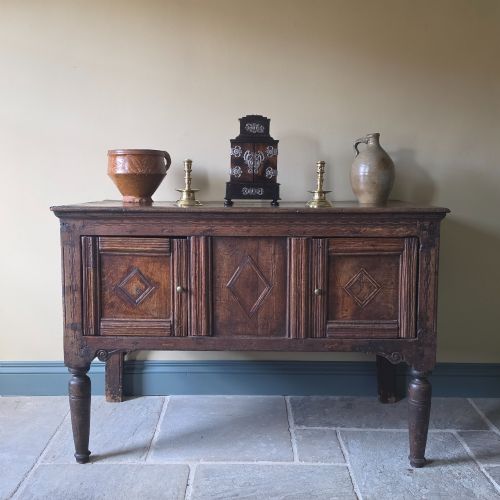
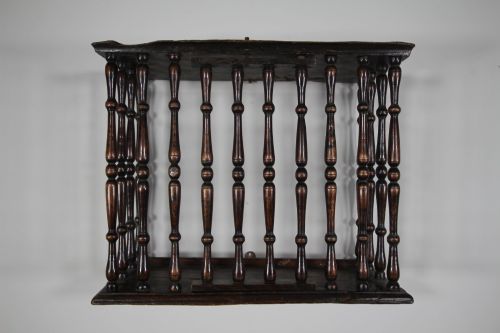
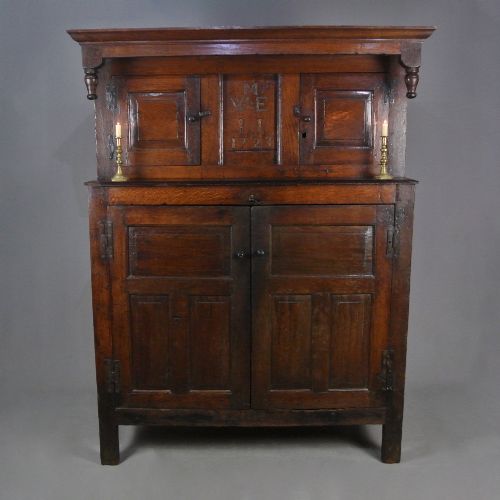
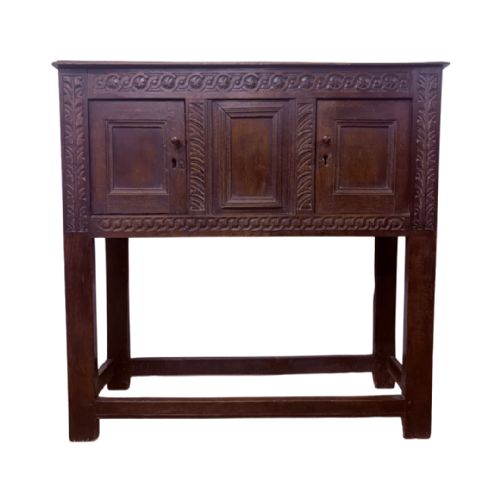
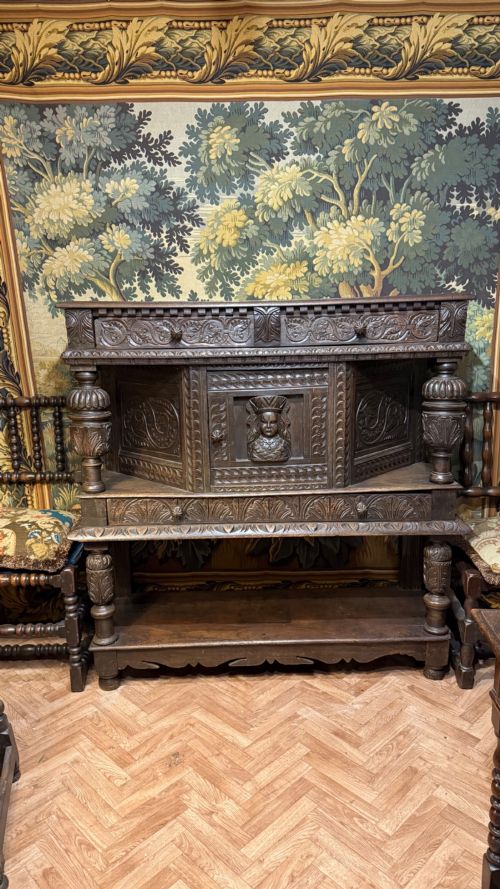
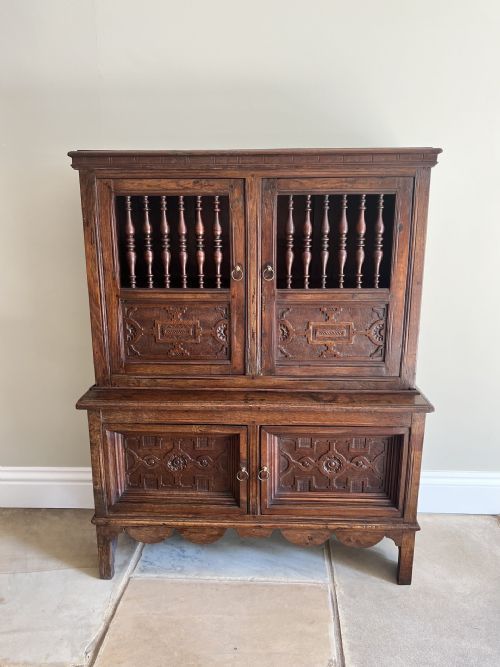


English Oak Livery Cupboard
An English oak livery cupboard is a heavy, timber-framed storage piece built to hold food, linens, and household provisions, prized for its robust joinery and dark patination.
English Oak Livery Cupboard
An english oak livery cupboard sits firmly within the heavy timber tradition of domestic storage, appearing in seventeenth-century forms and later revivals. These pieces function as freestanding cabinets or units raised on stands, built to secure household stores and textiles.
The seventeenth-century examples dominate the record, including joined pieces and court cupboards from the Jacobean and Charles II periods. Later nineteenth-century versions also appear, sometimes following earlier tastes or combining linen presses with wardrobe forms.
Makers constructed these storage pieces with deep recesses, panelled doors, and substantial carcases designed to withstand centuries of use. The surviving items range from mural wall cabinets to large floor-standing presses made of solid timber.
How they were made
Joiners built an english oak livery cupboard using heavy framing techniques with mortise and tenon joints secured by wooden pegs. They selected local oak for the primary structure, often quarter-sawing the timber to reveal the characteristic silver medullary rays.
Makers integrated wrought iron hinges, brass handles, and fruitwood inlay to accent the dark timber surfaces. Panel doors and friezes received hand-carved geometric or floral motifs, while interiors relied on plain board shelving.
Listings span seventeenth-century joined work through to nineteenth-century interpretations, utilising solid oak, fruitwood inlay, and iron.
What varies in quality
The depth of carving and the crispness of the joined mouldings dictate the standing of an english oak livery cupboard. Pieces retaining their original timber surfaces, structural pegs, and contemporary ironwork command greater attention than those with extensive timber replacement.
Proportion and structural integrity separate standard utility pieces from finely ornamented court cupboards and inlaid examples. The balance between the upper and lower tiers and the presence of period hardware determine the distinction across the range.
The English Oak Livery Cupboard Glossary
- Livery cupboard
- A storage cabinet originally used to keep rations, candles, and small household goods out of the reach of pests. These pieces often feature perforated or turned spindle doors to allow ventilation.
- Court cupboard
- A heavy two-tiered storage unit with a recessed upper section supported by turned posts. They served as display surfaces for plate and storage for provisions in great houses.
- Joined oak
- Furniture constructed using frame-and-panel joinery rather than nailed boards, allowing the timber to expand and contract with seasonal humidity. This method defines seventeenth-century cabinet work.
- Fruitwood inlay
- Contrasting lighter wood insertions set into the oak surface to create geometric patterns or floral designs. This technique adds visual depth to the dark primary timber.
- Linen press
- A tall storage piece containing sliding trays or shelves for folded textiles, often combined with a cupboard base. They evolved from earlier livery forms to manage household linens.
English Oak Livery Cupboard: Frequently Asked Questions
What is an english oak livery cupboard used for?
These cabinets originally stored food rations, candles, and daily provisions in the great hall or chamber. Households later used them for keeping household linens and garments secure.
Today they function as statement storage pieces in dining rooms or hallways, holding tableware or modern items while displaying traditional timber grain.
How do I date an english oak livery cupboard?
Dating relies on examining the construction methods, such as joined frames, pegged joints, and the style of carved mouldings. Seventeenth-century examples display distinct geometric panels and turned supports, whereas later nineteenth-century revivals copy these earlier motifs with different tool marks.
Hardware placement, timber shrinkage patterns, and secondary woods inside the carcase provide further evidence for determining the period of manufacture.
How do I care for an english oak livery cupboard?
Keep the timber away from direct heat sources and sudden humidity changes to prevent the oak panels from splitting. Apply traditional beeswaxes occasionally to nourish the surface and maintain the dark patination.
Avoid modern liquid polishes that can build up a sticky film over the carved details and hand-planed boards.
Where were english oak livery cupboards placed?
Historic households positioned these cupboards in dining chambers, service rooms, and private bedchambers for easy access to daily provisions. Their heavy construction meant they remained stationary once set against a principal wall.
In modern rooms, they anchor large wall spaces and provide substantial vertical storage without dominating the floor plan.