




Carolean Oak Sideboard
A carolean oak sideboard or related seventeenth-century serving piece brings robust joinery, rich carved detail, and centuries of domestic history straight into a modern interior.
Carolean Oak Sideboard
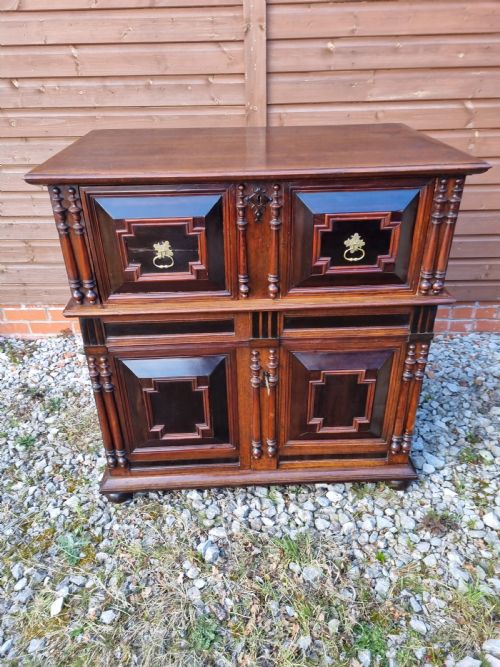
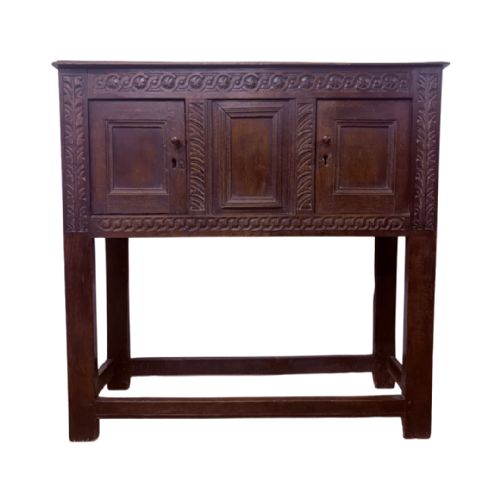
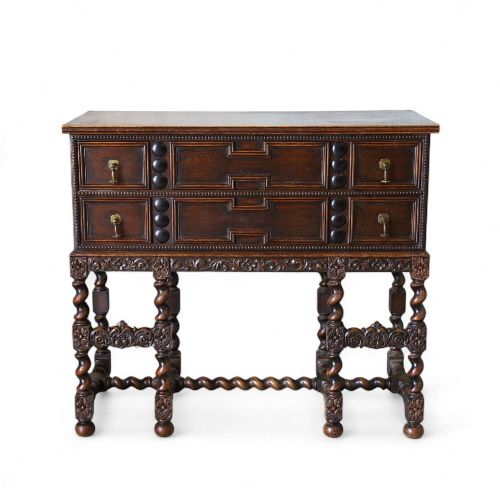
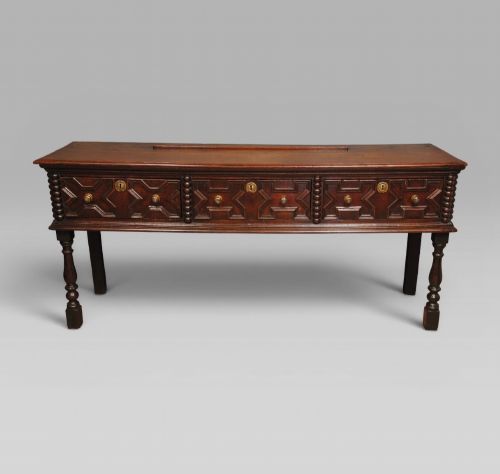
When you search for a carolean oak sideboard, you encounter substantial heavy timber items spanning the seventeenth century alongside later revival pieces from the nineteen-thirties. The selection includes joined cupboards on stands, low dressers, servers, court cupboards, and block-front dresser bases.
Forms vary from tall court cupboards down to low servers and dresser bases fitted with multiple drawers. The timber is predominantly English oak, occasionally enhanced with contrasting woods such as snakewood and fruitwood inlay or applied paint.
Materials and construction methods
Makers utilised solid English oak for the primary structure of these sideboards, cupboards, and servers, ensuring exceptional durability and weight. Boards were joined using traditional methods that accommodated seasonal timber movement.
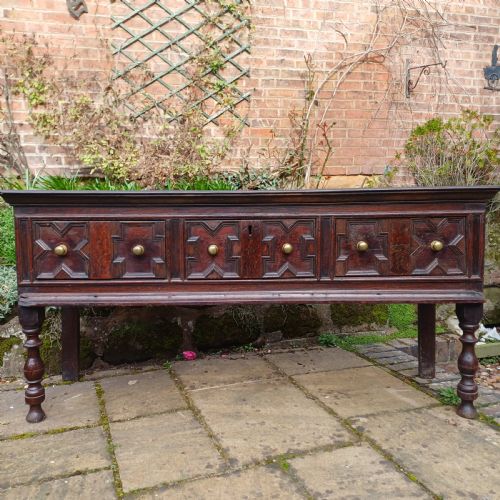
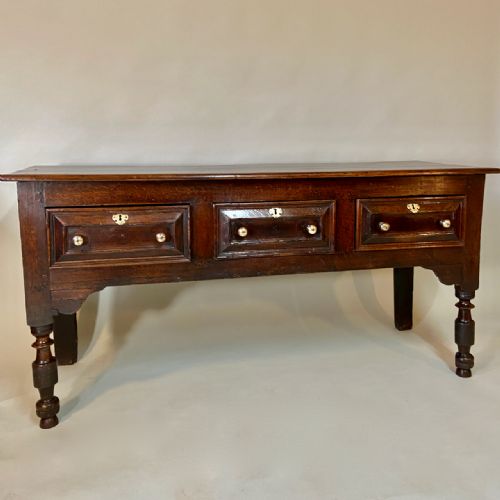
Decoration relied heavily on carved panels, geometrically moulded drawer fronts, and applied turnings like barley-twist supports. Artisans occasionally enriched the surfaces with fruitwood inlay, snakewood details, or historical paint finishes.
Hardware combined functional iron hinges with brass handles and escutcheons, securing doors and drawers built into court cupboards and dresser bases.
Carolean Oak Sideboard Retail Price Guide 2026
Typical asking prices for carolean oak sideboard among the pieces listed under this phrase on Sellingantiques today, from the lower quarter to the upper quarter. They describe what is for sale here now, not the wider market.
Makers occasionally added snakewood because plain oak just wasn't loud enough for a seventeenth-century dining hall.
Evaluating craftsmanship and survival
Quality rests in the crispness of the carved ornament, the depth of the geometric mouldings, and the integrity of the original joints. Pieces that retain their early surface patination and authentic hardware stand apart from heavily restored alternatives.
The sophistication of secondary timbers, such as finely executed fruitwood or snakewood inlay, distinguishes higher-status items from simpler utilitarian furniture. Similarly, the proportion and balance between the base structure and upper cupboard sections dictate the visual success of court cupboards and servers.
The Carolean Oak Sideboard Glossary
- Carolean
- Pertaining to the reign of King Charles the Second, spanning the mid-to-late seventeenth century, characterised by exuberant carving and rich surface decoration. This style influenced both seventeenth-century originals and nineteen-thirty revival pieces.
- Court cupboard
- A heavy oak storage piece featuring an enclosed upper section supported by pillars above a lower cabinet or open shelf. These were used to display plate and store provisions.
- Dresser base
- A long, low storage unit fitted with multiple drawers above cupboards, functioning as a sideboard or server in dining spaces. Seventeenth-century examples often display block fronts or geometric mouldings.
- Barley-twist
- A spiral turning resembling a twisted rope, commonly utilised on the vertical supports and legs of seventeenth-century furniture and nineteen-thirty revival pieces.
- Snakewood
- A dense, heavily figured exotic timber utilised sparingly for decorative inlay and contrast against pale English oak surfaces.
Carolean Oak Sideboard: Frequently Asked Questions
What is a carolean oak sideboard?
A carolean oak sideboard encompasses seventeenth-century serving pieces, low dressers, and dresser bases alongside nineteen-thirty revival interpretations. They are heavy wooden furniture items built with drawers and cupboards for dining storage.
These pieces feature distinct period characteristics such as geometric mouldings, carved panels, and turned supports. They serve as practical sideboards and focal points in dining rooms or hallways.
How do you date an antique oak sideboard?
Dating relies on examining construction techniques, tool marks, timber shrinkage, and stylistic indicators like mouldings and carving. Seventeenth-century pieces display hand-riven oak and early joinery methods.
Revival furniture from nineteen-thirty mimics these historical forms but often reveals twentieth-century machining and standardised fixings upon close inspection. Comparing hardware and secondary woods helps clarify the era of manufacture.
Where were court cupboards used?
Court cupboards originated in great houses and substantial rural homes as multifunctional storage and display furniture for dining halls. They held costly plate, silverware, and dry foodstuffs.
Over time, these heavy oak cupboards transitioned into domestic living spaces as decorative antiques. Today they function as statement storage pieces in traditional and eclectic interiors.
How do you care for antique oak furniture?
Antique oak benefits from stable indoor humidity and protection from direct sunlight and heat sources to prevent timber splitting. Regular dusting with a dry cloth maintains the surface.
Applying occasional specialist wax feeds the aged wood and preserves the natural patina built up over centuries. Avoid silicone-based polishes that can damage historic finishes.