

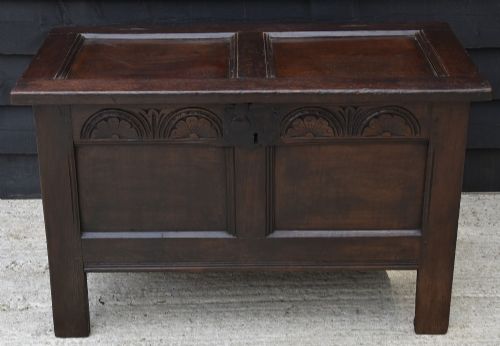
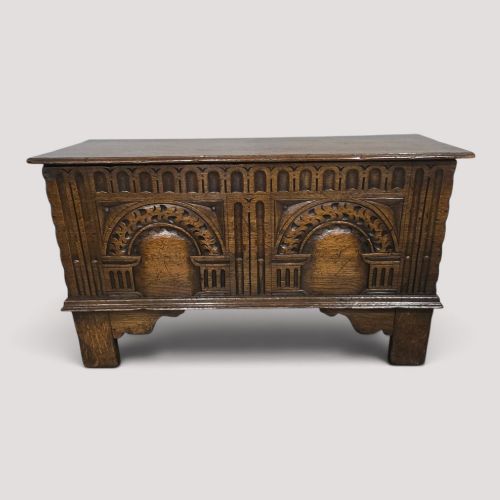
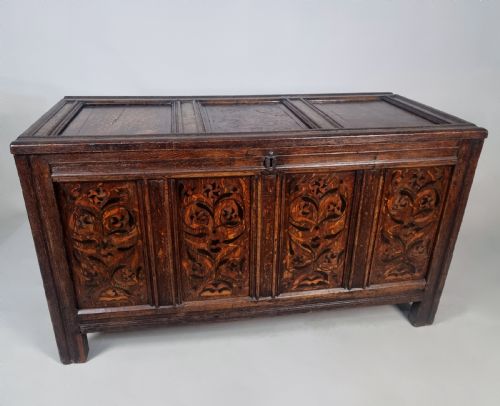
Jacobean Blanket Chest
A jacobean blanket chest brings sturdy seventeenth-century utility and rich dark timber into a modern interior.
Jacobean Blanket Chest
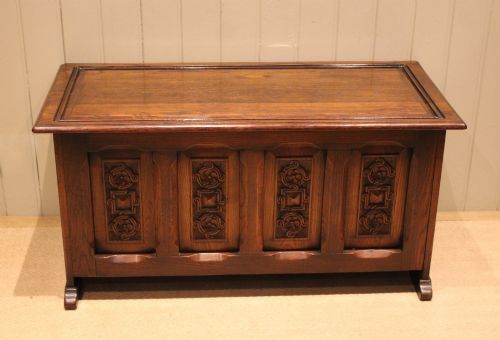
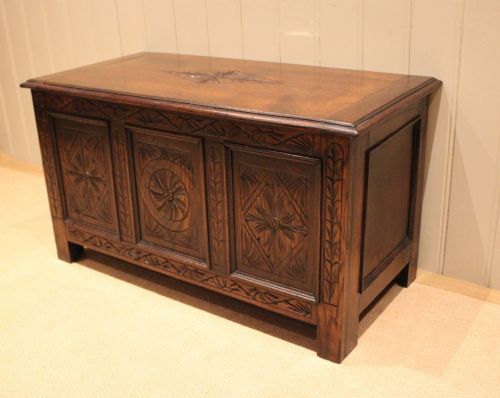
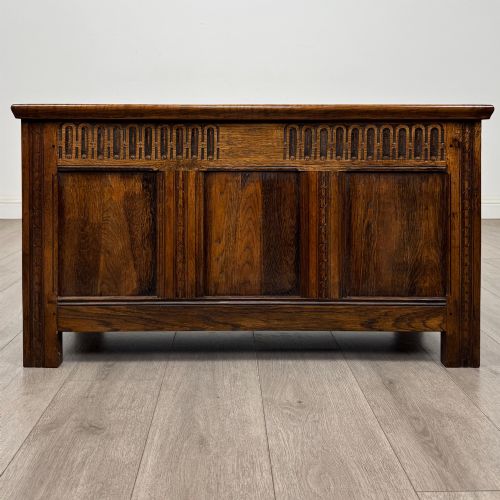
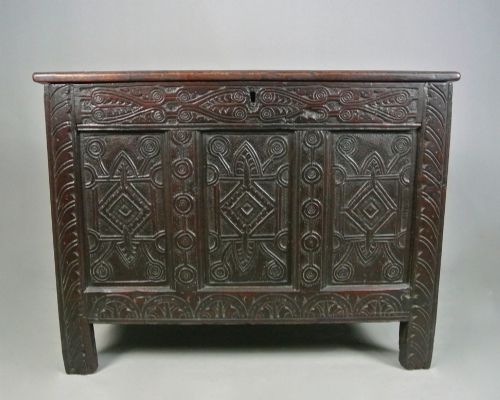
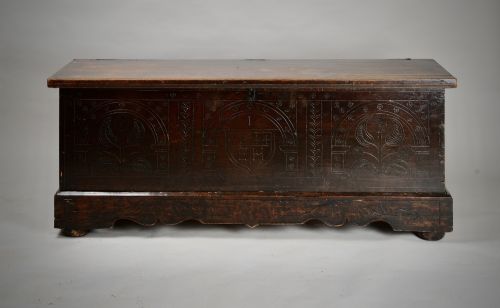
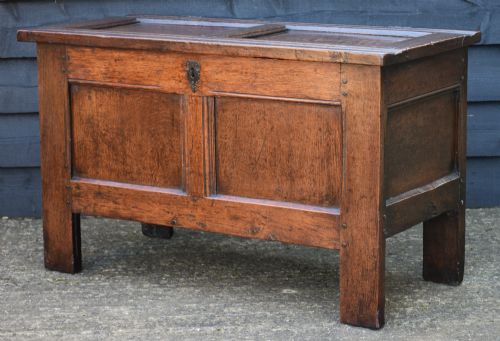
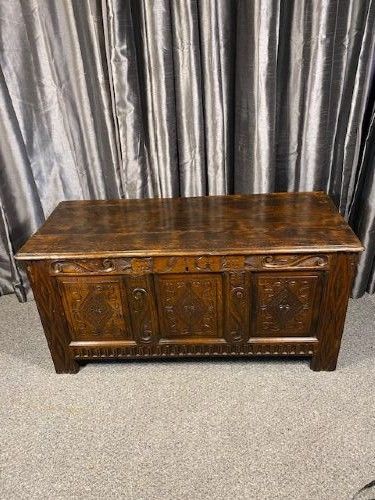
A jacobean blanket chest typically takes the form of a solid oak coffer or storage box designed for domestic security and storage. These pieces frequently appear from the seventeenth century, alongside revival interpretations made in the early twentieth century.
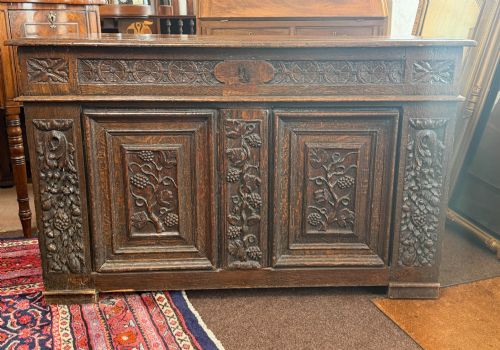
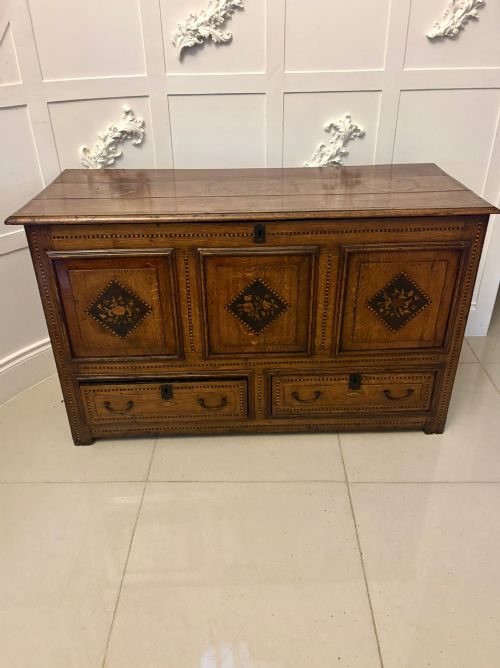
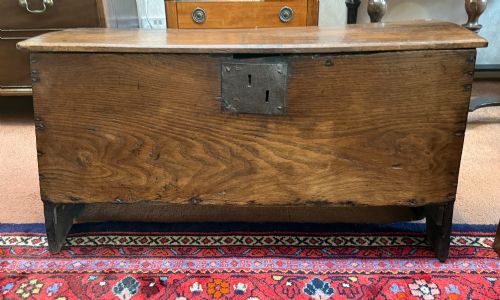
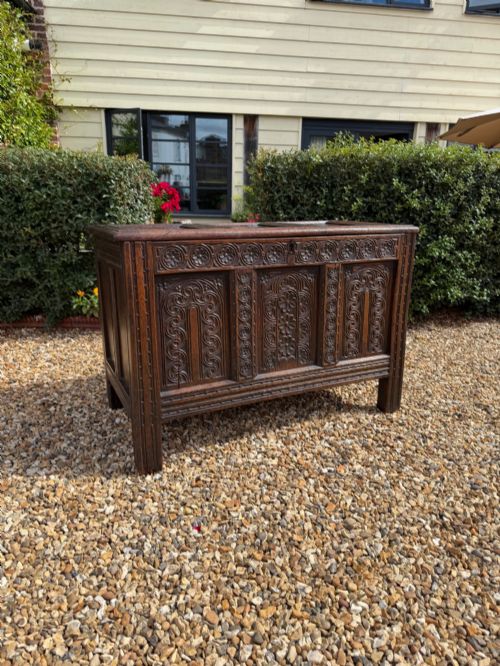
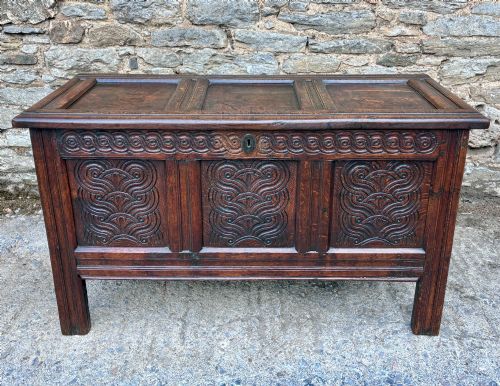
Makers constructed these chests with hinged lids for linens and woollens, sometimes incorporating lower drawers or smaller internal compartments. The surviving examples range from plain boarded constructions to heavily carved panelled boxes.
What Varies in Quality
The standard of carving and the depth of relief distinguish the finer examples from simpler provincial work. Crisp execution in the timber and well-proportioned panels elevate a piece above standard utility boxes.
Originality of surface timber and the survival of early hardware heavily influence the character of each chest. Later alterations or replaced timber panels alter the integrity of seventeenth-century pieces.
Materials documented across these storage chests include solid oak, ebonised wood, marquetry inlay, brass, and iron.
The Jacobean Blanket Chest Glossary
- Coffer
- A large wooden chest used historically for storing valuables, documents, or textiles. These heavy boxes formed the basis of early domestic furniture before dedicated wardrobes and chests of drawers became common.
- Linenfold
- A style of wood carving resembling folded linen cloth, frequently used to ornament vertical panels on seventeenth-century furniture. This motif gained widespread popularity across English joinery during the period.
- Panelling
- A method of construction where flat boards are fitted within a surrounding frame to prevent warping. This technique allowed large wooden surfaces to remain stable despite changes in temperature and humidity.
- Marquetry
- The art of applying decorative veneer pieces to a structure to form geometric or pictorial designs. Makers utilised mixed inlay woods to create contrasting patterns on the front panels of select chests.
Jacobean Blanket Chest: Frequently Asked Questions
What did people store in a jacobean blanket chest?
Households utilised these deep chests primarily for heavy woollen blankets, household linens, and valuable garments that needed protection from damp and pests.
They also served as secure storage for documents, silver, and other portable possessions before the widespread adoption of specialised cabinets.
How do I spot a seventeenth century piece?
Original period pieces display traditional joinery methods such as pegged mortise and tenon joints, hand-riven oak boards, and forged iron hardware.
Examining the underside and interior reveals tool marks and timber shrinkage consistent with centuries of age rather than machine production.
How do I care for old oak furniture?
Keep these timber chests away from direct heat sources and drastic humidity swings to prevent the dry oak from splitting or warping.
Applying a traditional beeswax polish occasionally helps nourish the wood surface and maintain a soft natural sheen.