


Ivory Wool Oriental Rug
An ivory wool oriental rug brings a pale, luminous warmth to a floor, grounding a room with centuries of hand-knotted tradition.
Ivory Wool Oriental Rug
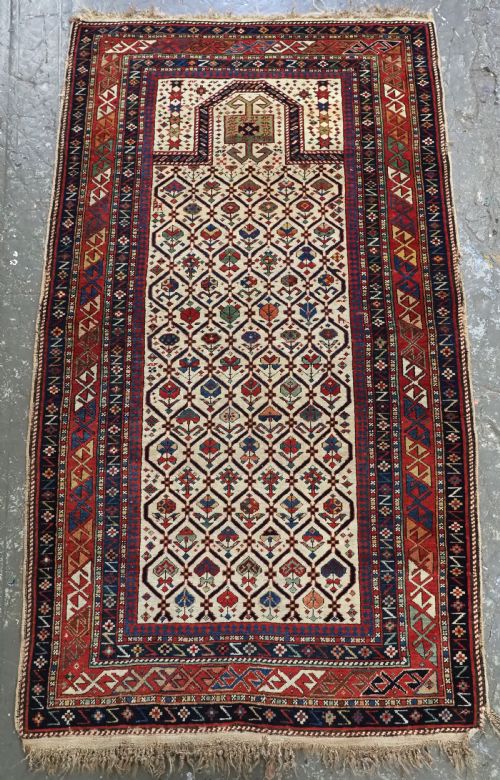
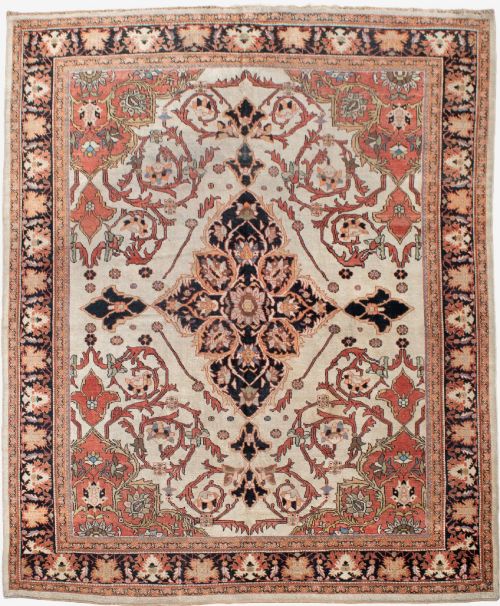
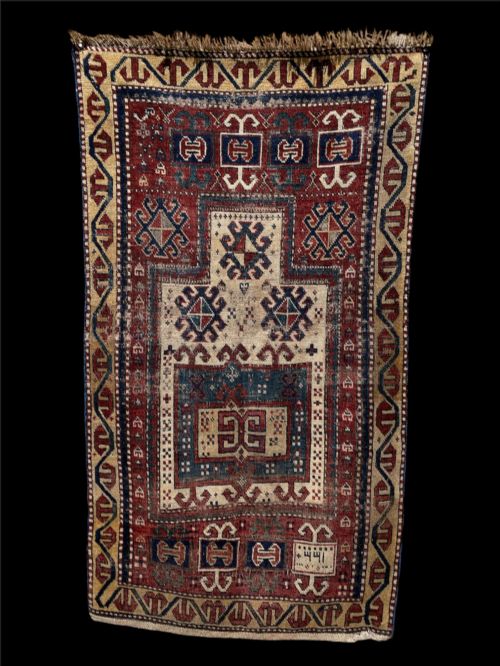
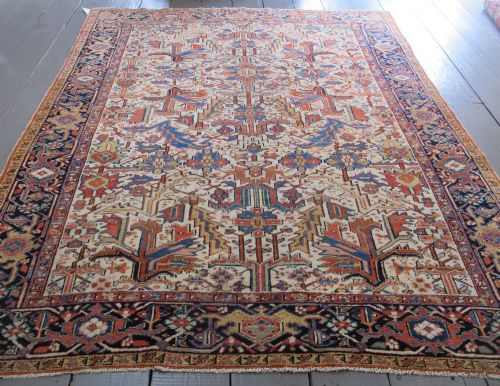
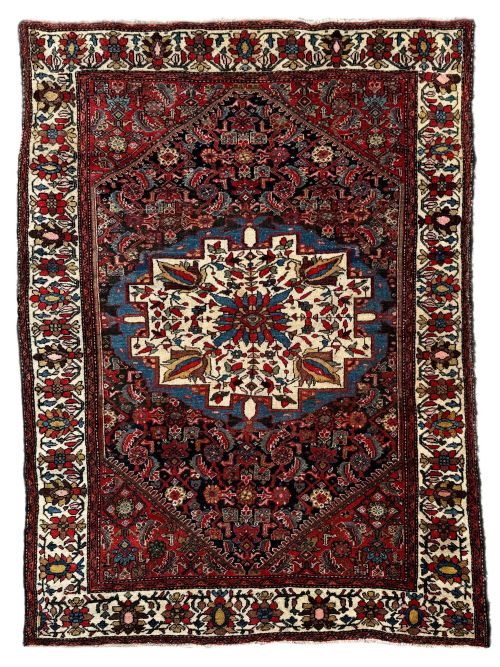
Makers from various regional traditions, including Heriz, Mahal, Tabriz, and Caucasian weaving centres, utilised light backgrounds to make intricate medallion and star details stand out clearly.
Materials and construction methods
These floor coverings are constructed primarily from hand-spun wool piled onto cotton or wool foundations, relying on natural dyes derived from plants and insects for colour. Natural dyes yield rich, complex tones that mellow gradually over decades of exposure and use.
Weavers tied individual knots by hand onto vertical looms, varying knot densities according to the regional workshop or tribal tradition. Silk highlights occasionally appear in specific city carpets to accentuate particular floral lines or borders against the wool pile.
Assessing quality and craftsmanship
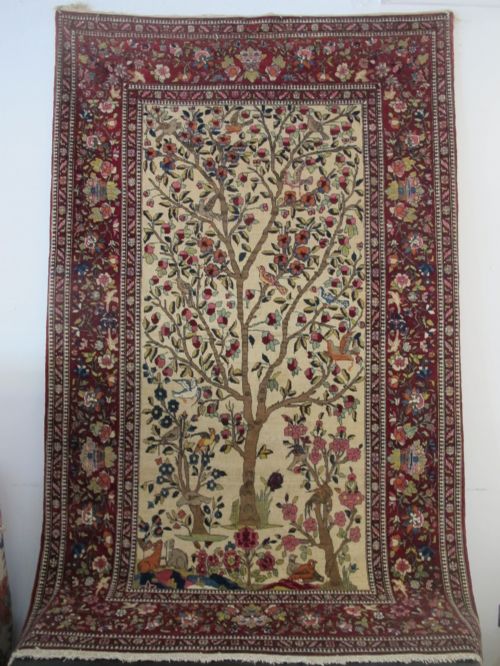
Quality in these textiles depends heavily upon the precision of the knotting, the fineness of the wool, and the depth of the palette. Tighter knotting allows for sharper delineation of intricate geometric lattices and delicate floral motifs.
The choice of natural dyes dictates how gracefully a piece ages, as superior dye formulas retain vibrancy without harsh chemical fading. The artistic balance of the border proportions relative to the central ivory field also separates standard village pieces from exceptional city workshop productions.
The Ivory Wool Oriental Rug Glossary
- Prayer rug
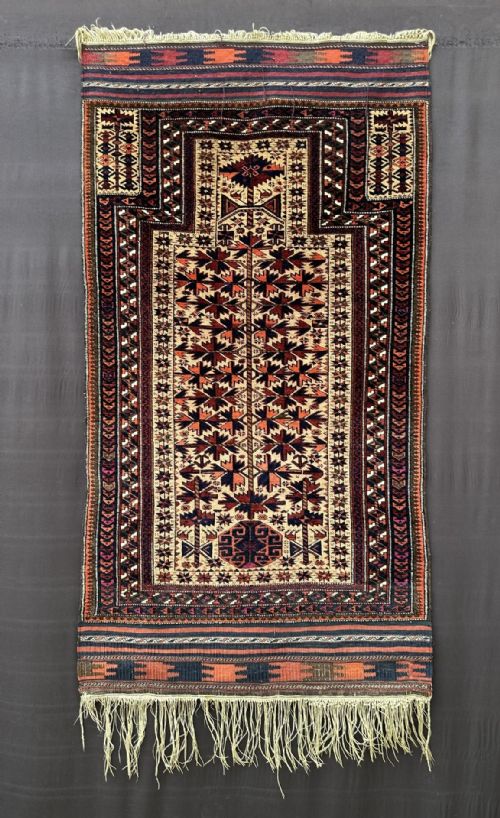
- A small floor textile featuring a distinct mihrab or arch design at one end, traditionally used for individual daily prayers. These formats often display compact dimensions suited for wall hanging or focal placement.
- Medallion
- A central ornamental motif positioned in the middle of the carpet field. It serves as the primary focal point around which secondary corners and border guards are arranged.
- Natural Dyes
- Colourants extracted from organic sources such as madder root, walnut shells, and indigo plants. They produce nuanced, variable shades that develop a desirable patina over time.
- Torba
- A small utilitarian bag face or wall hanging produced by Turkmen tribes, featuring characteristic geometric patterns and curled leaf designs. These pieces were historically utilised for tent storage before being preserved as textiles.
- Pile
- The upright surface of the rug formed by the ends of the knotted yarn. The height and density of the pile influence both the underfoot feel and the durability of the textile.
Ivory Wool Oriental Rug: Frequently Asked Questions
How do I clean an old wool rug?
Professional specialist cleaning is essential for antique wool textiles, as household detergents and excessive moisture can damage natural dyes and weaken historic foundations.
Regular gentle vacuuming without a rotating power brush helps remove surface grit that settles deep within the pile.
Can I place these rugs in high-traffic hallways?
Sturdier village and tribal weaves handle moderate foot traffic well, provided you use a quality underlay to prevent slipping and reduce friction against the floor.
Delicate city carpets with lower pile heights or silk highlights are better suited to low-traffic areas or display as wall hangings.
How do I distinguish regional styles apart?
Regional attribution relies on examining the specific knot structure, palette choices, and characteristic border motifs. Caucasian pieces generally favour bold geometry, whereas Persian workshops tend towards curvilinear florals and central medallions.
Local tribes often incorporate distinct animal symbols, star medallions, or specific abrash colour shifts unique to their district.
What causes colour variations within the wool pile?
Tonal shifts, known as abrash, occur naturally when a weaver changes dye batches mid-project or uses slightly different wool harvests. This variation is a hallmark of hand-dyed natural materials rather than a manufacturing flaw.