
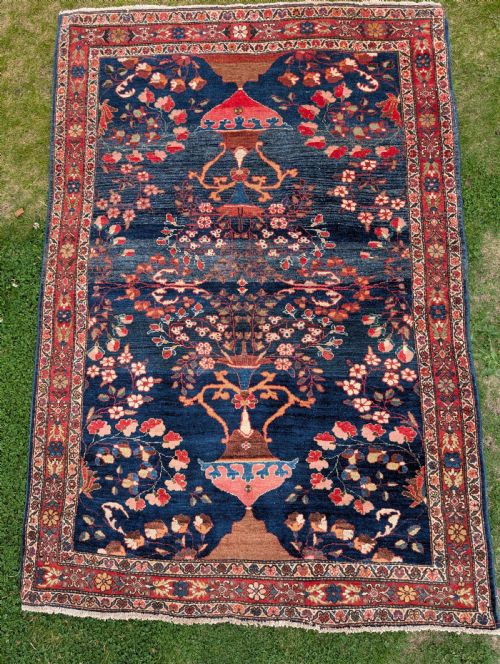
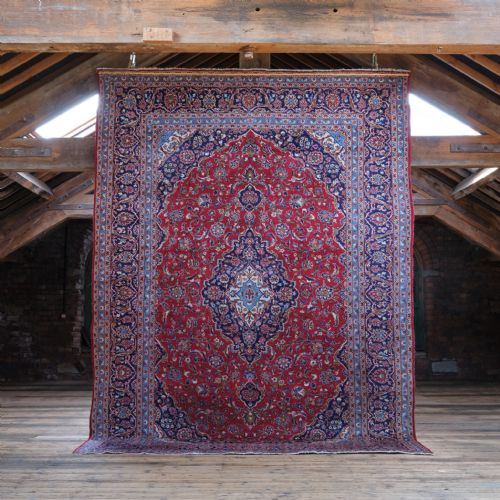


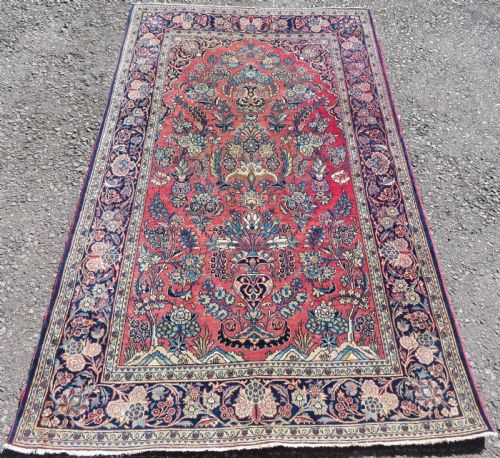


Wool Kashan Carpet
A wool kashan carpet brings enduring Persian craftsmanship and intricate floral design into a room through centuries of weaving tradition.
Wool Kashan Carpet
A wool kashan carpet represents traditional Persian weaving originating from central Iran, known for classic motifs, floral vases, and pictorial formats. Buyers searching this phrase look for resilient floor coverings that combine historical depth with practical utility.
The pieces on this page span from the nineteenth century through the Edwardian period up to the 1940s, encompassing standard area sizes as well as palace dimensions and specific prayer designs. Most examples encountered here date from the early twentieth century, reflecting established production eras in Persia.
Makers and workshops produced various formats including standard floor rugs, pictorial pieces depicting historical figures, and large carpets suitable for expansive spaces. These objects function simultaneously as durable floor coverings and complex textile artworks.
How They Were Made
Production relies on hand-knotted techniques using durable wool, cotton foundations, and occasional incorporation of silk elements to highlight specific design details. Artisans utilised fine fibres such as kork wool and kurk wool to achieve dense piles and soft textures.
Weavers constructed these textiles on vertical looms, tying individual knots by hand to secure patterns ranging from central medallion layouts to all-over floral arrangements. Natural dyeing methods contributed to deep red grounds and distinctive rose pink colourways.
Weavers immortalised figures like Kaiser Wilhelm II and Tsar Nicholas II in wool portraits.
What Varies In Quality
Knot density and material selection dictate the fineness of the pile, with examples utilising premium kork wool or silk accents representing higher precision in execution. The complexity of pictorial elements or intricate vase designs requires greater skill from the weaver.
Overall scale and proportion influence the visual impact, ranging from modest area dimensions to massive palace-size formats that demand extensive time and labour. Preserved structural integrity across foundational cotton warps and wefts determines long-term durability.
Mohtasham·Haroon
The Wool Kashan Carpet Glossary
- Knot
- The individual loops of wool or silk tied to the warp threads that form the pile of the carpet. Higher knot counts generally allow for sharper pictorial and floral detail.
- Warp
- The vertical foundation threads stretched lengthwise on the loom before weaving begins. Cotton serves as the primary material for these structural threads.
- Weft
- The horizontal threads passed alternately over and under the warp threads to hold the knots in place. They stabilise the entire textile structure.
- Medallion
- A symmetrical central ornamental design motif placed in the middle of the field. Many traditional compositions revolve around this focal point.
- Prayer Rug
- A smaller format featuring a mihrab or arch design indicating the direction of prayer. These pieces often incorporate floral vase motifs.
Wool Kashan Carpet: Frequently Asked Questions
How do I clean a wool kashan carpet?
Professional dusting and specialist washing preserve the natural lanolin in the wool fibres while protecting the cotton foundation from damage.
Avoid aggressive chemical treatments and excessive moisture to maintain the integrity of the dyes and the hand-knotted pile over decades of use.
Can I place these carpets in high traffic areas?
Dense hand-knotted wool construction provides natural resilience against regular foot traffic in living spaces and hallways.
Placing a suitable underlay beneath the carpet prevents sliding and reduces friction between the fibres and the floor.
What is a pictorial rug?
Pictorial rugs incorporate figurative portraits or historical scenes rather than standard geometric or floral medallions.
These specific examples depict notable historical figures such as rulers and monarchs within traditional borders.
How do I identify the age of a carpet?
Evaluating structural wear, natural dye characteristics, and stylistic elements provides clues regarding the period of origin.
Reference points include Edwardian-era pieces and items dating from the late nineteenth century up to the 1940s.