
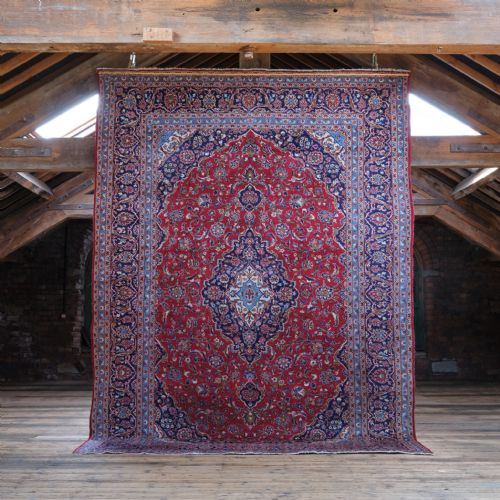
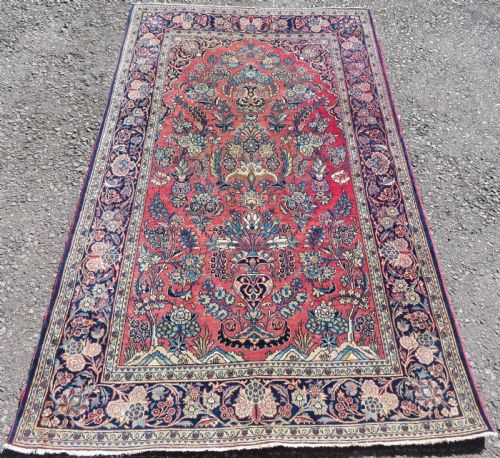


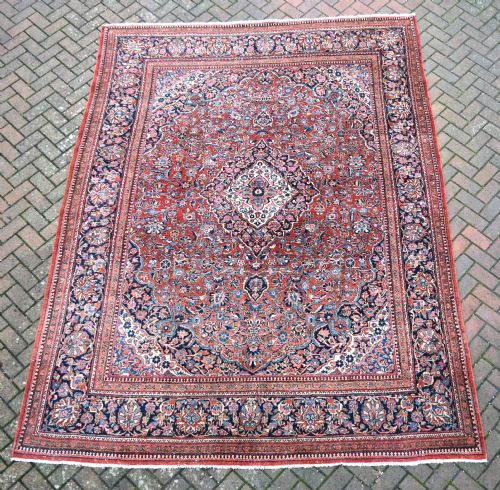
Hand Woven Kashan Carpet
A hand woven kashan carpet brings enduring Persian artistry and dense wool pile into a room, offering a rich anchor for traditional interiors.
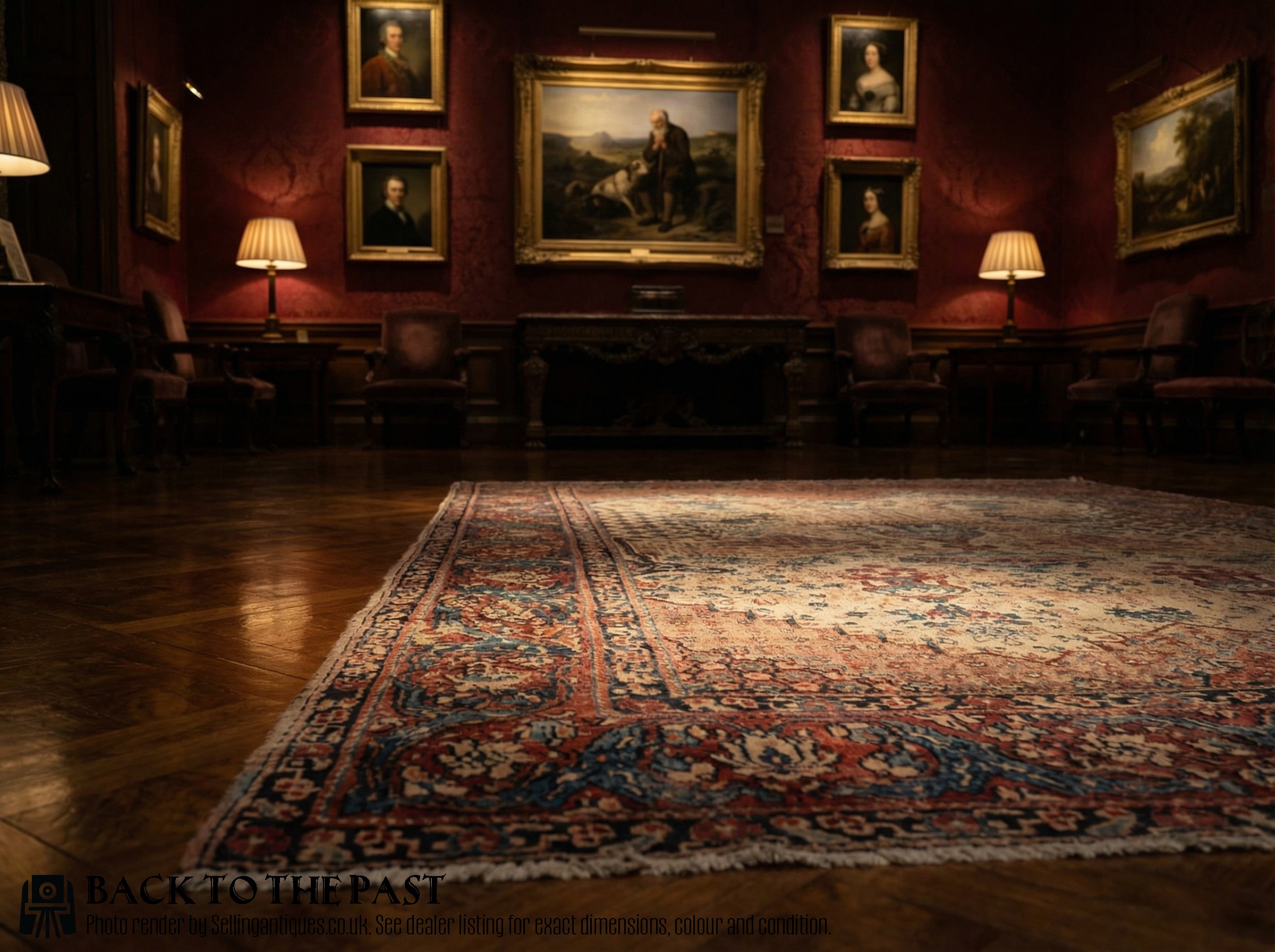
Hand Woven Kashan Carpet
A hand woven kashan carpet represents traditional Persian weaving originating from central Persia, spanning eras from the late nineteenth century through the early decades of the twentieth century. These pieces appear in varied formats, from modest area rugs up to expansive palace sizes and grand carpets.
The selections here showcase distinct regional styles including traditional Persian designs, Indo-Persian variants, and specific pictorial formats depicting figures or floral and vase motifs. Buyers encounter both standard woollen constructions and pieces incorporating silk elements or specific regional attributions.
Materials and construction
Production relies on hand-knotted techniques executed across foundations of durable cotton, providing structural stability for dense pile work. Artisans utilise quality wool, sometimes complemented by silk highlights, to achieve detailed surface patterns.
Weavers employ traditional dyeing methods to establish deep colour palettes, notably featuring signature rose pink tones alongside intricate multi-coloured motifs. The density of the hand knotting determines the crispness of the floral and pictorial layouts.
Listings feature hand woven kashan carpets spanning the late nineteenth century through the 1940s, utilising wool, cotton, and silk materials.
Assessing quality and character
Quality separates standard production from exceptional work through the fineness of the knotting and the complexity of the design execution, such as intricate flower and vase arrangements or pictorial portraits. Master workshops achieve greater textural depth and sharper delineation of motifs.
The choice of materials also dictates standing, with select examples incorporating partial silk content or originating from renowned master weavers like Mohtasham. Scale influences desirability, with palace sizes and matched pairs holding particular distinction among older Persian weaves.
Mohtasham Kashan·Haroon Kashan
The Hand Woven Kashan Carpet Glossary
- Kashan
- A historic city in central Persia renowned for producing fine knotted carpets with intricate floral and medallion designs. These rugs often feature central medallions and elaborate corner spandrels.
- Pile
- The upright yarn loops or cut ends that form the soft surface texture of a carpet. Dense pile construction contributes to the longevity and tactile richness of antique weaves.
- Warp
- The longitudinal threads stretched tightly on the loom that form the structural foundation of the rug. Cotton typically serves as this foundational base in central Persian production.
- Weft
- The horizontal threads passed across the warp strands to lock the knots securely in place. Multiple weft shots help determine the rigidity and flatness of the finished textile.
- Medallion
- A large symmetrical ornamental design centred in the middle of the carpet field. This central motif frequently anchors the entire decorative scheme of traditional Persian work.
Hand Woven Kashan Carpet: Frequently Asked Questions
How do I clean an antique kashan carpet?
Professional specialist cleaning is essential for antique wool and silk textiles to protect the structural integrity of the foundation and prevent dye bleeding. Regular gentle vacuuming without rotating brush heads helps remove surface dust safely.
Avoid home chemical treatments and excessive water exposure, which damage organic fibres and historical dyes. Consultation with a textile conservator ensures proper maintenance over decades of domestic use.
Where were these carpets originally made?
Production centres in north-west central Persia, specifically the historic city of Kashan, generated these traditional hand-knotted floor coverings. Some pieces reflect regional adaptations created in India as Indo-Persian variants.
Master workshops in these areas developed distinct aesthetic traditions incorporating classical floral layouts and pictorial themes. The geographic origin dictates the specific material combinations and knotting densities observed today.
Are these carpets suitable for heavy foot traffic?
Dense hand-knotted wool construction provides natural resilience, allowing these carpets to withstand regular domestic use in living spaces and reception rooms. Selecting appropriately sized area rugs or palace carpets ensures weight distributes evenly across the weave.
Placing a quality underlay beneath the rug prevents slipping and reduces friction between the cotton foundation and the floor. Lighter pieces containing silk elements benefit from placement in lower-traffic areas to preserve delicate fibres.
How can I date an antique kashan?
Dating relies on examining structural characteristics, palette variations, and stylistic motifs associated with periods from the late nineteenth century through the 1940s. Natural dye variations and specific weave densities often point towards earlier nineteenth-century origins.
Documentation of historical figures, such as Ahmad Shah Qajar in pictorial examples, provides firm chronological markers for pieces produced around 1920. Comparing knot counts and material handling against established stylistic eras refines the estimated age.