
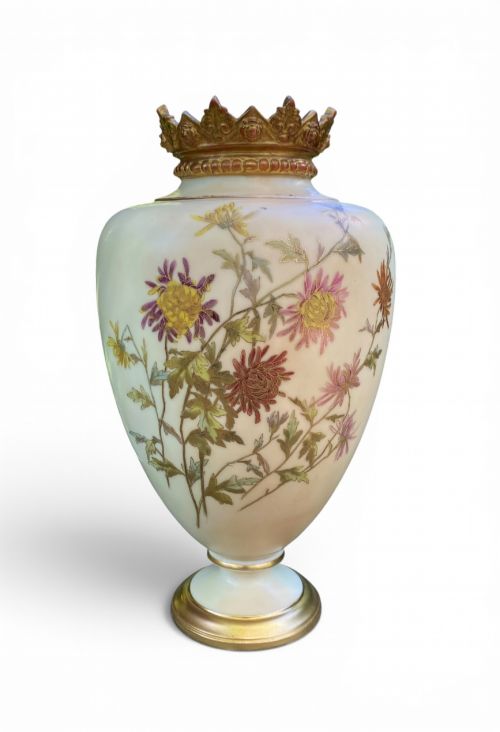


Ivory Ceramic Floral Vase
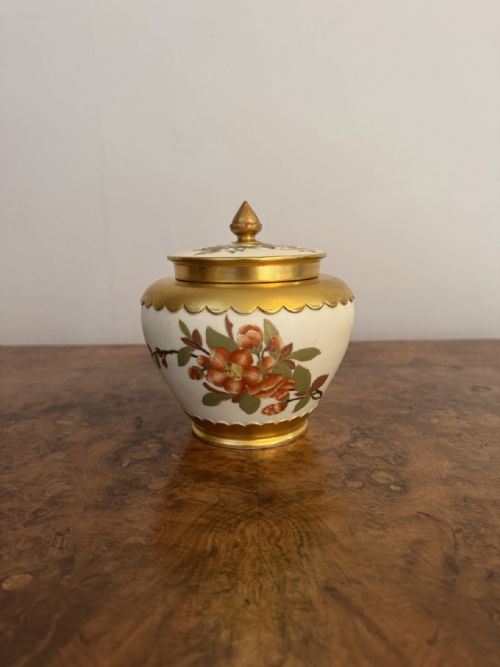
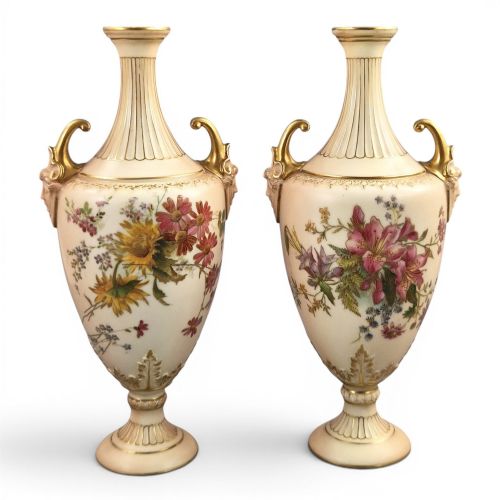
An ivory ceramic floral vase brings soft Victorian and Edwardian elegance into a room with delicate hand-painted blooms and rich gilding.
Ivory Ceramic Floral Vase
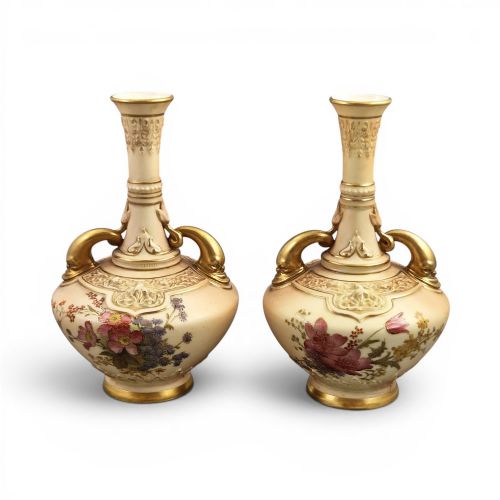
When you search for an ivory ceramic floral vase, you encounter refined porcelain pieces dominated by the blush ivory aesthetic of the late nineteenth and early twentieth centuries. These works span the Victorian, Edwardian, and later nineteenth-century periods, capturing a distinct era of British ceramic artistry.
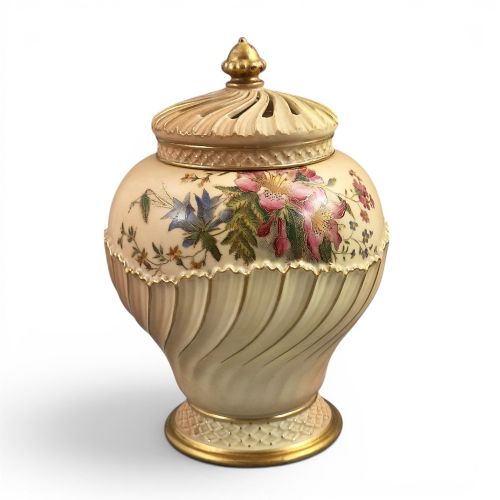
The objects take many forms beyond standard vessels, including lidded potpourri jars, handled ewers, pedestal vases, and loving cups. You are most likely to meet pieces finished in soft cream and ivory glazes, often paired with delicate floral painting and gilt highlights.
How they were made
Makers utilised fine porcelain and ceramic bodies covered in smooth ivory and blush glazes as the foundation for these decorative objects. Artisans then applied detailed enamel painting by hand, focusing predominantly on floral motifs such as chrysanthemums and roses.
Gilding, gold leaf, and elaborate gilt accents were incorporated to finish handles, rims, and moulded details. Pierced elements and structural additions like dolphin handles or crown covers required careful modelling before final firing.
Some ewers include dolphin-shaped handles, proving that Victorian decorators were entirely willing to let sea creatures hold up the flower arrangements.
What varies in quality
The standard of painting sets the finest pieces apart from simpler examples, particularly where artists rendered botanical subjects with subtle shading and precise brushwork. Signed work or evidence of specific hand-painted artistry elevates the piece significantly.
Complexity of form and ornamentation also govern quality, distinguishing standard vessels from elaborate lidded potpourri jars, ewers with pierced gilt handles, and matched pairs. The preservation of original gilding and the crispness of moulded details further define the upper tier.
Royal Worcester
The Ivory Ceramic Floral Vase Glossary
- Blush ivory
- A soft, matte cream or ivory ceramic glaze popularised during the late Victorian and Edwardian eras. It provides a muted background that enhances hand-painted floral decoration.
- Potpourri jar
- A decorative vessel featuring a pierced or crown cover designed to hold dried scented plant material. These containers often include inner lids and elaborate body shapes.
- Ewer
- A large jug-shaped vase with a decorated handle and spouted lip, originating from washing vessels but produced primarily for display in this period.
- Gilding
- The application of gold leaf or gold paint to ceramic surfaces and handles. It provides metallic contrast against the ivory glaze.
- Loving cup
- A large drinking vessel typically fitted with multiple handles, though often made purely for decorative display in later ceramic production.
Ivory Ceramic Floral Vase: Frequently Asked Questions
What period are blush ivory vases from?
These pieces originate primarily from the late nineteenth century, the Victorian era, and the Edwardian period up through the early 1920s.
The soft ivory glazes and specific floral styles are characteristic of British ceramic production during these decades.
How were potpourri jars used?
Potpourri jars held dried flower petals mixed with spices to fragrance rooms in Victorian and Edwardian homes.
The pierced covers allowed the scent to diffuse gently into the surrounding space while keeping the botanical mixture contained.
What is a ewer?
A ewer is a decorative pitcher with a shaped handle and an open spout, adapted from historical water jugs into purely ornamental forms.
In these collections, they often appear alongside matching pedestal vases and feature elaborate gilt handles.
How do I identify hand-painted decoration?
Hand-painted floral motifs show subtle variations in brushstrokes, pigment depth, and artist signatures upon close inspection.
Printed transfers lack the fine graduation of colour and individual touch found on painted pieces from this period.