




Italian Rococo Table
An italian rococo table brings dramatic carved movement and gilded splendour into a room, spanning centuries of craftsmanship.
Italian Rococo Table
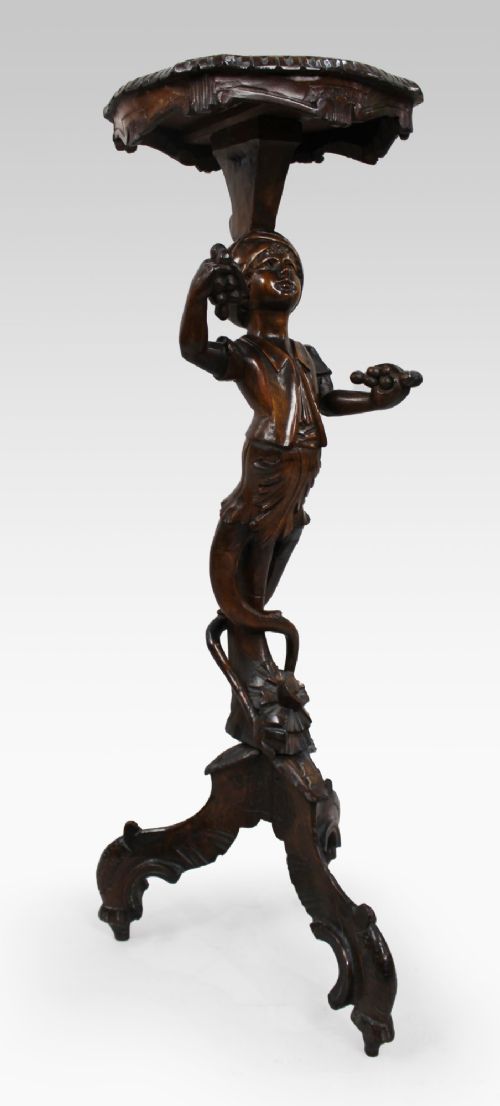
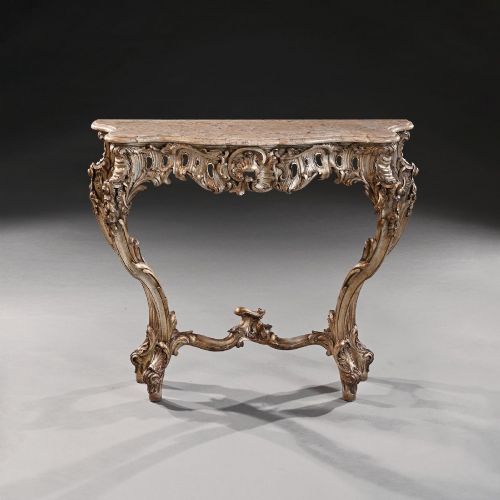
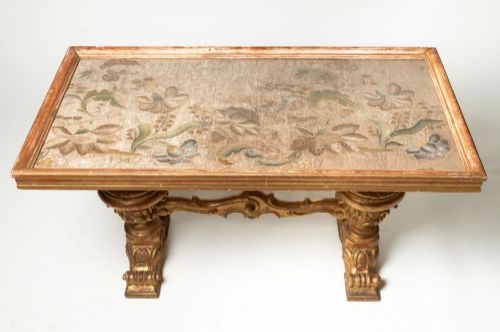
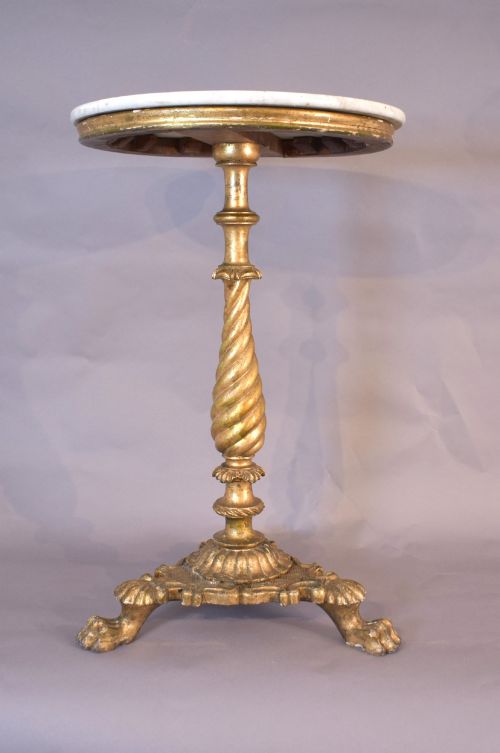
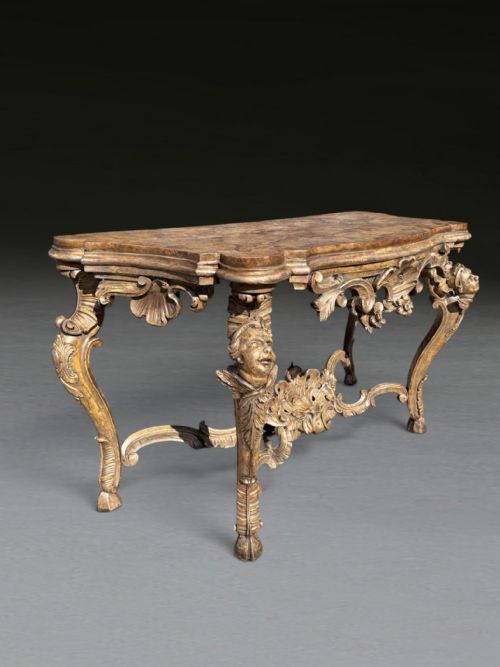
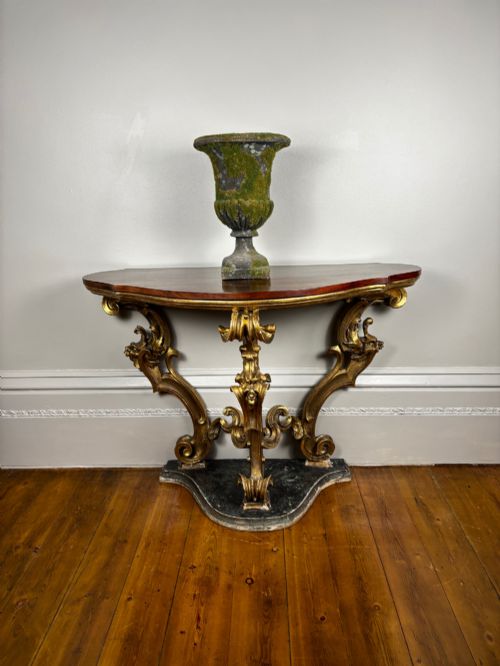
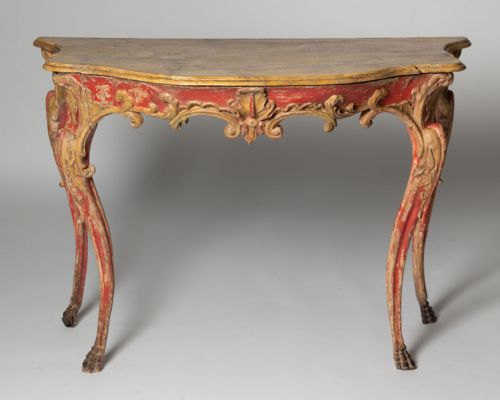
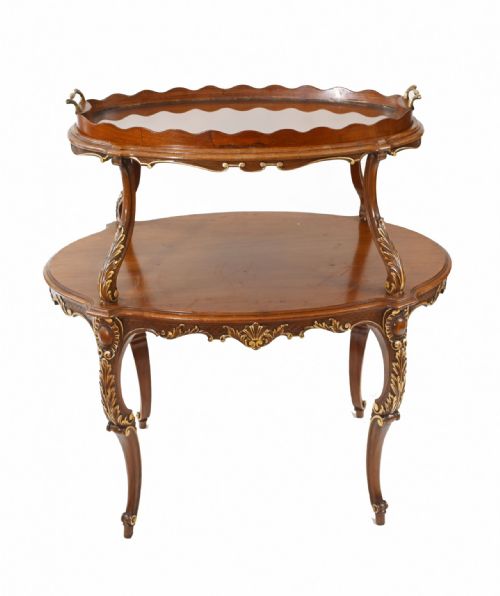
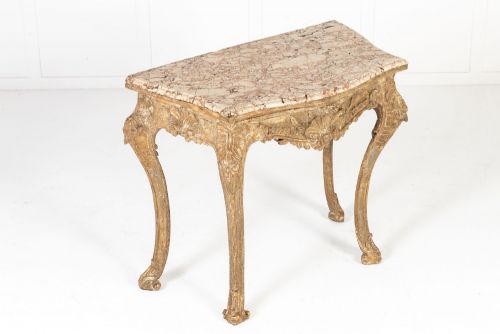
When you search for an italian rococo table, you encounter an array of ornate forms rooted in centuries of continental design. The evidence shows console tables dominate the selection, frequently paired with shaped marble tops and carved giltwood frames. Alongside these grand wall tables, you find occasional tables, coffee tables, and bedside variants spanning the eighteenth century through later revival periods.
The regional variations stretch from Venetian workshops to broader Italian centres, incorporating styles like Venetian Rococo, Rococo Revival, and Baroque influences. These pieces range from authentic eighteenth-century survivals to later interpretations from the nineteenth and twentieth centuries. The form adapts from heavy console structures to intimate bedside stands and low coffee tables.
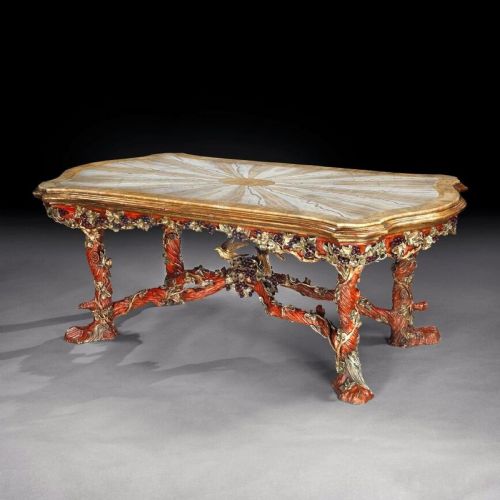
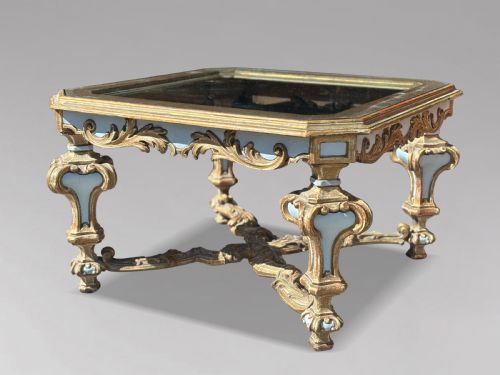
The physical presence of these tables relies heavily on their sculptural qualities, often featuring asymmetrical scrolls, floral carvings, and painted or gilded surfaces. While many pieces retain their original marble or wooden tops, others showcase intricate marquetry or glass components. Understanding the lineage helps place each piece within its historical context.
Materials and technique
Makers constructed these pieces using dense hardwoods such as walnut and kingwood, providing a stable armature for decorative schemes. Artisans applied gesso over carved wooden foundations to build up high-relief scrolls and organic motifs before applying gold leaf or silver gilt. This layered method created the reflective surfaces characteristic of the style.
Tops frequently incorporated shaped marble, onyx, or alabaster, fitted precisely to carved wooden rails. Painted and polychrome finishes also appear widely, utilising pigments applied over gesso grounds to achieve rich decorative effects. Cabinetmakers combined structural joinery with elaborate surface ornamentation to balance durability with visual lightness.
Italian Rococo Table Retail Price Guide 2026
Typical asking prices for italian rococo table among the pieces listed under this phrase on Sellingantiques today, from the lower quarter to the upper quarter. They describe what is for sale here now, not the wider market.
The listings span from the eighteenth century through to the 1930s, featuring materials like marble, giltwood, walnut, and alabaster.
The spectrum of quality
Quality reveals itself in the crispness of the hand-carved gesso and wood elements, where fluid lines and deep undercut foliage separate superior work from softer, mechanical casting or shallow carving. The application of gold or silver leaf demonstrates the artisan's precision, with finer examples showing careful burnishing against matte grounds.
The choice and fit of materials also dictate the hierarchy, such as heavy slab marble properly contoured to a serpentine wooden apron rather than poorly fitted stone. Structural integrity within the walnut or giltwood frame ensures the piece holds its weight without sagging at the joints.
Amleto Bertoni·Pauly et Cie
The Italian Rococo Table Glossary
- Giltwood
- Wood that has been coated with gold leaf or gold paint. This finish creates a luminous surface that catches candlelight and natural illumination.
- Console table
- A table designed to stand against a wall, frequently secured to it with brackets. These tables usually feature elaborate front legs and decorative aprons.
- Gesso
- A plaster-like mixture applied to wood as a base for paint or gilding. It allows carvers to achieve sharp, intricate relief details.
- Serpentine
- A curved line that ripples inward and outward in a continuous wave. This contour appears frequently on table fronts and marble tops.
- Marquetry
- The art of applying pieces of veneer to a structure to form decorative patterns. Craftsmen utilise various wood tones to build pictorial or geometric designs.
Italian Rococo Table: Frequently Asked Questions
How do I style a console table?
Place the table against a prominent wall in a hallway or reception room to anchor the space. Pair it with a matching mirror or artwork above to complete the vertical composition.
Keep surface accessories minimal to let the carved gesso and marble top remain the focus. Lamps or decorative candlesticks add height and balance to the arrangement.
Are these tables sturdy enough for daily use?
Console tables are primarily designed to stand against walls and often benefit from structural wall fixings for stability. Heavier stone tops provide their own gravity-held security within the wooden frame.
Coffee and bedside variants offer robust daily utility when constructed from solid walnut or hardwood. Care should be taken with delicate gilded edges to prevent chipping.
How do I tell an eighteenth-century piece apart from a later revival?
Eighteenth-century examples display hand-cut joinery, aged patination on the exposed woods, and gesso that has settled naturally over centuries. Tool marks and subtle asymmetries often reveal the hand of the original period artisan.
Revival pieces from the nineteenth and twentieth centuries typically show machine-cut precision or different secondary woods beneath the gilding. Examining the construction methods inside the drawers and aprons clarifies the true age.