
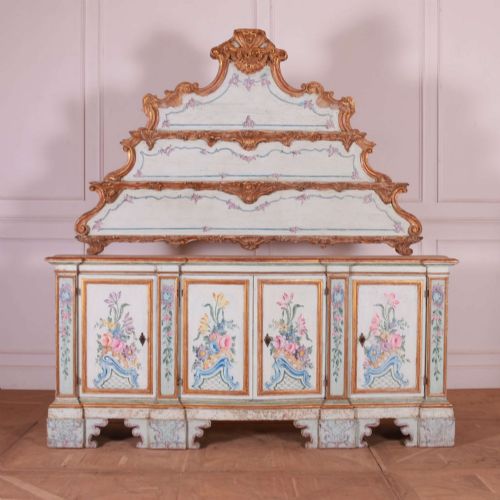
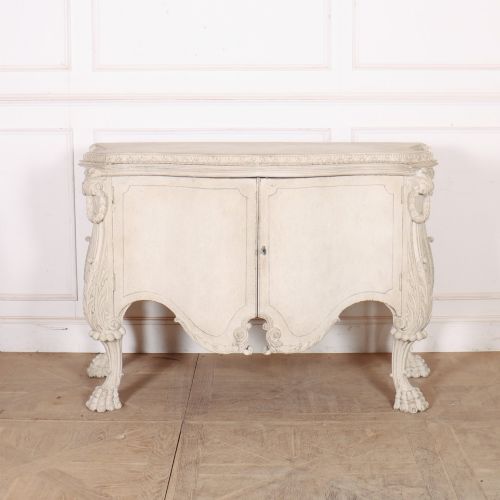
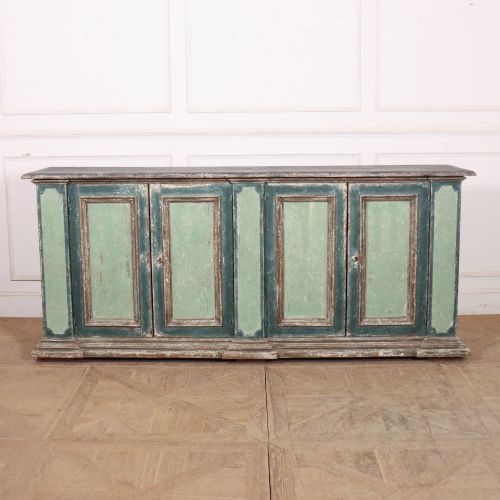
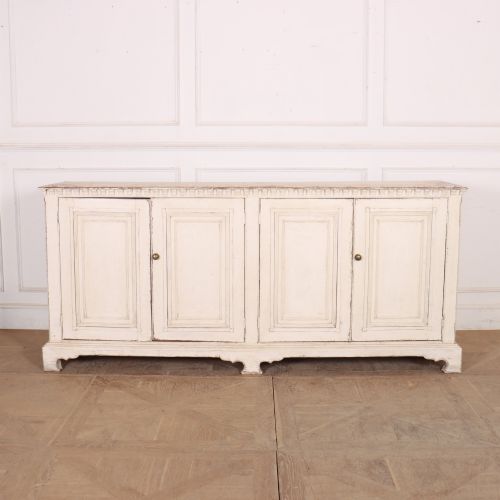


Italian Painted Sideboard
An italian painted sideboard brings vibrant regional character and practical storage to a room through centuries of traditional craftsmanship.
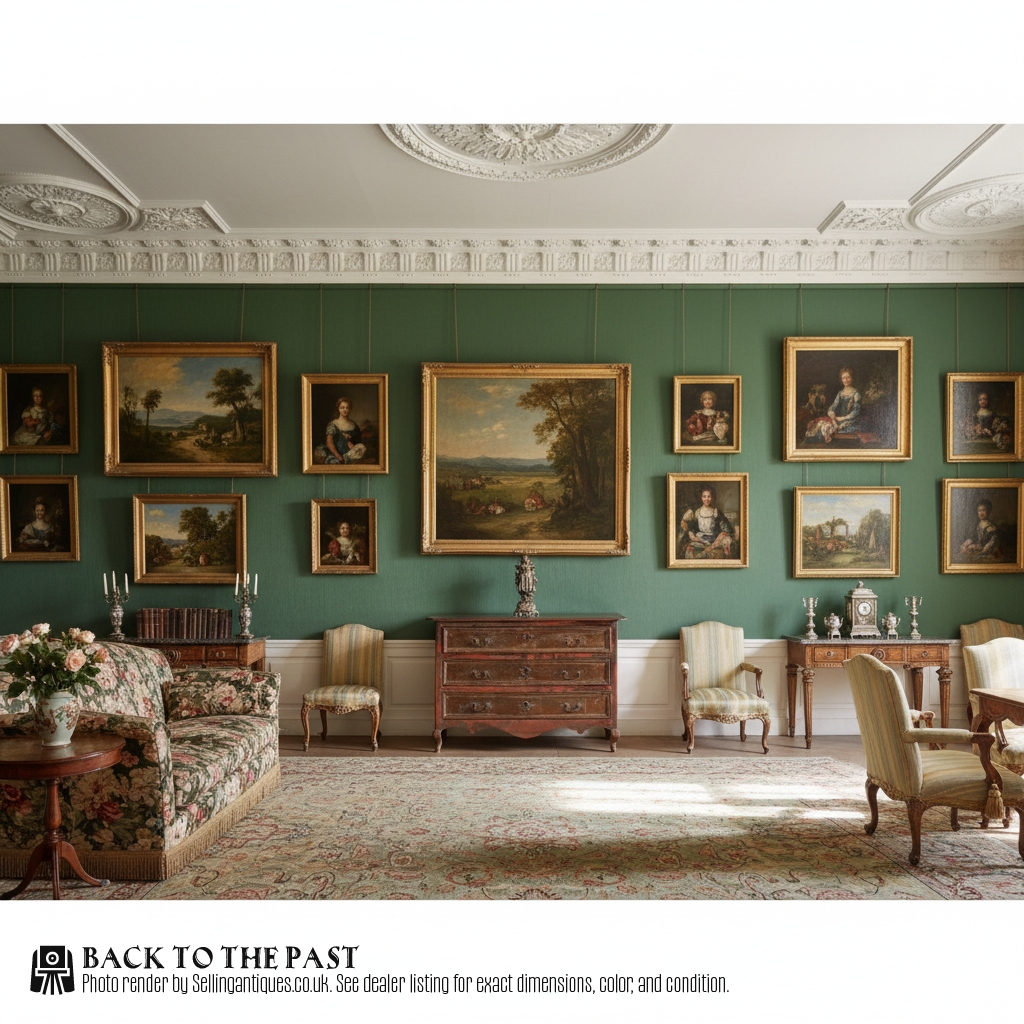
Italian Painted Sideboard
An italian painted sideboard encompasses various forms of storage furniture decorated with pigment, including sideboards, commodes, side cabinets, and buffets. These items emerge from multiple eras, ranging from the eighteenth century to the late nineteenth century.
The pieces on this page frequently manifest as commodious chests of drawers, serpentine front commodes, and side cabinets. Regional aesthetics heavily influence the forms, spanning Venetian Rococo, Italian Neoclassical, and provincial interpretations.
Buyers encountering this selection will observe traditional cabinetmaking adapted for domestic utility and decorative display. The inventory balances substantial enfilades with compact side cabinets originating across Italian workshops.
How they were made
Makers constructed these cabinets using softwood and walnut, often shaping timber to achieve serpentine fronts and cabinet-on-stand elevations. Structural integrity relied upon traditional joinery combined with iron and brass fixings.
Surfaces received layers of paint to create decorative finishes, sometimes complemented by heavy marble tops. Metal hardware such as brass handles and iron accents completed the construction of these storage forms.
Materials recorded across the inventory include painted wood, softwood, walnut, marble, brass, and iron.
What varies in quality
The refinement of the painted decoration distinguishes simpler provincial output from sophisticated Venetian Rococo or Neoclassical design. Skill in handling the pigment and preserving original surface layers dictates the visual success of each piece.
Structural complexity also separates standard sideboards from elaborate serpentine commodes and cabinets on stand. The integration of materials such as carved walnut, brass mountings, and fitted marble tops marks the upper tier of the range.
The Italian Painted Sideboard Glossary
- Commode
- A low chest of drawers or cabinet designed for domestic storage. These items often feature decorative painted surfaces and serpentine contours.
- Enfilade
- A suite of rooms or, in furniture terms, a long sideboard or cabinet designed for grand storage and display. They frequently appear in nineteenth century Italian inventories.
- Serpentine
- A furniture contour characterised by a wave-like curve, presenting a convex centre flanked by concave sides. This shape requires advanced woodworking skill.
- Neoclassical
- A style reflecting classical Greek and Roman art, prominent in eighteenth and nineteenth century Italian design. It favours symmetry and restrained ornamentation over exuberant curves.
Italian Painted Sideboard: Frequently Asked Questions
What rooms suit an italian painted sideboard?
These sideboards and commodes fit well in dining rooms, hallways, and living spaces where surface display and concealed storage are both required.
The varied proportions, from compact side cabinets to expansive enfilades, allow them to anchor different interior layouts.
How do I identify eighteenth century pieces?
Eighteenth century examples often display specific regional characteristics such as Venetian Rococo curves or early Neoclassical symmetry.
Examining the construction methods and the wear of the original paint layer helps distinguish these earlier pieces from later nineteenth century revivals.
Are marble tops original to these commodes?
Marble tops appear on several nineteenth century commodes and sideboards, providing a durable and decorative working surface.
Their presence usually corresponds to the specific stylistic requirements of the period, particularly within Italian provincial and neoclassical output.
How should I care for painted wood surfaces?
Preserving the painted finish involves keeping the furniture away from direct sunlight and maintaining stable room humidity.
Gentle dusting with a soft, dry cloth protects the pigment without introducing harsh cleaning agents that might harm the antique surface.