




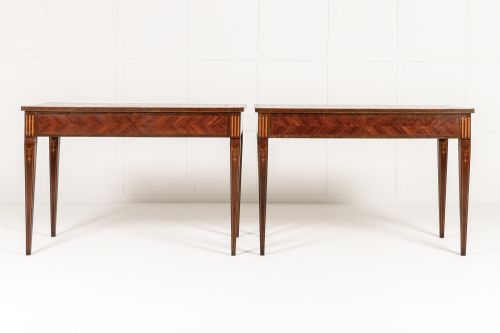
Italian Marquetry Side Table
An italian marquetry side table brings intricate wood inlay and warmth into a room, most often meeting the eye as a nineteenth-century Sorrento piece.
Italian Marquetry Side Table
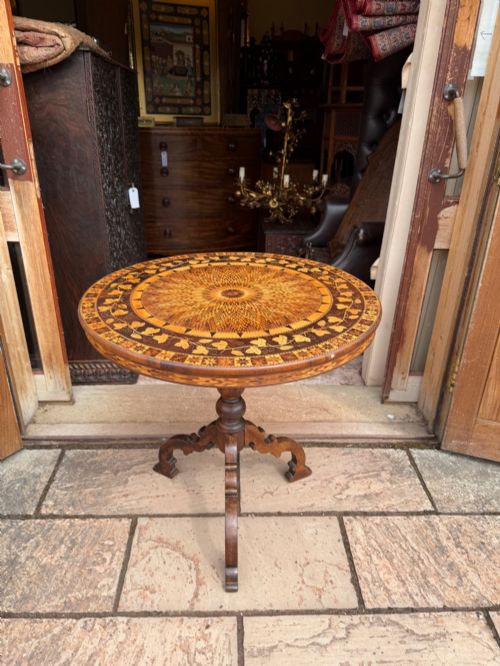
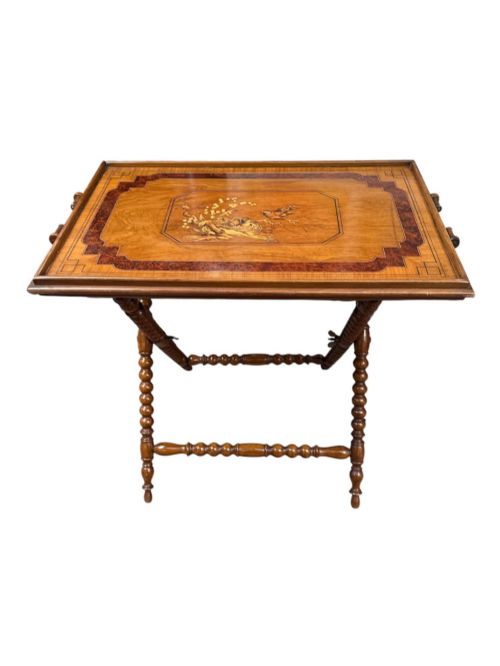
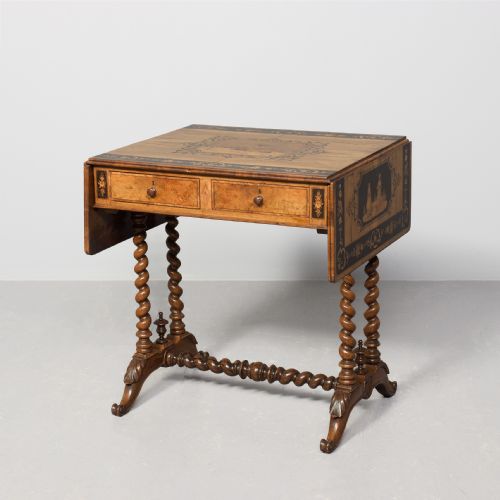
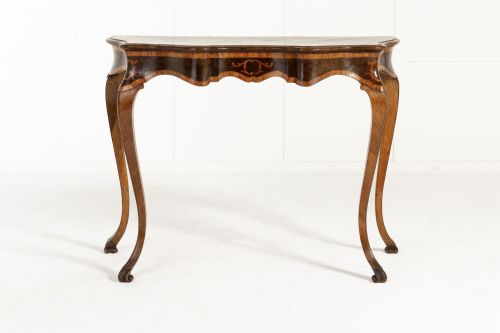
An italian marquetry side table appears in forms such as occasional tables, sofa tables, console tables, and butler's tray tables. The nineteenth century yields the highest volume of examples, particularly Sorrento ware utilising distinctive coastal imagery and geometric patterns.
Makers and workshops of the nineteenth century also produced pedestal designs, tilt-top tables, and low tables. Pieces span styles from Neoclassical and Rococo Revival to Italian Renaissance Revival and Grand Tour aesthetics.
Alongside nineteenth-century work, twentieth-century exhibition pieces and earlier sixteenth-century walnut and bone-inlaid formats occasionally surface. These tables function practically as lamp stands, plant stands, and hall tables while displaying elaborate surface decoration.
What varies in quality
The precision of the wood inlay dictates the visual success of the surface, with finer execution displaying sharp junctions between contrasting timbers. The choice of primary wood also influences the piece, as rich walnut and figured olivewood elevate the overall character above standard fruitwood grounds.
Signatures from notable workshops or exhibition-grade construction differentiate standard production items from master-level pieces. The complexity of the table form, from simple occasional stands to multi-axis butler's trays and signed marquetry designs, marks the upper tier.
The selection spans occasional tables, console tables, butler's tray tables, and exhibition side cabinets.
Pietro Ferrario·Almerico Gargiulo
The Italian Marquetry Side Table Glossary
- Marquetry inlay
- A decorative technique arranging fitted wood veneers to create pictorial or geometric surface patterns. It transforms a plain tabletop into a detailed mosaic of natural tones.
- Sorrento ware
- Woodwork originating from the Italian coastal town renowned for intricate micro-mosaics and floral marquetry. Makers there specialised in small tables and boxes.
- Parquetry
- Geometric wood inlay forming repeating patterns such as cubes, stripes, or lattices. This technique differs from figurative marquetry by relying on precise straight lines.
- Ebonised wood
- Timber treated with chemical stains or black finishes to imitate ebony. This dark ground provides high visual contrast for bone and light fruitwood inlays.
- Tilt top table
- A table featuring a mechanism that allows the top to hinge vertically when not in use. This clever design saved domestic space in period interiors.
Italian Marquetry Side Table: Frequently Asked Questions
What is Sorrento ware?
Sorrento ware refers to decorative wooden items produced in the Italian town of Sorrento, particularly during the nineteenth century. These pieces are celebrated for intricate floral, landscape, and geometric marquetry.
Makers utilised local woods like olivewood and fruitwood to build small tables, boxes, and trays. The tradition represents a distinct regional specialisation in decorative wood inlay.
How do I style a side table?
These tables suit hallways, living rooms, and bedrooms as functional display surfaces for lamps, plants, or decorative objects. Their detailed tops deserve placement where adequate lighting can reveal the wood grain and inlay work.
Pairing a nineteenth-century inlaid table with minimal modern surroundings allows the historic craftsmanship to stand out. Avoid covering the entire surface so the marquetry remains visible.
Are these tables sturdy enough for daily use?
Most occasional and side tables were built for light domestic service rather than heavy physical weight. Using coasters and protective pads prevents surface marking on antique wood and polished finishes.
Occasional movement should be done with care, particularly with tilt-top mechanisms or pedestal bases. Careful placement away from direct heat sources protects the historic veneers.
How do I identify a nineteenth-century piece?
Nineteenth-century examples often feature characteristic Sorrento floral motifs, geometric parquetry, or olivewood construction. Details such as bone inlay and ebonised frames frequently point to this active production period.
Construction methods, timber types, and stylistic cues like Neoclassical or Rococo Revival influences help distinguish these nineteenth-century items from later reproductions.