



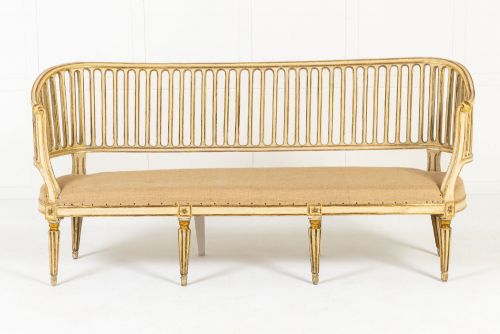


Italian Giltwood Seat
An italian giltwood seat brings high-relief carving and rich surface gilding into a room, offering both decorative presence and period seating.
Italian Giltwood Seat
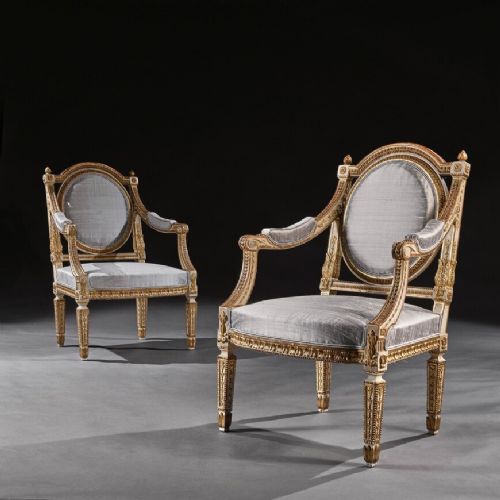
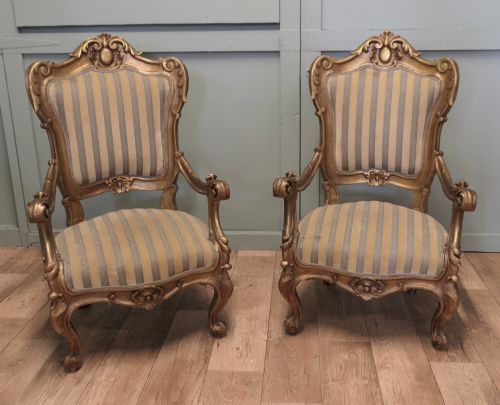
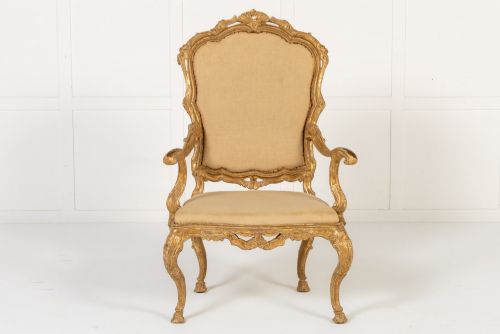
An italian giltwood seat encompasses a variety of forms designed for formal rooms, ranging from single armchairs to larger settees and window seats. The examples found here span several centuries, with pieces originating from the eighteenth and nineteenth centuries.
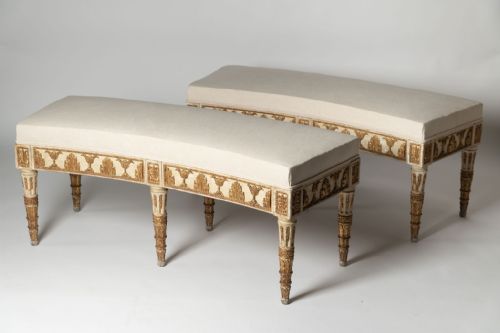
Armchairs and pairs of stools form the most frequent encounters on this page, alongside larger items like settees and window seats. These furnishings display distinct regional styling rooted in historical Italian design traditions.
Makers and craftsmen utilised specific stylistic vocabularies over the periods represented, including rococo, neoclassical, and baroque designs. A buyer finds both grand armchairs and simpler stools finished with gilded surfaces.
How they were made
Construction relies upon carved wood frames that provide structural form for subsequent surface decoration. Artisans shaped timber using traditional hand tools before applying preparatory layers such as gesso.
Giltwood surfaces are achieved through the application of gold leaf or silver gilt over prepared wooden bases. Painted and gilded variants combine pigment with metallic leaf to accentuate carved details.
Upholstery materials complete the construction, with historical pieces utilising fabrics such as linen and other traditional textiles. These soft elements are integrated directly into the frame design of armchairs, settees, and stools.
Italian Giltwood Seat Retail Price Guide 2026
Typical asking prices for italian giltwood seat among the pieces listed under this phrase on Sellingantiques today, from the lower quarter to the upper quarter. They describe what is for sale here now, not the wider market.
Some nineteenth-century makers revived ancient Roman folding furniture shapes, turning simple cross-leg stools into gilded statement pieces.
What varies in quality
The sophistication of the hand carving dictates much of the distinction between pieces, with deep relief work and refined proportions marking out the finer examples. Artisans who executed intricate foliage and scrollwork produced work that holds visual clarity.
The application and survival of the gilt surface influence the character of each piece. Intact layers of gold leaf or silver gilt demonstrate skilled workshop practice, whereas worn surfaces reveal the underlying gesso and wood structure.
The Italian Giltwood Seat Glossary
- Giltwood
- Wood that has been coated with gold leaf or metal leaf. This finish creates a luminous, reflective surface characteristic of formal European furniture.
- Gesso
- A plaster-like mixture applied to wooden frames as a smooth base for gilding. It allows carvers to crisp up details before metal leaf is laid down.
- Curule stool
- An ancient Roman stool form characterised by intersecting curved legs. Nineteenth-century interpretations adapt this X-frame shape into gilded seating.
- Tete a tete
- A specialised two-seater sofa designed for face-to-face conversation. These double seats often feature elaborate carved frames and gilded woodwork.
Italian Giltwood Seat: Frequently Asked Questions
What periods do these seats cover?
The inventory spans the eighteenth century through to the end of the nineteenth century, including pieces dated around nineteen hundred.
Stylistic influences range from baroque and rococo to neoclassical revivals.
How do I identify a neoclassical style?
Neoclassical pieces show cleaner, straighter lines and symmetrical motifs drawn from classical antiquity.
They often replace the flowing asymmetry of earlier rococo forms with geometric restraint and balanced proportions.
What is a window seat?
A window seat is a long, bench-like form traditionally placed in architectural window recesses.
These pieces provide low-backed or backless seating upholstered to match interior textile schemes.
How should I care for giltwood?
Giltwood requires dry dusting with a soft brush and protection from moisture and direct sunlight.
Avoiding harsh cleaning products preserves the fragile gold leaf and underlying gesso layers.